
Ovarian Endometrioma: Symptoms, Diagnosis and Treatment
At a glance
- Also called
- Chocolate cyst
- Common presentations
- Painful periods and pain during sex
- Usually assessed with
- Pelvic ultrasound
What is an ovarian endometrioma?
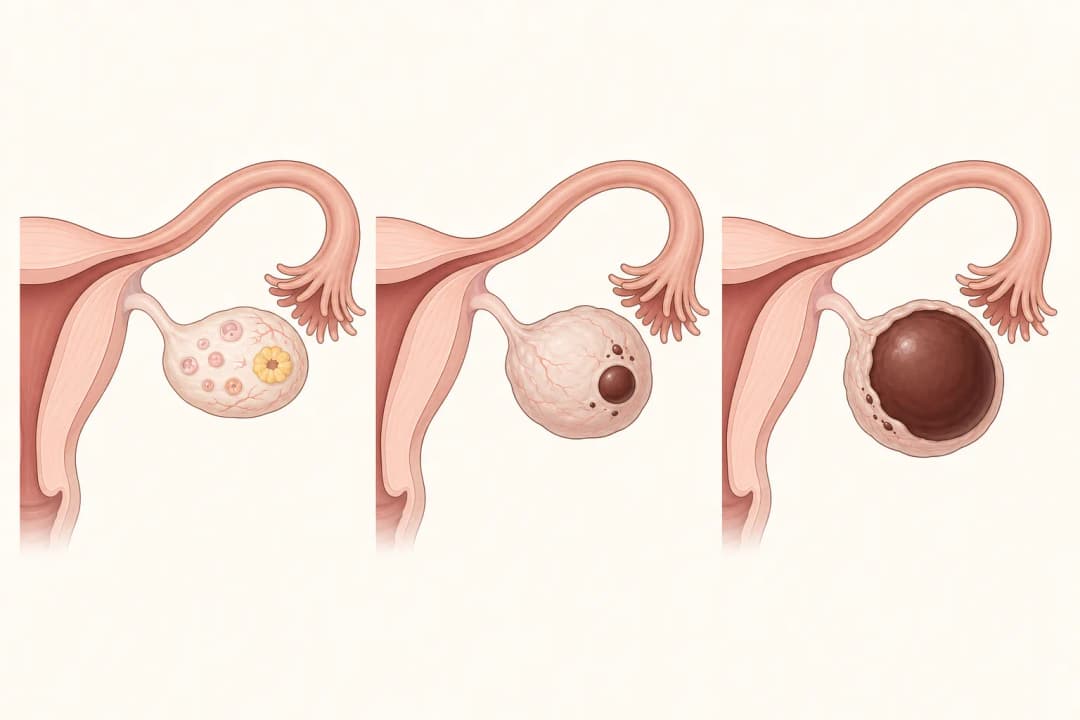
An ovarian endometrioma is a cyst formed when endometriosis-like tissue grows in or on an ovary and collects old blood. It is sometimes called a chocolate cyst because of the thick, dark fluid inside. The cyst may occur on one ovary or both and can exist alongside endometriosis elsewhere in the pelvis.
Symptoms
Ovarian endometrioma commonly presents with painful periods and pain during sex. Some people have pelvic pain between periods, discomfort with bowel movements or urination around menstruation, bloating, or difficulty becoming pregnant. Others have no noticeable symptoms and the cyst is found during an examination or scan. Symptoms can vary with cyst size and with endometriosis in nearby tissues.
Causes
The cyst develops when endometriosis-like tissue responds to hormonal cycling and bleeding becomes trapped in ovarian tissue. The exact reason this tissue settles on an ovary is not fully understood. An endometrioma is not caused by a personal failure or by sexual activity.
Course and progression
An endometrioma may remain stable, enlarge, or recur after treatment. Its symptoms can fluctuate with the menstrual cycle. A scan may show its appearance, but follow-up depends on symptoms, size, age, fertility plans and whether the image has reassuring features. Sudden severe pain, vomiting or faintness needs urgent medical assessment because a cyst can occasionally twist or rupture.
Factors linked with risk
Risk is higher in people who have endometriosis or a close relative with it. Earlier onset of menstruation, longer or heavier menstrual bleeding and a shorter cycle may be associated with more exposure to cyclical hormones, but these features do not diagnose an endometrioma. Anyone with persistent pelvic symptoms can need assessment.
How it is diagnosed
A clinician asks about cycle-related pain, sex-related pain, bowel or bladder symptoms and fertility goals, then performs an abdominal or pelvic examination when appropriate. Ultrasound is commonly used to examine the ovaries. MRI may help map deeper endometriosis or clarify an uncertain finding. Blood tests do not by themselves confirm an endometrioma. Keyhole surgery can confirm and treat disease in selected situations.
Treatment options
Treatment is individualised. Observation with repeat imaging may suit a small, stable cyst without troublesome symptoms. Hormonal medicines can reduce cycle-related activity and pain, although they do not remove an existing cyst. GnRH analogue therapy is one specialist option. Surgery may be considered for persistent pain, a large or changing cyst, uncertainty about its nature, or fertility treatment planning. Laparoscopic ovarian cystectomy removes the cyst through small incisions; clinicians discuss possible effects on ovarian tissue before deciding.
Living with an endometrioma
Track pain, bleeding, bowel or bladder changes and how symptoms affect work, sleep and intimacy. Heat, pacing activity and a clinician-approved pain plan may help. Tell a gynaecology team if pregnancy is a goal, since both endometriosis and ovarian surgery can influence fertility decisions.
Possible complications
Endometriomas can be associated with adhesions, ongoing pelvic pain and difficulty conceiving. A cyst may rarely rupture or contribute to ovarian twisting, causing abrupt severe pain. New sudden symptoms should be assessed promptly rather than managed at home.
Prevention
There is no reliable way to prevent an ovarian endometrioma from developing. Follow-up and treatment of known endometriosis may help identify recurrence early. Keep planned appointments even when symptoms improve, especially after surgery.
Finding specialist care
A gynaecologist with experience in endometriosis can combine scan findings, symptoms and fertility goals into a care plan. Ask how ovarian reserve will be considered if surgery is proposed, and what follow-up is expected. Bring a symptom diary and a list of medicines to the appointment.
Questions people ask
Can an ovarian endometrioma cause pain during sex?
Yes. Pain during sex is a common presentation, particularly when endometriosis or adhesions affect tissues behind the uterus or around the ovary.
Does every endometrioma need surgery?
No. Monitoring or medical treatment may be appropriate when symptoms and scan findings are suitable; surgery depends on the whole clinical picture.
Related
Related reading
Keep reading
Find care
General Clinics & Polyclinics in Abu Dhabi
Where ovarian endometrioma: symptoms, diagnosis and treatment is assessed depends on what is causing it. These are licensed general clinics & polyclinics listed in Abu Dhabi.
27 Ar Ruwwad St - Shakhbout City - MSH4 - Abu Dhabi - United Arab Emirates
Accepts: Daman, Thiqa, Cigna, MetLife +20 more
Al Ruwais, Al Dhafrah
Accepts: Daman, Thiqa, AXA, Cigna +16 more
Al Bahyah - Al Bahyah Old - Abu Dhabi - United Arab Emirates
Accepts: Daman, Thiqa, Cigna, Allianz Care +18 more
Abu Dhabi
Accepts: Daman, Thiqa, AXA, Cigna +27 more
Ordered by verification status and how complete each clinic's public record is, then alphabetically. This is a directory listing, not a ranking — Zavis does not rate or recommend providers.
A factual listing drawn from the DHA, DOH and MOHAP licence registers. It is not a referral, an endorsement, or advice that any of these providers is right for you.
Medical disclaimer. This page is general health information, not medical advice, and it cannot diagnose you. Always consult a licensed healthcare provider about your own symptoms and treatment. In an emergency in the UAE, call 998 for an ambulance.