
Inguinal hernia: symptoms, diagnosis and treatment
At a glance
- Also called
- Groin hernia
- Location
- Lower abdominal wall near the groin
- Urgent signs
- Severe pain, vomiting or tender persistent bulge
What an inguinal hernia is
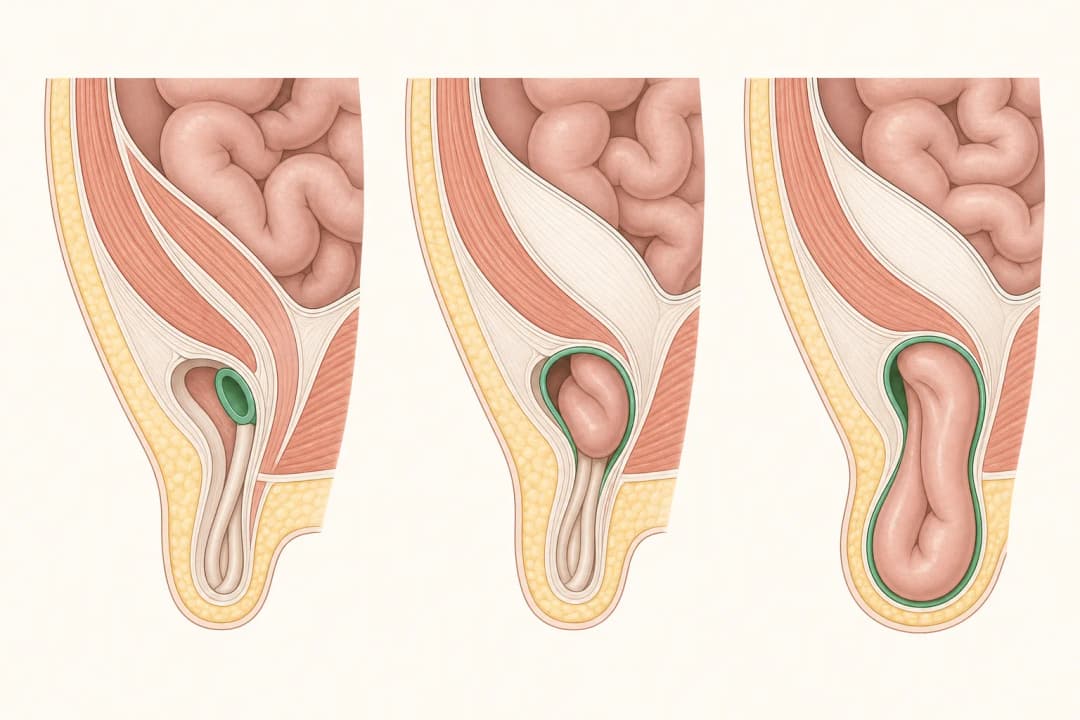
An inguinal hernia occurs when tissue pushes through a weak area in the lower abdominal wall near the groin. It may form a bulge in the groin or scrotum and can be more noticeable when standing, coughing or straining. It is also known as a groin hernia.
Symptoms and warning signs
Some people notice a soft groin lump, pressure, burning or an ache that develops with activity. An inguinal hernia can present with abdominal pain, and some men notice discomfort extending towards the testicle. A hernia may be painless, especially at first. Sudden severe pain, a firm tender lump that will not settle, vomiting, or a swollen abdomen needs urgent assessment.
Why it develops
The groin contains a natural passage through the abdominal wall. An inguinal hernia can develop when this area is weak or when pressure inside the abdomen repeatedly pushes tissue through it. Some people have a weakness from birth, while in others it develops over time.
How it can change over time
A hernia may stay similar for a while or gradually become more noticeable. Symptoms often fluctuate with physical effort, constipation or coughing. Hernias do not close by themselves, although avoiding triggers can reduce discomfort. A clinician can explain whether watchful waiting or repair is appropriate for your symptoms and circumstances.
Factors that increase abdominal pressure
Repeated heavy lifting, chronic cough, constipation and straining to pass urine can increase pressure in the abdomen. Previous abdominal surgery, pregnancy, ageing and a family tendency may also be relevant. These factors do not mean a person will develop a hernia, but they can help guide prevention and treatment discussions.
Diagnosis and assessment
A clinician will ask about the lump, pain and activities that bring symptoms on. Examination is often done standing and may include asking you to cough or bear down. If the examination is unclear, an abdominal ultrasound can help assess the groin area and rule out other causes of a lump or pain.
Treatment choices
Treatment depends on symptoms, the hernia's features and your general health. A small hernia with minimal symptoms may be monitored with a safety plan. Surgery repairs the weakness and is commonly considered when pain interferes with daily life, the bulge is enlarging, or complications are a concern. Your surgical team can discuss the approach, recovery and individual risks.
Living with a hernia
Until a care plan is in place, avoid activities that reliably trigger pain and manage constipation or cough with clinical advice. Supportive underwear may feel more comfortable for some people, but it does not repair the hernia. Note changes in the lump, pain, bowel symptoms and ability to reduce usual activities so you can describe them clearly at review.
Complications that need quick action
Occasionally, tissue caught in a hernia can become trapped, affecting the bowel or its blood supply. This may cause sudden pain, a tender non-reducible bulge, nausea, vomiting or abdominal swelling. Do not try to force a painful lump back in; seek urgent medical care instead.
Reducing strain on the groin
Not every hernia can be prevented, especially when there is an existing weakness. Keeping bowel habits regular, addressing a long-lasting cough, using careful lifting technique and maintaining a weight that is suitable for you can reduce repeated strain. After repair, follow the activity advice provided by your surgical team.
Who can help
A GP consultation can assess a new groin lump or pain and arrange referral when needed. An abdominal ultrasound may be used if the diagnosis is uncertain. Seek urgent in-person care rather than waiting for a routine appointment if severe pain, vomiting or a tender persistent bulge develops.
Questions people ask
Can an inguinal hernia go away without surgery?
The weakness in the abdominal wall does not close by itself. Some people with few symptoms can be monitored, while others benefit from surgical repair.
Is a groin lump always a hernia?
No. A clinician should examine a new lump because several conditions can affect the groin. Ultrasound may help when the diagnosis is uncertain.
Related
Related reading
Keep reading
Find care
General Clinics & Polyclinics in Abu Dhabi
Where inguinal hernia: symptoms, diagnosis and treatment is assessed depends on what is causing it. These are licensed general clinics & polyclinics listed in Abu Dhabi.
27 Ar Ruwwad St - Shakhbout City - MSH4 - Abu Dhabi - United Arab Emirates
Accepts: Daman, Thiqa, Cigna, MetLife +20 more
Al Ruwais, Al Dhafrah
Accepts: Daman, Thiqa, AXA, Cigna +16 more
Al Bahyah - Al Bahyah Old - Abu Dhabi - United Arab Emirates
Accepts: Daman, Thiqa, Cigna, Allianz Care +18 more
Abu Dhabi
Accepts: Daman, Thiqa, AXA, Cigna +27 more
Ordered by verification status and how complete each clinic's public record is, then alphabetically. This is a directory listing, not a ranking — Zavis does not rate or recommend providers.
A factual listing drawn from the DHA, DOH and MOHAP licence registers. It is not a referral, an endorsement, or advice that any of these providers is right for you.
Medical disclaimer. This page is general health information, not medical advice, and it cannot diagnose you. Always consult a licensed healthcare provider about your own symptoms and treatment. In an emergency in the UAE, call 998 for an ambulance.