
Chronic cough: causes, assessment and relief
Updated
At a glance
- Also called
- Persistent cough
- Assessment focus
- Pattern, triggers and associated symptoms
- Possible tests
- Spirometry or chest X-ray
When a cough persists
A chronic cough is a cough that persists and deserves assessment when it does not settle.
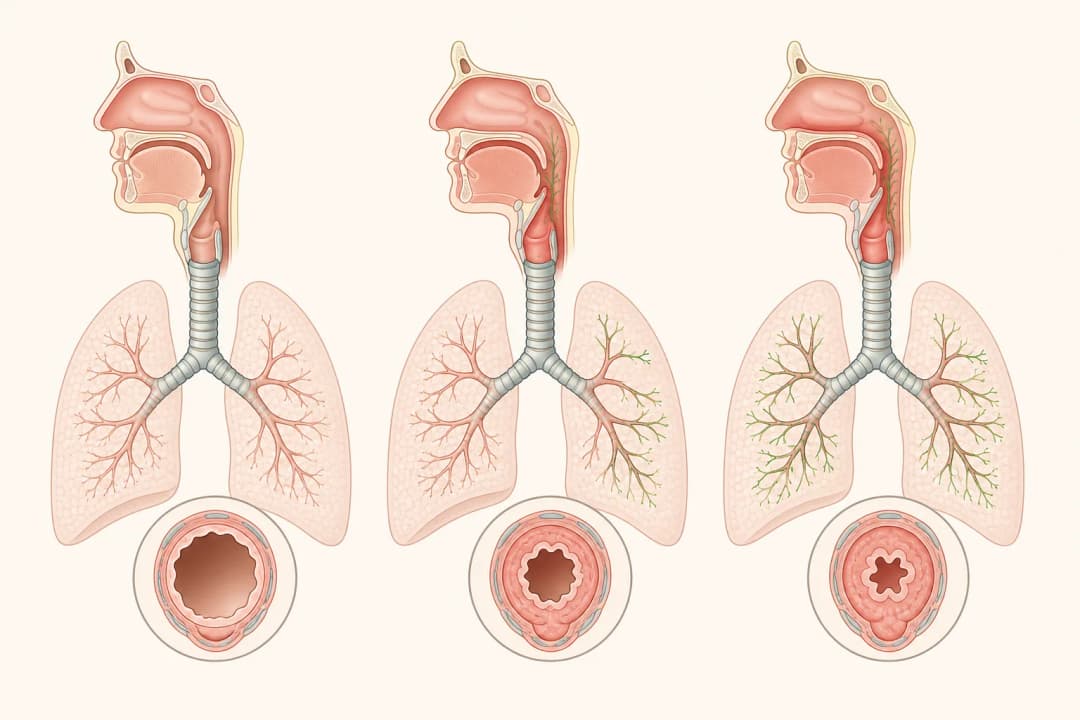
It is a symptom rather than a diagnosis, and several factors may be involved at the same time. A cough can interrupt sleep, work, conversation and eating. The pattern, triggers and associated symptoms help a clinician work out which investigations or treatment may be useful.
Symptoms that can accompany it
Cough is the defining symptom of chronic cough. Hoarse voice and postnasal drip are common accompanying presentations. Some people notice coughing after meals, during exercise, in cold air or when lying down; noting these patterns can give useful clues at an appointment.
Common contributors
A persistent cough can be associated with asthma, allergic rhinitis, acid reflux, smoking or nicotine dependence, and irritation after a respiratory infection. Some medicines can also trigger cough. The same cough pattern can have different causes, so treatment is more effective when guided by an assessment rather than by repeated cough remedies alone.
How the pattern may change
A cough may start after an infection and remain because the airways are sensitive, or it may develop gradually alongside nasal, breathing or reflux symptoms. Frequent coughing can itself irritate the throat, creating a cycle. Changes such as worsening breathlessness, chest pain or coughing blood need urgent review.
Factors to mention
Tell the clinician about smoking or vaping, workplace dust or fumes, damp exposure, recent illness, travel, medicines and contact with respiratory infections. A history of asthma, allergies or reflux can also shape the assessment. These details are clues, not a diagnosis by themselves.
Assessment and tests
A GP will ask about duration, mucus, triggers, breathing, nasal symptoms, reflux and medicines, then examine you. Depending on the findings, tests can include spirometry to assess airflow or a chest X-ray to look at the lungs and chest. Further tests are selected according to the suspected cause.
Treatment options
Treatment targets the cause or contributors. This may include treatment for asthma or nasal allergy, reflux management, reviewing a medicine or support to stop smoking. If an infection or another condition is identified, care will be matched to that finding. Cough suppressants may not address the underlying driver.
Managing day to day
Keep a short record of cough episodes, triggers and what brings relief. Drink fluids regularly if suitable for you, avoid smoke and strong irritants, and follow any inhaler or nasal treatment plan carefully. Return for review if the cough is disrupting sleep or daily life despite the plan.
Effects of ongoing coughing
Repeated coughing can cause throat soreness, voice strain, disturbed sleep and exhaustion. It can also cause embarrassment or avoidance of social situations. These effects are valid reasons to seek care even if the cough seems familiar.
Reducing avoidable triggers
Avoid tobacco smoke and, where possible, reduce exposure to dust, fumes and fragrances that provoke coughing. Manage known asthma, allergies or reflux consistently, and check technique when using prescribed inhalers. Seek advice before stopping a prescribed medicine because of a cough.
When to seek medical help
Arrange a GP consultation for a cough that persists or keeps returning. Seek urgent assessment for coughing blood, severe breathlessness, chest pain, confusion, blue or grey lips, or a sudden deterioration. Take a list of medicines and your symptom record to the visit.
Questions people ask
Can acid reflux cause a chronic cough?
Yes. Reflux can irritate the throat and airways, sometimes without obvious heartburn. A clinician will consider it alongside other possible causes.
Should I stop a medicine if I think it is causing my cough?
Do not stop prescribed medicine on your own. Arrange a review so a clinician can assess the link and discuss a safe alternative if needed.
Related
Related reading
Keep reading
Find care
General Clinics & Polyclinics in Dubai
Where chronic cough: causes, assessment and relief is assessed depends on what is causing it. These are licensed general clinics & polyclinics listed in Dubai.
Elite Business Bay Residence - Shop 03 & 04, 34 Marasi Dr - Business Bay - Dubai - United Arab Emirates
Accepts: Tabby
Airport View Building, Al Garhoud, Dubai
Accepts: Daman, Thiqa, AXA, Cigna +25 more
IBIS Building, 5th Floor, Unit 5003, Deira, Dubai
Accepts: AXA, Cigna, MetLife, Allianz Care +18 more
- Aarna Elite Medical CenterVerified
Madeira Building, Shop 1 & 2, Al Jadaf, Dubai, UAE
Ordered by verification status and how complete each clinic's public record is, then alphabetically. This is a directory listing, not a ranking — Zavis does not rate or recommend providers.
A factual listing drawn from the UAE health regulators' public licence registers. It is not a referral, an endorsement, or advice that any of these providers is right for you.
Medical disclaimer. This page is general health information, not medical advice, and it cannot diagnose you. Always consult a licensed healthcare provider about your own symptoms and treatment. In an emergency in the UAE, call 998 for an ambulance.