
Dizziness vs Vertigo: How They Differ
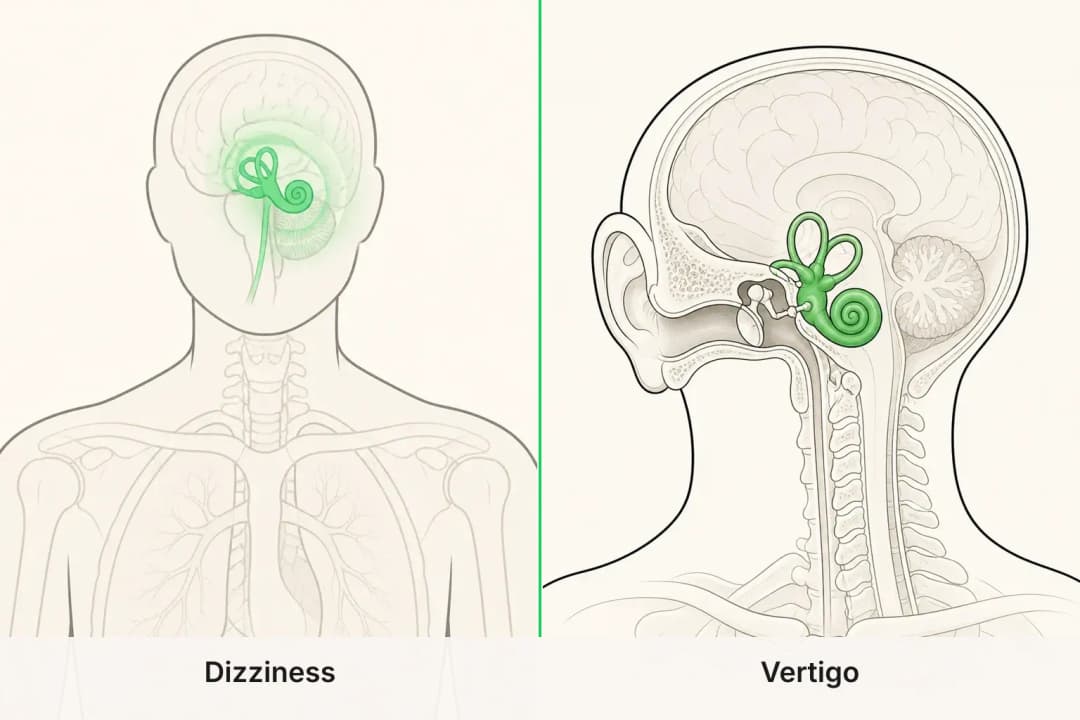
At a glance
- Core difference
- Vertigo involves a false sense of movement; dizziness can describe several non-spinning sensations.
- Immediate safety
- Sit or lie down and avoid driving or fall hazards while symptoms are active.
- Helpful description
- Timing, triggers, position, ear symptoms, fainting, and neurological symptoms all matter.
Find care
General Clinics & Polyclinics in Abu Dhabi
Licensed general clinics & polyclinics listed in Abu Dhabi. Appearing here means a provider holds a UAE licence in this category — not that it offers dizziness vs vertigo: how they differ, which is worth confirming with the clinic before you book.
27 Ar Ruwwad St - Shakhbout City - MSH4 - Abu Dhabi - United Arab Emirates
Accepts: Daman, Thiqa, Cigna, MetLife +20 more
Al Ruwais, Al Dhafrah
Accepts: Daman, Thiqa, AXA, Cigna +16 more
Al Bahyah - Al Bahyah Old - Abu Dhabi - United Arab Emirates
Accepts: Daman, Thiqa, Cigna, Allianz Care +18 more
Abu Dhabi
Accepts: Daman, Thiqa, AXA, Cigna +27 more
The New EMI State Tower - 3rd Floor 303 Kan’ad Street - Hamdan Bin Mohammed St - Al Danah - Zone 1 - Abu Dhabi - United Arab Emirates
Accepts: Daman, Thiqa, Cigna, MetLife +22 more
Taj Resorts RV-1, Al Nasser Properties - Mafraq-2 - Mafraq Industrial Area - Abu Dhabi - United Arab Emirates
Accepts: Daman, Thiqa, AXA, Cigna +14 more
Ordered by verification status and how complete each clinic's public record is, then alphabetically. This is a directory listing, not a ranking — Zavis does not rate or recommend providers.
A factual listing drawn from the DHA, DOH and MOHAP licence registers. It is not a referral, an endorsement, or advice that any of these providers is right for you.
Compare the sensation you feel
Dizziness is a broad feeling of light-headedness or unsteadiness, while vertigo is the false sensation that you or your surroundings are moving.
People use the word dizziness for several experiences: feeling faint, off balance, weak, foggy, or briefly unsteady. Vertigo is more specific. It can feel as though the room is spinning, tilting, swaying, or being pulled to one side, even while you are still. Describing the sensation in your own words is often more useful than choosing a label.
Dizziness may fit better if
The feeling may fit dizziness when you feel close to fainting, floaty, weak, or generally off balance without a clear sense of spinning. It may come on after getting out of bed or a chair, during a fever, after fluid loss, when you have skipped meals, or during intense worry. Some medicines can also contribute.
Notice what happened just before the episode, whether you actually fainted, and whether your heartbeat felt fast or irregular. Sit or lie down promptly if you feel faint, and avoid driving, climbing, or operating machinery until the feeling has passed and the cause is understood.
Vertigo may fit better if
Vertigo may fit better when movement is the dominant sensation, especially if rolling over, sitting up, bending, looking upward, or turning your head brings it on. The episode can be brief or persist longer, and nausea can make ordinary movement difficult. Keeping your gaze on a stable object and moving slowly may reduce the immediate sense of motion.
The balance system includes the inner ear, eyes, nerves, and brain. A disturbance anywhere in that system can create vertigo. Ear symptoms such as new hearing change, ringing, pain, or fullness are useful details to report because they can help guide the assessment.
Safety risks and urgent warning signs
Either symptom can lead to falls, particularly on stairs, in the shower, or when walking without support. Pause where you are, hold onto something stable, and ask someone to stay with you if the sensation is severe. Avoid alcohol or sedating medicines unless a clinician has advised them for you.
Seek urgent medical help for a new severe headache, chest pain, shortness of breath, fainting, trouble speaking, facial drooping, new weakness or numbness, double vision, inability to walk safely, or a sudden major change in hearing. These warning signs need prompt assessment because they can signal a problem beyond a simple balance disturbance.
When neither label feels quite right
Some people describe a disconnected, foggy, or unreal feeling rather than faintness or movement. Others have imbalance mainly while walking, visual blurring, or a sense that they may black out. Those descriptions still deserve attention; they may relate to vision, nerves, blood pressure, heart rhythm, medicines, infection, migraine, or other causes.
Do not force a diagnosis from a single word. A short record of the timing, triggers, duration, food and fluid intake, recent illnesses, and accompanying symptoms gives a clinician a clearer starting point than the label alone.
How a clinician works out the next step
A clinician will usually begin by clarifying the exact sensation, how quickly it started, what provokes it, and what happens alongside it. They may check your pulse, blood pressure in different positions, walking and balance, eye movements, hearing, and nerves. The findings determine whether you need simple self-care guidance, a medication review, a balance assessment, blood tests, heart checks, or urgent referral.
Bring a current medicine list and mention any recent head injury, infection, pregnancy, diabetes, heart condition, or previous episodes. If symptoms recur, change, or interfere with daily activity, arrange a medical review even when they settle between episodes.
Questions people ask
Can dizziness turn into vertigo?
They are descriptions of sensations rather than stages of one illness. An episode can feel different over time, so describe each component, including any spinning, near-fainting, imbalance, or nausea.
Should I lie still during vertigo?
Resting somewhere safe can help during a strong episode. Move slowly when you get up, keep a light on if you need to walk, and seek urgent help if warning signs such as weakness, speech difficulty, chest pain, or a severe headache occur.
What should I tell a clinician about dizziness?
Explain the first moment it started, what you were doing, how long it lasted, whether position changed it, what medicines you take, and any ear, heart, vision, or neurological symptoms.
Related
Related reading
Medical disclaimer. This page is general health information, not medical advice, and it cannot diagnose you. Always consult a licensed healthcare provider about your own symptoms and treatment. In an emergency in the UAE, call 998 for an ambulance.