
Dizziness vs fainting: how they differ
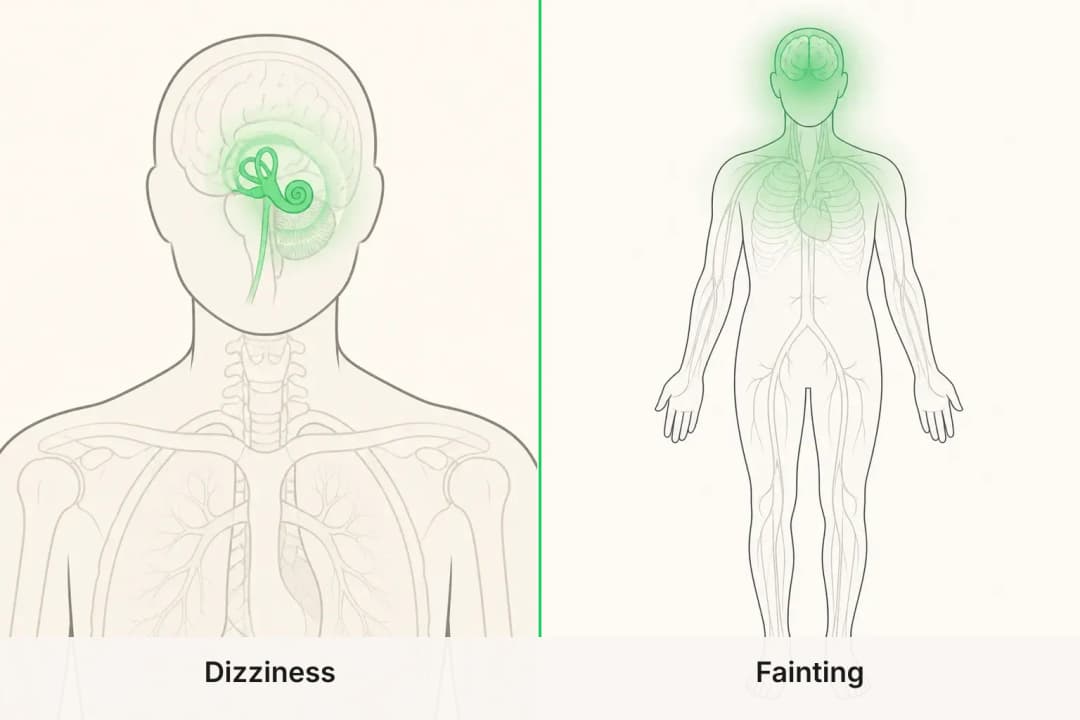
At a glance
- Dizziness
- An altered sensation while consciousness is retained.
- Fainting
- A temporary loss of consciousness with loss of postural control.
- Useful detail
- Triggers, warning signs, duration, and witness observations.
Find care
General Clinics & Polyclinics in Abu Dhabi
Licensed general clinics & polyclinics listed in Abu Dhabi. Appearing here means a provider holds a UAE licence in this category — not that it offers dizziness vs fainting: how they differ, which is worth confirming with the clinic before you book.
27 Ar Ruwwad St - Shakhbout City - MSH4 - Abu Dhabi - United Arab Emirates
Accepts: Daman, Thiqa, Cigna, MetLife +20 more
Al Ruwais, Al Dhafrah
Accepts: Daman, Thiqa, AXA, Cigna +16 more
Al Bahyah - Al Bahyah Old - Abu Dhabi - United Arab Emirates
Accepts: Daman, Thiqa, Cigna, Allianz Care +18 more
Abu Dhabi
Accepts: Daman, Thiqa, AXA, Cigna +27 more
The New EMI State Tower - 3rd Floor 303 Kan’ad Street - Hamdan Bin Mohammed St - Al Danah - Zone 1 - Abu Dhabi - United Arab Emirates
Accepts: Daman, Thiqa, Cigna, MetLife +22 more
Taj Resorts RV-1, Al Nasser Properties - Mafraq-2 - Mafraq Industrial Area - Abu Dhabi - United Arab Emirates
Accepts: Daman, Thiqa, AXA, Cigna +14 more
Ordered by verification status and how complete each clinic's public record is, then alphabetically. This is a directory listing, not a ranking — Zavis does not rate or recommend providers.
A factual listing drawn from the DHA, DOH and MOHAP licence registers. It is not a referral, an endorsement, or advice that any of these providers is right for you.
The practical difference
Dizziness changes how you feel while awake, whereas fainting involves a brief loss of consciousness and postural control.
Dizziness can feel like spinning, swaying, floating, light-headedness, or difficulty keeping your balance. You may need to sit down, but you remain aware of your surroundings. During a faint, the person becomes unresponsive and collapses or slumps, then wakes again. A witness can be especially helpful when sorting out a possible faint.
Use dizziness when this fits
Use the word dizziness if you stayed conscious but felt that you, the room, or the ground was moving, or if you felt unsteady or light-headed. Note whether it began when turning your head, standing after sitting, walking, or remaining still. Also record nausea, ringing in the ears, hearing change, blurred vision, palpitations, or headache.
Use fainting when this fits
Use fainting if there was a gap in awareness, even if it lasted only a short time. People may describe warning signs such as warmth, nausea, tunnel vision, sweating, or muffled hearing before they lose consciousness. Clarify whether you were standing, whether someone saw the event, how you landed, and how quickly you returned to your usual thinking.
Why the distinction matters
Both symptoms can lead to injuries, particularly around stairs, roads, water, hot surfaces, or when driving. A faint needs prompt medical assessment when it happens during exercise, while lying down, after a chest symptom, or alongside a racing or irregular heartbeat. Emergency help is appropriate for new facial drooping, speech difficulty, one-sided weakness, severe headache, ongoing confusion, a serious injury, or failure to wake normally.
When the words do not quite fit
Some experiences are better described as imbalance, sleepiness, a panic sensation, confusion, or a seizure-like event. General weakness can make walking difficult without creating a spinning or near-blackout feeling. If you cannot name the sensation, describe exactly what you were doing, what changed first, how long it lasted, and what another person observed instead of forcing a label.
How a clinician sorts it out
A clinician will usually begin with the timeline, triggers, medicines, fluid intake, recent illness, and previous episodes. They may check blood pressure and pulse in different positions, examine the heart and nervous system, and consider tests guided by the history. Bring a list of medicines and, if possible, an account from anyone who witnessed the episode. Until reviewed, avoid activities where a sudden spell could cause harm.
Questions people ask
Can dizziness happen before fainting?
Yes. Light-headedness, warmth, nausea, sweating, or visual dimming can occur before a faint, but dizziness can also occur without loss of consciousness.
Should I drive after a faint?
Do not drive until you have discussed the episode with a clinician, because another sudden loss of consciousness could put you and others at risk.
Related
Related reading
Medical disclaimer. This page is general health information, not medical advice, and it cannot diagnose you. Always consult a licensed healthcare provider about your own symptoms and treatment. In an emergency in the UAE, call 998 for an ambulance.