
Why does rheumatoid arthritis cause joint swelling?
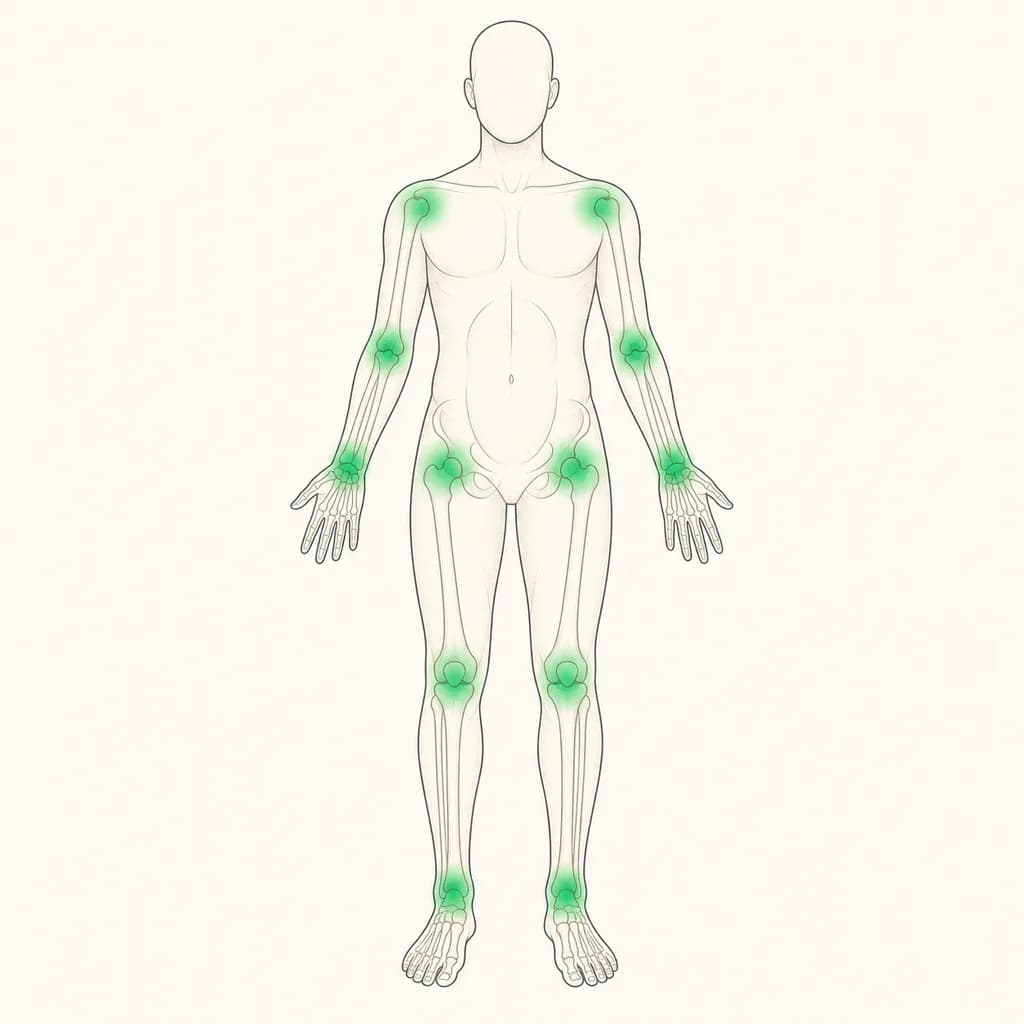
Short answer
Joint swelling is a very common presentation of Rheumatoid Arthritis because immune-driven inflammation thickens the joint lining and increases fluid within the joint.
This answers one question. It is not a diagnosis and does not replace an assessment by a licensed doctor.
At a glance
- Main mechanism
- Inflamed joint lining and extra fluid
- Common pattern
- Swelling, warmth and tenderness in one or more joints
What the swelling means
Rheumatoid arthritis is an inflammatory condition in which the immune system mistakenly targets tissue around joints. The lining, called the synovium, becomes irritated and produces extra fluid. The lining may also become thicker, making the joint look puffy and feel warm, tender or tight. Swelling can affect matching joints on both sides, such as the hands, wrists or feet, and may come and go during flares. Persistent inflammation can gradually limit movement and damage joint structures, so early assessment matters.
What you can do
Arrange a clinical assessment if swelling lasts, returns, or affects several joints. Treatment may include prescribed medicines that calm inflammation, alongside physiotherapy or occupational therapy to maintain movement and protect function. Gentle range-of-motion exercises can help prevent stiffness, but forcing a hot, very painful joint may aggravate symptoms. Rest during a flare while continuing comfortable movement, and record which joints swell, when symptoms are worst, and whether morning stiffness accompanies them.
When to seek care
Seek urgent medical advice for a suddenly swollen joint with marked redness, severe pain, fever, or feeling very unwell, because infection or another urgent problem needs prompt evaluation. Contact your clinician soon if swelling is new, steadily worsening, or making ordinary tasks difficult. A clinician may examine several joints and decide whether blood tests or imaging are appropriate.
Questions for your doctor
Ask which joints appear inflamed, how treatment will be monitored, and which movements are safe during a flare. You can also ask when to contact the clinic about side effects, whether a therapist can advise on hand or foot protection, and how to distinguish an inflammatory flare from an injury.
Find care
General Clinics & Polyclinics in Abu Dhabi
That answer is general. If you want it applied to your own case, these are licensed general clinics & polyclinics listed in Abu Dhabi.
27 Ar Ruwwad St - Shakhbout City - MSH4 - Abu Dhabi - United Arab Emirates
Accepts: Daman, Thiqa, Cigna, MetLife +20 more
Al Ruwais, Al Dhafrah
Accepts: Daman, Thiqa, AXA, Cigna +16 more
Al Bahyah - Al Bahyah Old - Abu Dhabi - United Arab Emirates
Accepts: Daman, Thiqa, Cigna, Allianz Care +18 more
Abu Dhabi
Accepts: Daman, Thiqa, AXA, Cigna +27 more
Ordered by verification status and how complete each clinic's public record is, then alphabetically. This is a directory listing, not a ranking — Zavis does not rate or recommend providers.
A factual listing drawn from the DHA, DOH and MOHAP licence registers. It is not a referral, an endorsement, or advice that any of these providers is right for you.
Questions people ask
Can rheumatoid arthritis swelling affect more than one joint?
Yes. Rheumatoid arthritis often involves several joints, commonly including the hands, wrists and feet.
Should a swollen joint be kept completely still?
Usually not. Comfortable, gentle movement can support function, while a severely painful or hot joint needs medical guidance.
Related
Related reading
Keep reading
Medical disclaimer. This page is general health information, not medical advice, and it cannot diagnose you. Always consult a licensed healthcare provider about your own symptoms and treatment. In an emergency in the UAE, call 998 for an ambulance.