
Joint Swelling: Causes, Diagnosis and Treatment
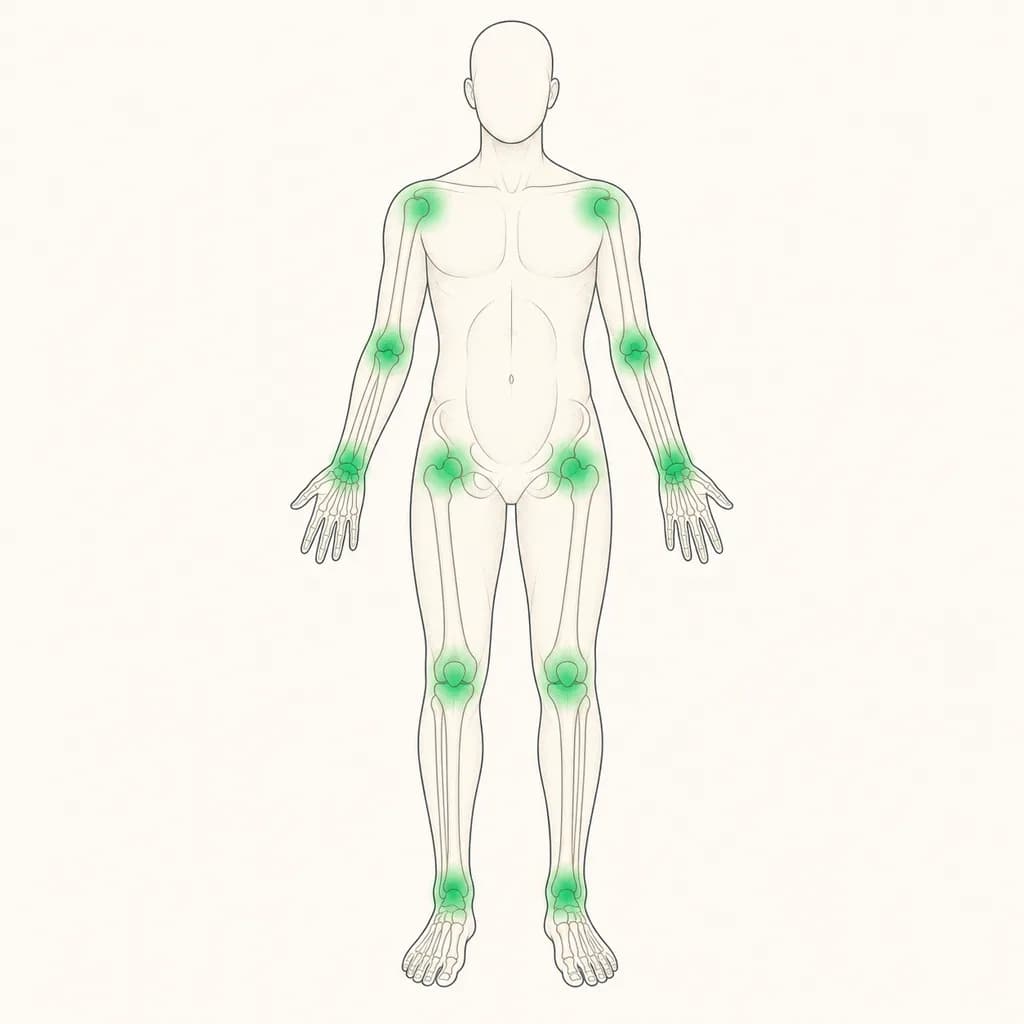
At a glance
- Can involve
- One joint or several joints
- Possible features
- Warmth, redness, tightness and reduced movement
- Urgent warning
- A hot, very painful swollen joint with fever
What joint swelling feels like
Joint swelling is enlargement around or within a joint caused by fluid, inflammation, bleeding, or nearby irritated tissues.
The area may look fuller, feel tight, or become harder to bend and straighten. It can be warm, tender, stiff, or painful, and the skin may appear red. Swelling may develop after an injury, build gradually, or come and go. Note whether one joint or several are involved and whether movement, fever, or a skin flare changes with it.
Is joint swelling urgent?
Seek urgent medical care for a rapidly swollen, hot, red, and very painful joint, particularly with fever, chills, feeling unwell, or inability to move or bear weight. Septic Arthritis is a serious cause that needs prompt assessment. Immediate evaluation is also appropriate after significant trauma, when the joint is deformed, or when numbness or colour change affects the limb.
Conditions that can present with joint swelling
The causes below are alphabetical, not a likelihood ranking. Bursitis presents with swelling over a small fluid-filled cushion near a joint. Gout and Pseudogout can present with sudden inflammatory swelling. Osteoarthritis can present with swelling linked to joint changes. Psoriatic Arthritis and Rheumatoid Arthritis can present with inflammatory swelling in one or several joints. Septic Arthritis can present with a hot, painful swollen joint and systemic illness.
How joint swelling is diagnosed
Assessment covers the onset, speed of swelling, injury, recent illness, skin or nail changes, other joints, medicines, and previous attacks. Examination checks warmth, redness, tenderness, fluid, range of movement, and general health. A clinician may use blood tests or imaging. If fluid is present, sampling it can help distinguish crystals, infection, blood, or other inflammatory causes. Do not squeeze or puncture a swollen joint yourself.
Treatment is chosen for the cause
Treatment varies according to whether swelling reflects injury, crystal inflammation, infection, or a longer-term joint condition. Anti-Inflammatory Medication may reduce inflammation when medically suitable, but it is not appropriate for everyone. A Cortisone Injection may be considered for selected non-infectious joint problems after assessment; it must not be used to mask a suspected infection. Hot and Cold Therapy can support comfort when used with guidance. Infection needs urgent medical treatment, while rehabilitation may restore movement after swelling settles.
Ways to reduce recurring swelling
Protect a recovering joint from sudden heavy loading, then return to activity gradually as movement improves. Use supportive footwear or equipment when recommended, take breaks from repeated pressure, and follow exercises that maintain strength and range. Keep a record of foods, activities, illness, skin changes, and timing around repeated attacks; this can help identify triggers without assuming a diagnosis. Manage any established inflammatory condition according to its care plan.
Symptoms to record alongside swelling
Record warmth, redness, pain, stiffness, reduced movement, fever, rash, nail changes, eye symptoms, or swelling in other joints. The speed of onset matters: sudden severe swelling is assessed differently from a gradual fullness that follows activity.
What persistent swelling can affect
Ongoing swelling can restrict movement and reduce muscle use around a joint. That may affect walking, gripping, stairs, sleep, or work tasks. Assessment helps identify the cause early and decide whether you need medication, a procedure, activity modification, or rehabilitation.
Find care
Physiotherapy & Rehabilitation in Dubai
Where joint swelling: causes, diagnosis and treatment is assessed depends on what is causing it. These are licensed physiotherapy & rehabilitation listed in Dubai.
Office 1510, SIT Tower, Dubai Silicon Oasis, Dubai, United Arab Emirates
Accepts: Daman, Thiqa, AXA, Cigna +23 more
- Physio Expert DubaiVerified
Renew and Revive Polyclinic, Al Wasl Rd, opposite J3 Mall, Umm Suqeim 2, Dubai, United Arab Emirates
Accepts: Insurance accepted
Kent Healthcare LLC, Nashwan Building - 208C Business Block, Al Mankhool Rd - above Emirates NBD Bank - Al Raffa - Dubai
Accepts: Thiqa, AXA, Cigna, MetLife +23 more
Index Building, Nad Al Hamar Road, Dubai Festival City, Dubai
Accepts: Thiqa, AXA, Cigna, MetLife +30 more
Ordered by verification status and how complete each clinic's public record is, then alphabetically. This is a directory listing, not a ranking — Zavis does not rate or recommend providers.
A factual listing drawn from the DHA, DOH and MOHAP licence registers. It is not a referral, an endorsement, or advice that any of these providers is right for you.
Questions people ask
Should I use heat or cold for a swollen joint?
Either may help comfort in selected situations, but use a protected pack for a short period and stop if symptoms worsen; urgent features need medical assessment.
Does every swollen joint need drainage?
No. Drainage is considered only when examination identifies a reason, such as testing fluid or relieving selected pressure, and it should be performed by a trained clinician.
Related
Related reading
Keep reading
Medical disclaimer. This page is general health information, not medical advice, and it cannot diagnose you. Always consult a licensed healthcare provider about your own symptoms and treatment. In an emergency in the UAE, call 998 for an ambulance.