
Why does perimenopause cause heavy periods?
Short answer
Perimenopause can cause heavy periods because changing hormone patterns may make ovulation irregular and allow the uterine lining to build up before it sheds.
This answers one question. It is not a diagnosis and does not replace an assessment by a licensed doctor.
At a glance
- Main mechanism
- Irregular ovulation can alter progesterone timing and allow the uterine lining to build up.
- Pattern
- Flow and cycle timing may vary from one period to the next.
- Get checked
- New, persistent, disruptive, or very heavy bleeding deserves medical review.
What the change means
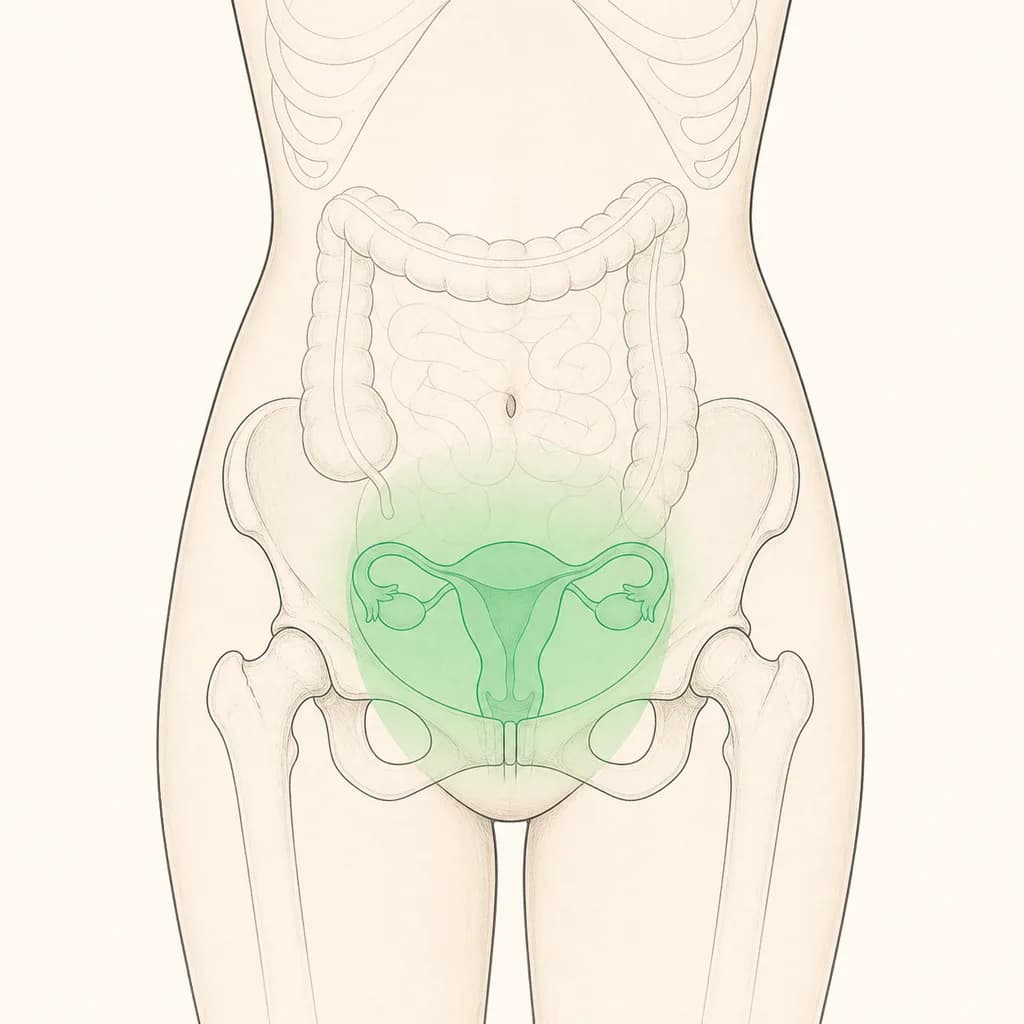
During perimenopause, the ovaries may not release an egg in every cycle. When ovulation is delayed or does not occur, progesterone may be lower or arrive later than usual. Oestrogen can continue stimulating the uterine lining, so the lining may become thicker and then shed with heavier or longer bleeding. The next period may also arrive earlier or later, and flow can vary from one cycle to another. Heavy Periods is a common presentation of Perimenopause.
Perimenopause is one possible explanation, not the only one. Fibroids, polyps, thyroid conditions, some medicines, pregnancy-related causes, and other conditions can also change bleeding. A clinician may ask about your cycle pattern, medicines, pregnancy possibility, pain, and symptoms such as tiredness or breathlessness.
What you can do now
Keep a simple record of when bleeding starts and stops, how often you need to change menstrual products, whether clots or pain are present, and whether bleeding happens between periods or after sex. Bring the record and a list of medicines or supplements to an appointment. Use the menstrual products that manage your flow comfortably, rest when needed, and seek advice before taking medicines intended to reduce bleeding or pain because some options are unsuitable for certain health conditions.
When to seek care
Arrange medical review if heavy bleeding is new, keeps returning, disrupts daily activities, occurs between periods or after sex, or comes with increasing pelvic pain. Ask about assessment if you feel unusually tired, weak, dizzy, or short of breath, since repeated heavy bleeding can contribute to anaemia. Seek urgent help if bleeding is so heavy that you cannot keep up with changing protection, or if you feel faint, confused, severely unwell, or have intense pain.
Questions for your doctor
You could ask: Could my bleeding pattern fit perimenopause, or should other causes be checked? What examinations or tests are appropriate for me? How can we check for anaemia? Which treatment options might reduce the bleeding, and what risks or interactions should I know about?
Find care
General Clinics & Polyclinics in Abu Dhabi
That answer is general. If you want it applied to your own case, these are licensed general clinics & polyclinics listed in Abu Dhabi.
27 Ar Ruwwad St - Shakhbout City - MSH4 - Abu Dhabi - United Arab Emirates
Accepts: Daman, Thiqa, Cigna, MetLife +20 more
Al Ruwais, Al Dhafrah
Accepts: Daman, Thiqa, AXA, Cigna +16 more
Al Bahyah - Al Bahyah Old - Abu Dhabi - United Arab Emirates
Accepts: Daman, Thiqa, Cigna, Allianz Care +18 more
Abu Dhabi
Accepts: Daman, Thiqa, AXA, Cigna +27 more
Ordered by verification status and how complete each clinic's public record is, then alphabetically. This is a directory listing, not a ranking — Zavis does not rate or recommend providers.
A factual listing drawn from the DHA, DOH and MOHAP licence registers. It is not a referral, an endorsement, or advice that any of these providers is right for you.
Questions people ask
Can perimenopause make periods both heavy and irregular?
Yes. Changing ovulation and hormone timing can make bleeding heavier in some cycles and change when the next period arrives.
Does heavy bleeding always mean perimenopause?
No. Perimenopause can cause heavy periods, but fibroids, polyps, thyroid conditions, medicines, pregnancy-related causes, and other conditions may also be involved.
Can heavy perimenopause bleeding cause anaemia?
Repeated heavy bleeding can contribute to anaemia, which may cause unusual tiredness, weakness, dizziness, or shortness of breath.
Related
Related reading
Keep reading
Medical disclaimer. This page is general health information, not medical advice, and it cannot diagnose you. Always consult a licensed healthcare provider about your own symptoms and treatment. In an emergency in the UAE, call 998 for an ambulance.