
What does colonoscopy treat?
Short answer
Colonoscopy mainly examines the bowel; it can remove some polyps and take biopsies, but it does not treat every bowel cancer.
This answers one question. It is not a diagnosis and does not replace an assessment by a licensed doctor.
At a glance
- Main role
- Examine the lining of the large bowel
- May happen during the test
- Biopsy, polyp removal, or local bleeding control
What happens during colonoscopy
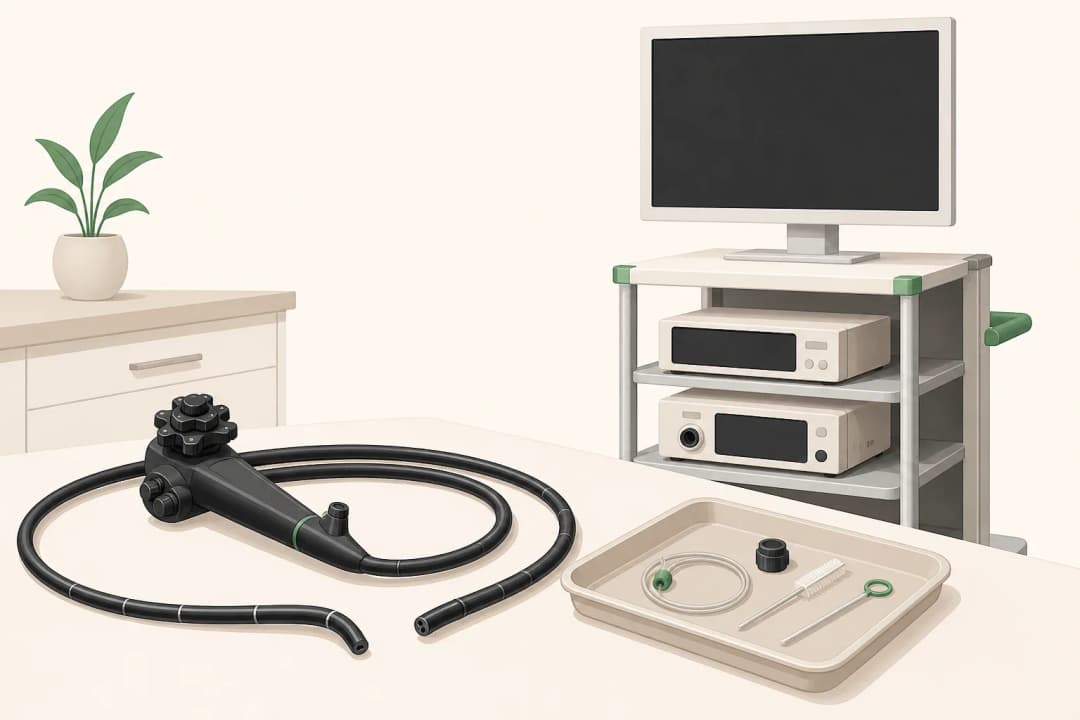
A flexible camera passes through the back passage to inspect the lining of the rectum and colon. The clinician may remove a small polyp, stop a local source of bleeding, or take a biopsy for laboratory examination. Colonoscopy can identify changes linked with Bowel Cancer, Bowel Polyps, Familial Adenomatous Polyposis, or Lynch Syndrome, but a finding may need other treatment or surgery.
Preparing for the test
Follow the bowel-preparation instructions so the lining can be seen clearly, including advice about food, fluids, and regular medicines. Arrange transport and support if sedation is planned. Tell the endoscopy team about blood-thinning medicines, allergies, pregnancy possibility, and previous reactions to sedation.
When to seek care
After colonoscopy, seek urgent advice for severe or worsening abdominal pain, persistent vomiting, fever, fainting, heavy rectal bleeding, or a swollen abdomen. Small amounts of bleeding can occur after a polyp is removed, but follow the specific instructions from your endoscopy team.
Questions for your doctor
Ask why colonoscopy is recommended, whether a biopsy or polyp removal may happen, how to manage medicines before the test, and when results will be discussed. Ask what other treatment would be considered if a suspicious area is found.
Questions people ask
Does colonoscopy remove bowel cancer?
It may sample a suspicious area, but many bowel cancers require treatment beyond the procedure, such as surgery or other oncology care.
Can polyps be removed during colonoscopy?
Often, suitable polyps can be removed during the procedure and sent for examination.
Related
Related reading
Keep reading
Cancer care in the UAE
Hospitals & Medical Centers in Abu Dhabi
Most UAE cancer care is delivered inside hospital services rather than by standalone oncology clinics, so these are licensed hospitals & medical centers listed in Abu Dhabi. Confirm the specific cancer service exists before you travel, and know that asking for a second opinion is routine.
Ahalia Hospital Musaffah Building - Musaffah - Musaffah Industrial - Abu Dhabi - United Arab Emirates
Accepts: Daman, Thiqa, AXA, Cigna +26 more
Al Ruwais Industrial City - Abu Dhabi - United Arab Emirates
Accepts: Daman, Thiqa, AXA, Cigna +30 more
Abu Dhabi, Abu Dhabi
Accepts: Daman, Thiqa, AXA, Cigna +30 more
Second opinions are routine in cancer care and asking for one does not affect your treatment. How to arrange a second opinion in the UAE.
Ordered by verification status and how complete each clinic's public record is, then alphabetically. This is a directory listing, not a ranking — Zavis does not rate or recommend providers.
A factual listing drawn from the DHA, DOH and MOHAP licence registers. It is not a referral, an endorsement, or advice that any of these providers is right for you.
Medical disclaimer. This page is general health information, not medical advice, and it cannot diagnose you. Always consult a licensed healthcare provider about your own symptoms and treatment. In an emergency in the UAE, call 998 for an ambulance.