
What causes prostatitis?
Short answer
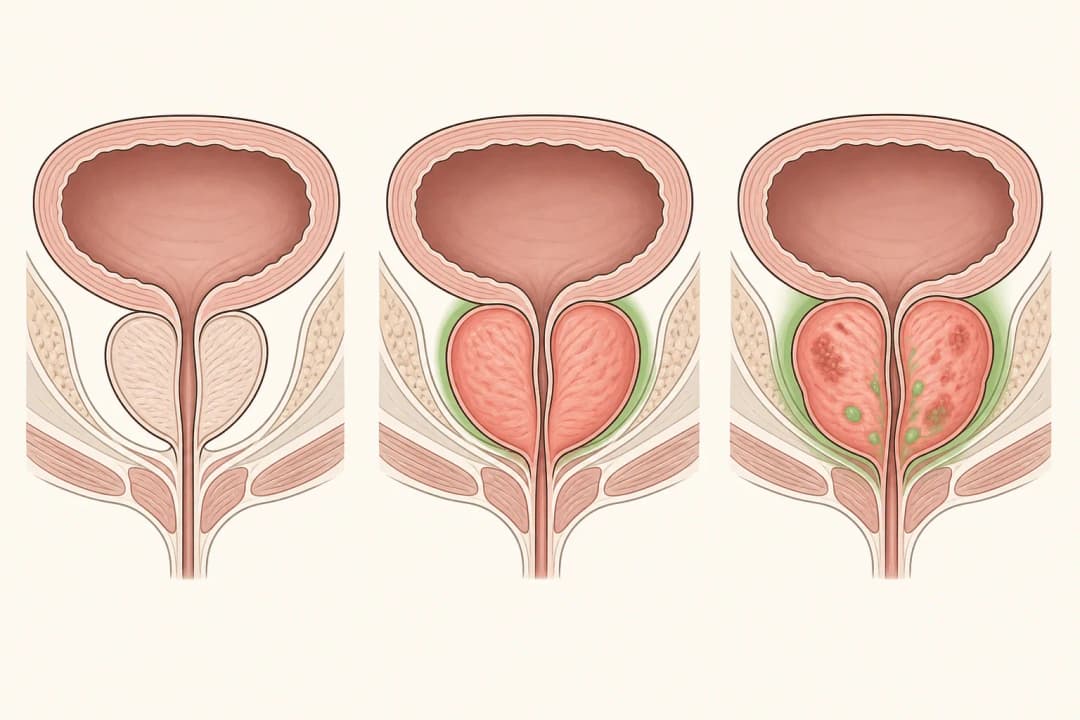
Prostatitis can be caused by bacteria entering the urinary tract or prostate, while some long-lasting cases involve inflammation, pelvic-floor tension or nerve irritation without a clear infection.
This answers one question. It is not a diagnosis and does not replace an assessment by a licensed doctor.
At a glance
- Main cause
- Bacteria can reach the prostate from the urinary tract.
- Not always infection
- Long-lasting pelvic pain may occur without detectable bacteria.
- Urgent warning
- Being unable to pass urine needs prompt medical care.
How prostatitis can start
Acute bacterial prostatitis may develop when bacteria from the urinary tract reach the prostate. A urinary tract infection, difficulty emptying the bladder, or a urinary catheter can make this more likely. Some sexually transmitted infections can also affect the urinary passage and prostate.
Chronic bacterial prostatitis can follow an infection that persists or returns. In chronic pelvic pain syndrome, the prostate area may hurt or feel pressured even when tests do not show bacteria. Pelvic-floor muscle spasm, irritation of nearby nerves, urinary chemicals flowing backward, or a previous infection may contribute. Sometimes no single cause is found. Prostatitis is not the same as prostate cancer, and symptoms alone cannot distinguish the conditions.
What to do next
Arrange a medical assessment if you have pelvic or lower-back pain, burning when urinating, a weak stream, urinary frequency, pain with ejaculation, or fever. A clinician may ask about recent infections, sexual health, procedures and medicines, then test urine and assess the prostate when appropriate. Treatment depends on whether infection is present; antibiotics do not treat every form of prostatitis.
Until you are assessed, drink normally, avoid activities that clearly worsen pressure or pain, and use only pain medicine that is safe for you. Do not use leftover antibiotics or stop a prescribed course without speaking with the prescriber.
When to seek urgent care
Seek urgent medical help if you cannot pass urine, or if urinary symptoms occur with fever, chills, marked weakness, confusion, vomiting, or severe pain in the pelvis, back or lower abdomen. These features can signal a significant infection or blocked urine flow and need prompt assessment.
Questions for your doctor
Ask whether your symptoms suggest bacterial prostatitis or chronic pelvic pain syndrome, which tests are appropriate, and whether a recent urinary procedure or sexually transmitted infection could be relevant. You can also ask which symptoms should prompt urgent review and how long improvement may take.
Find care
General Clinics & Polyclinics in Abu Dhabi
That answer is general. If you want it applied to your own case, these are licensed general clinics & polyclinics listed in Abu Dhabi.
27 Ar Ruwwad St - Shakhbout City - MSH4 - Abu Dhabi - United Arab Emirates
Accepts: Daman, Thiqa, Cigna, MetLife +20 more
Al Ruwais, Al Dhafrah
Accepts: Daman, Thiqa, AXA, Cigna +16 more
Al Bahyah - Al Bahyah Old - Abu Dhabi - United Arab Emirates
Accepts: Daman, Thiqa, Cigna, Allianz Care +18 more
Abu Dhabi
Accepts: Daman, Thiqa, AXA, Cigna +27 more
Ordered by verification status and how complete each clinic's public record is, then alphabetically. This is a directory listing, not a ranking — Zavis does not rate or recommend providers.
A factual listing drawn from the DHA, DOH and MOHAP licence registers. It is not a referral, an endorsement, or advice that any of these providers is right for you.
Questions people ask
Can a urinary tract infection cause prostatitis?
Yes. Bacteria from a urinary tract infection can spread to the prostate and cause bacterial prostatitis, particularly when urine flow is impaired.
Can prostatitis happen without an infection?
Yes. Chronic pelvic pain syndrome can involve inflammation, pelvic-floor muscle tension or nerve irritation even when urine tests do not find bacteria.
Is prostatitis caused by prostate cancer?
No. Prostatitis and prostate cancer are different conditions, although some symptoms can overlap and should be assessed rather than self-diagnosed.
Related
Related reading
Keep reading
Medical disclaimer. This page is general health information, not medical advice, and it cannot diagnose you. Always consult a licensed healthcare provider about your own symptoms and treatment. In an emergency in the UAE, call 998 for an ambulance.