
What should you know about a vertebroplasty procedure?
Short answer
A vertebroplasty procedure uses imaging guidance to place bone cement inside a selected painful vertebral compression fracture.
This answers one question. It is not a diagnosis and does not replace an assessment by a licensed doctor.
At a glance
- Guidance
- Imaging helps direct the needle and monitor cement placement.
- Preparation
- Medicine, allergy, fasting, and transport instructions matter.
- Alternatives
- Kyphoplasty and non-procedural care may be discussed.
The procedure explained
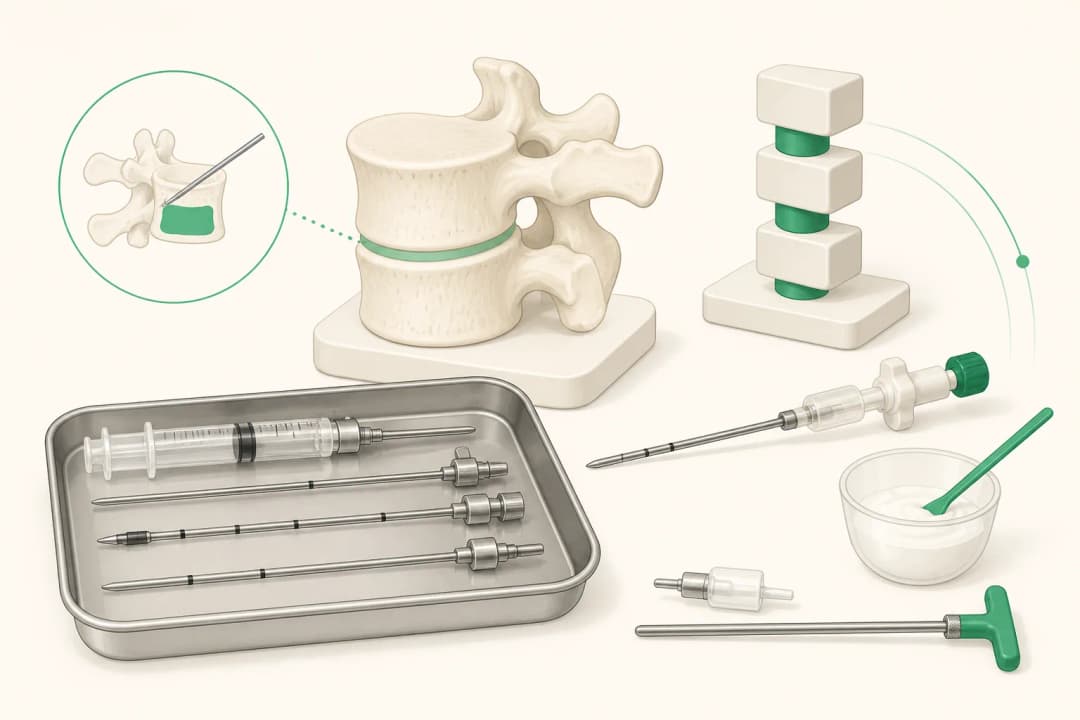
The clinician cleans and numbs the skin, then advances a needle toward the affected vertebra while watching live imaging. Cement is released carefully into the weakened bone. The team monitors its position and your vital signs throughout. Sedation or a different anaesthesia approach may be used depending on the procedure and your health.
Vertebroplasty is considered only after the diagnosis, pain pattern, imaging, and response to other care have been reviewed. It may help support a fractured vertebra, but it does not correct every cause of back pain. Cement can rarely travel outside the intended area, which is one reason imaging and patient selection matter.
Before and after the appointment
Give the team an accurate medicine and allergy list, including blood thinners and supplements. Report infection, pregnancy possibility, or major heart and breathing conditions. Follow fasting instructions and arrange a safe journey home when advised. After the procedure, keep the puncture site clean, follow movement guidance, and attend follow-up. Ask when walking, driving, lifting, and physiotherapy can resume. Kyphoplasty may be an alternative for some fractures.
Symptoms that need attention
Call the care team about fever, worsening redness or drainage, increasing pain, or a new rash. Emergency assessment is needed for new weakness or numbness, difficulty walking, loss of bladder or bowel control, chest pain, severe breathlessness, or fainting.
What to ask
Ask what the imaging shows, why vertebroplasty is being recommended, and which non-procedural options remain. Discuss the cement, anaesthesia, medicine changes, possible complications, discharge plan, follow-up imaging, and how the underlying bone strength will be assessed.
Find care
General Clinics & Polyclinics in Abu Dhabi
That answer is general. If you want it applied to your own case, these are licensed general clinics & polyclinics listed in Abu Dhabi.
27 Ar Ruwwad St - Shakhbout City - MSH4 - Abu Dhabi - United Arab Emirates
Accepts: Daman, Thiqa, Cigna, MetLife +20 more
Al Ruwais, Al Dhafrah
Accepts: Daman, Thiqa, AXA, Cigna +16 more
Al Bahyah - Al Bahyah Old - Abu Dhabi - United Arab Emirates
Accepts: Daman, Thiqa, Cigna, Allianz Care +18 more
Abu Dhabi
Accepts: Daman, Thiqa, AXA, Cigna +27 more
Ordered by verification status and how complete each clinic's public record is, then alphabetically. This is a directory listing, not a ranking — Zavis does not rate or recommend providers.
A factual listing drawn from the DHA, DOH and MOHAP licence registers. It is not a referral, an endorsement, or advice that any of these providers is right for you.
Questions people ask
Will I be awake during vertebroplasty?
Some people receive local anaesthesia with sedation, while others need a different plan; the anaesthesia team explains what applies to you.
Can pain after the procedure be ignored?
Mild soreness may occur, but worsening pain or new nerve symptoms should be reported promptly.
Related
Related reading
Keep reading
Medical disclaimer. This page is general health information, not medical advice, and it cannot diagnose you. Always consult a licensed healthcare provider about your own symptoms and treatment. In an emergency in the UAE, call 998 for an ambulance.