
Vertebroplasty: What to Expect
At a glance
- Target
- A painful vertebral compression fracture
- Material used
- Medical bone cement
- Aftercare
- Follow-up, safe movement, and bone-health assessment
Find care
General Clinics & Polyclinics in Abu Dhabi
Licensed general clinics & polyclinics listed in Abu Dhabi. Appearing here means a provider holds a UAE licence in this category — not that it offers vertebroplasty: what to expect, which is worth confirming with the clinic before you book.
27 Ar Ruwwad St - Shakhbout City - MSH4 - Abu Dhabi - United Arab Emirates
Accepts: Daman, Thiqa, Cigna, MetLife +20 more
Al Ruwais, Al Dhafrah
Accepts: Daman, Thiqa, AXA, Cigna +16 more
Al Bahyah - Al Bahyah Old - Abu Dhabi - United Arab Emirates
Accepts: Daman, Thiqa, Cigna, Allianz Care +18 more
Abu Dhabi
Accepts: Daman, Thiqa, AXA, Cigna +27 more
The New EMI State Tower - 3rd Floor 303 Kan’ad Street - Hamdan Bin Mohammed St - Al Danah - Zone 1 - Abu Dhabi - United Arab Emirates
Accepts: Daman, Thiqa, Cigna, MetLife +22 more
Taj Resorts RV-1, Al Nasser Properties - Mafraq-2 - Mafraq Industrial Area - Abu Dhabi - United Arab Emirates
Accepts: Daman, Thiqa, AXA, Cigna +14 more
Ordered by verification status and how complete each clinic's public record is, then alphabetically. This is a directory listing, not a ranking — Zavis does not rate or recommend providers.
A factual listing drawn from the DHA, DOH and MOHAP licence registers. It is not a referral, an endorsement, or advice that any of these providers is right for you.
What vertebroplasty is
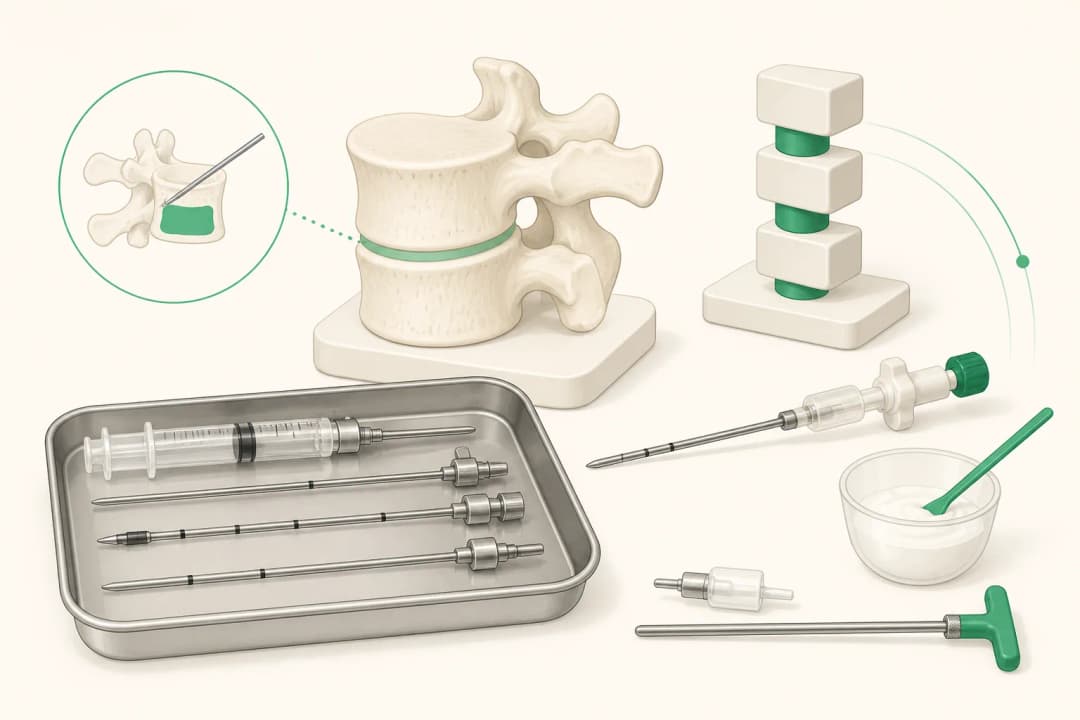
Vertebroplasty places medical bone cement into a painful fractured vertebra to support the weakened bone.
A spine specialist uses imaging to guide a narrow needle through the back into the collapsed vertebral body. Cement is then delivered into the fracture area. The goal is to stabilize the bone and reduce pain linked to movement. It does not rebuild every change caused by a fracture or treat all causes of back pain. Read about [Vertebral Compression Fracture](/conditions/vertebral-compression-fracture/) to understand the condition this procedure may address.
How fast will I feel a difference?
Pain may improve soon after the procedure, but the timing varies. Local soreness from the needle can briefly overlap with the original pain. Improvement is more meaningful when standing, turning, or walking becomes easier over the following days. If pain remains severe, spreads, or changes character, contact the treating team so they can assess the fracture and other possible causes.
What are the side effects?
Temporary soreness at the needle site, bruising, or fatigue can occur. Cement can occasionally move outside the intended bone, and the procedure can irritate nearby tissues or nerves. Tell the team about fever, infection, bleeding problems, allergies, medicines that affect clotting, or new numbness before treatment. Seek urgent care for new leg weakness, loss of bladder or bowel control, chest symptoms, or difficulty breathing.
How long will I be on it?
Vertebroplasty is a procedure rather than a medicine taken over time. The appointment itself is planned around your imaging, health, and sedation needs; follow-up focuses on healing, safe movement, and the reason the vertebra weakened. You may still need osteoporosis assessment, fall prevention, pain management, and rehabilitation after cement has been placed.
Key facts at a glance
The decision depends on the fracture pattern, symptom severity, imaging findings, general health, and response to initial care. Cement stabilizes a selected vertebra; it does not prevent new fractures elsewhere.
Who may be considered
A specialist may discuss vertebroplasty with a person who has a painful vertebral compression fracture that matches imaging and continues to limit function despite appropriate initial care. The team must also consider infection, bleeding risk, spinal canal involvement, nerve symptoms, fracture stability, and whether another diagnosis better explains the pain. Not every compression fracture needs cement augmentation.
What happens during the procedure
You change into procedure clothing and receive monitoring, skin cleansing, local anaesthetic, and sometimes sedation. With imaging guidance, the specialist advances a needle to the selected vertebra, checks its position, and injects a controlled amount of [Bone Cement](/materials/bone-cement/). The needle is removed and the puncture site is covered. Staff observe you afterward and explain activity and warning signs.
Recovery and follow-up
Follow the discharge instructions about driving, lifting, bathing, and medication. Gentle walking may be encouraged, while heavy lifting and forceful bending may be limited until the team reviews your progress. Arrange follow-up if requested. Rehabilitation can address posture, trunk strength, balance, and confidence with movement, while medical care evaluates bone fragility.
Risks and limits
Possible problems include infection, bleeding, allergic or sedation reactions, needle-site pain, nerve irritation, and leakage or migration of cement. The procedure may not relieve pain if the fracture is not the main pain source. New or worsening neurological symptoms require urgent assessment rather than routine follow-up.
Other options
Care may include pain relief, short-term activity changes, a brace in selected cases, physiotherapy, and treatment of low bone density. [Kyphoplasty](/treatments/spine-care/kyphoplasty/) is another cement-augmentation procedure that uses a balloon step before cement placement; suitability depends on the fracture and specialist assessment.
Finding suitable care
Choose a spine or interventional radiology team that reviews your scans and explains why cement augmentation is being considered. Bring a list of medicines, previous fractures, allergies, and changes in walking or sensation. Ask what recovery restrictions apply, how pain will be monitored, and which plan will protect your bone health afterward.
Questions people ask
Does vertebroplasty treat osteoporosis?
No. It may stabilize a selected painful fracture, but osteoporosis still needs separate assessment and management.
Will I need physiotherapy afterward?
Some people benefit from rehabilitation for posture, strength, balance, and safe return to activity.
How is kyphoplasty different?
Kyphoplasty creates a space with a balloon before cement placement, while vertebroplasty delivers cement directly into the vertebra.
Related
Related reading
Keep reading
Medical disclaimer. This page is general health information, not medical advice, and it cannot diagnose you. Always consult a licensed healthcare provider about your own symptoms and treatment. In an emergency in the UAE, call 998 for an ambulance.