
What should you know about a urine sediment test?
Short answer
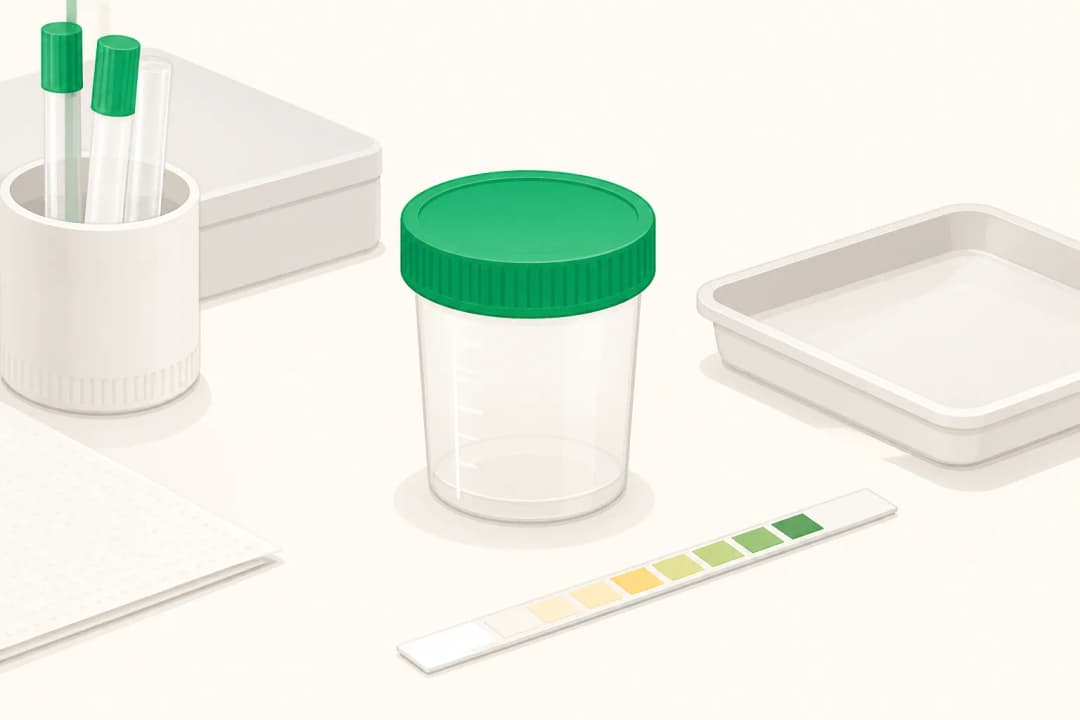
A urine sediment test examines particles in urine to help identify infection, bleeding, inflammation, crystals, or kidney-related changes.
This answers one question. It is not a diagnosis and does not replace an assessment by a licensed doctor.
At a glance
- Sample
- Fresh urine collected in a clean container
- Examines
- Cells, bacteria, crystals, casts and other particles
- Interpretation
- Combined with symptoms and other urine findings
What the result can mean
A laboratory first concentrates a urine sample and examines the sediment, often with a microscope. Red blood cells can point to bleeding somewhere in the urinary tract, while white blood cells may fit with inflammation or infection. Bacteria, crystals, casts, and epithelial cells can add context, but a finding does not establish one diagnosis by itself. A contaminated sample can include cells or bacteria from skin or genital areas, so collection technique matters.
The result is interpreted alongside symptoms, the rest of the urine test, and sometimes a urine culture. A urinary tract infection or kidney infection may produce white cells and bacteria, while crystals can appear for several reasons. Benign prostatic hyperplasia can affect urine flow and the bladder, which may influence the wider assessment.
What to do before and after the test
Follow the laboratory instructions. Usually, you clean the area, begin urinating into the toilet, then collect a midstream sample in the supplied container without touching its inside. Tell the clinician about medicines, supplements, menstrual bleeding, recent strenuous activity, and urinary symptoms. These details can help explain an unexpected result.
Do not start or save antibiotics based only on sediment findings. If infection is suspected, a clinician may request a culture and choose treatment after considering the whole picture. Read more about a [Urine Test](/treatments/diagnostics-and-screening/urine-test/) and [Antibiotic Treatment](/treatments/medical-management/antibiotic-treatment/).
When to seek care
Arrange medical review for visible blood in urine, repeated abnormal results, burning with urination, new frequency, or persistent lower abdominal discomfort. Seek urgent care for fever with flank or back pain, vomiting, confusion, or feeling severely unwell, because these symptoms can occur with a more serious urinary infection. A test result should not delay assessment when symptoms are intense or worsening.
Questions for your doctor
Ask which sediment findings were present, whether the sample may have been contaminated, whether a culture or repeat sample is needed, and what follow-up fits your symptoms. You can also ask whether [Kidney Infection](/conditions/kidney-infection/) or [Urinary Tract Infection](/conditions/urinary-tract-infection/) is being considered, and whether urinary flow needs assessment for [Benign Prostatic Hyperplasia](/conditions/benign-prostatic-hyperplasia/).
Find care
General Clinics & Polyclinics in Abu Dhabi
That answer is general. If you want it applied to your own case, these are licensed general clinics & polyclinics listed in Abu Dhabi.
27 Ar Ruwwad St - Shakhbout City - MSH4 - Abu Dhabi - United Arab Emirates
Accepts: Daman, Thiqa, Cigna, MetLife +20 more
Al Ruwais, Al Dhafrah
Accepts: Daman, Thiqa, AXA, Cigna +16 more
Al Bahyah - Al Bahyah Old - Abu Dhabi - United Arab Emirates
Accepts: Daman, Thiqa, Cigna, Allianz Care +18 more
Abu Dhabi
Accepts: Daman, Thiqa, AXA, Cigna +27 more
Ordered by verification status and how complete each clinic's public record is, then alphabetically. This is a directory listing, not a ranking — Zavis does not rate or recommend providers.
A factual listing drawn from the DHA, DOH and MOHAP licence registers. It is not a referral, an endorsement, or advice that any of these providers is right for you.
Questions people ask
Is a urine sediment test the same as a urine culture?
No. Sediment examination looks at material in the sample, while culture attempts to grow and identify bacteria and helps guide antibiotic choices.
Can an abnormal sediment result confirm a disease?
No. The result provides clues. A clinician compares it with symptoms, collection details, other tests, and sometimes imaging or culture.
Related
Related reading
Keep reading
Medical disclaimer. This page is general health information, not medical advice, and it cannot diagnose you. Always consult a licensed healthcare provider about your own symptoms and treatment. In an emergency in the UAE, call 998 for an ambulance.