
Kidney Infection: Symptoms, Causes and Treatment
Updated
At a glance
- Also called
- Pyelonephritis
- Usually begins in
- The lower urinary tract
- Care priority
- Prompt assessment, especially with fever or flank pain
Understanding kidney infection
A kidney infection is a urinary infection that reaches the kidney and usually needs prompt medical assessment and treatment.
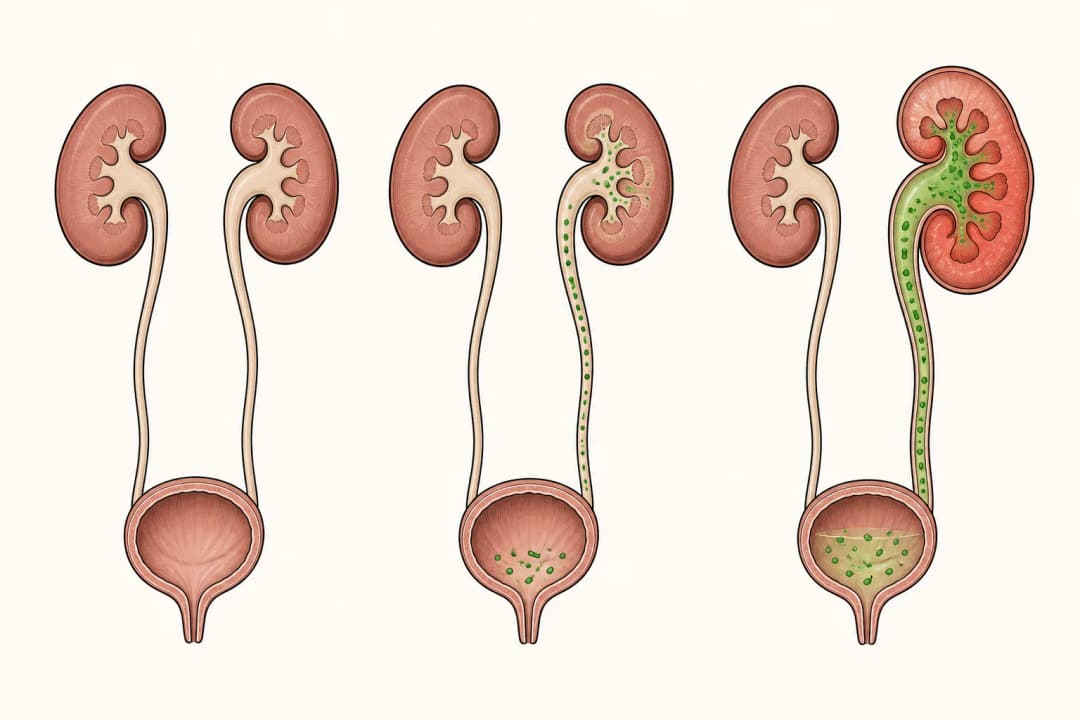
It is also called pyelonephritis. Bacteria can travel upward through the urinary tract and inflame kidney tissue. Early assessment matters because an untreated infection can make a person significantly unwell and may spread beyond the urinary system.
Symptoms to recognise
People with a kidney infection often have fever, chills and pain in the flank or back, below the ribs. Painful urination, needing to pass urine more often, cloudy urine or blood in urine may occur as well.
Nausea, vomiting, tiredness and feeling generally unwell can accompany the urinary symptoms. Fever with flank pain, shaking chills, vomiting, confusion, pregnancy, or an inability to keep fluids down needs urgent medical assessment.
How it develops
Most kidney infections begin as an infection in the bladder or lower urinary tract. Germs enter the urinary system and move upward toward a kidney. A urinary tract infection can be an earlier stage in this pathway, but not every urinary infection reaches the kidneys.
A blockage that slows urine flow, such as a stone, can make it easier for infection to persist. Urinary catheters and procedures involving the urinary tract can also provide a route for bacteria.
What may happen over time
Symptoms can develop quickly and may worsen as inflammation and infection build. With an appropriate treatment plan, clinicians expect the infection and symptoms to begin settling, while they also check for factors such as obstruction or a recurrent infection that may need additional care.
Factors that can increase risk
Risk can be higher when urine cannot drain freely, when there is a structural change in the urinary tract, or when a bladder infection has not cleared. Pregnancy, diabetes, reduced immune defences and regular catheter use are other reasons a clinician may take urinary symptoms particularly seriously.
Tests and assessment
A clinician will ask about urinary symptoms, fever, flank pain, past infections, medicines and pregnancy. They may examine the abdomen and back, check temperature and look for signs of dehydration or more widespread illness.
A urine test can look for signs of infection and may be sent for culture to identify the germ and guide antibiotic choice. Blood tests or imaging may be considered when symptoms are severe, recovery is not as expected, or a blockage is suspected.
Treatment and supportive care
Antibiotic treatment is commonly used for a confirmed or strongly suspected kidney infection. The medicine and route depend on your symptoms, medical history, pregnancy status, allergies and urine-test findings. Take it exactly as prescribed and contact the treating clinician if you are unable to take it or develop a concerning reaction.
Rest, fluids when you can safely drink, and treatment for pain or fever may support recovery. Some people need treatment in hospital, particularly when they are very unwell, vomiting, dehydrated, pregnant, or have a concern for blockage or infection spreading.
During recovery
Follow the treatment plan and monitor how you feel rather than relying on urine appearance alone. Seek prompt reassessment for worsening fever, increasing flank pain, repeated vomiting, confusion, or no improvement after starting the prescribed plan. Keep follow-up appointments if your clinician requests them.
Why prompt care matters
A kidney infection can lead to dehydration, a collection of infection around the kidney, or infection entering the bloodstream. These problems need urgent treatment. A blocked infected urinary tract is also an urgent situation because infection and pressure can build up behind the blockage.
Lowering the chance of another infection
Drink regularly unless you have been given a fluid restriction, do not delay passing urine, and seek care for possible urinary infection symptoms before you become systemically unwell. Recurrent infections, stones, catheter problems or difficulty emptying the bladder deserve a clinician-led prevention plan.
Questions people ask
Can a kidney infection cause blood in the urine?
It can. Blood, cloudiness, burning and changes in urine frequency may occur alongside fever or flank pain in a kidney infection.
Should I wait for symptoms to pass?
No. Fever with flank pain or urinary symptoms needs prompt clinical assessment; seek urgent care sooner if there is vomiting, confusion, pregnancy or you cannot keep fluids down.
Related
Related reading
Keep reading
Find care
General Clinics & Polyclinics in Dubai
Where kidney infection: symptoms, causes and treatment is assessed depends on what is causing it. These are licensed general clinics & polyclinics listed in Dubai.
Elite Business Bay Residence - Shop 03 & 04, 34 Marasi Dr - Business Bay - Dubai - United Arab Emirates
Accepts: Tabby
Airport View Building, Al Garhoud, Dubai
Accepts: Daman, Thiqa, AXA, Cigna +25 more
IBIS Building, 5th Floor, Unit 5003, Deira, Dubai
Accepts: AXA, Cigna, MetLife, Allianz Care +18 more
- Aarna Elite Medical CenterVerified
Madeira Building, Shop 1 & 2, Al Jadaf, Dubai, UAE
Ordered by verification status and how complete each clinic's public record is, then alphabetically. This is a directory listing, not a ranking — Zavis does not rate or recommend providers.
A factual listing drawn from the UAE health regulators' public licence registers. It is not a referral, an endorsement, or advice that any of these providers is right for you.
Medical disclaimer. This page is general health information, not medical advice, and it cannot diagnose you. Always consult a licensed healthcare provider about your own symptoms and treatment. In an emergency in the UAE, call 998 for an ambulance.