
What should you know about a urine routine examination test?
Short answer
A urine routine examination test provides a broad check of urine appearance, chemistry and cellular clues linked to urinary health.
This answers one question. It is not a diagnosis and does not replace an assessment by a licensed doctor.
At a glance
- Purpose
- Broad screening of urine features
- Sample
- Use the supplied clean container
- Meaning
- A clue interpreted with symptoms
What the report may include
The examination can describe colour and clarity and test for acidity, concentration, protein, glucose, ketones, blood, white cells and nitrite. Some laboratories also review the sample under a microscope. An unusual result is a clue, not a diagnosis. Concentrated urine can change its appearance, and blood may come from the urinary tract or from contamination during collection. A result should be read alongside symptoms such as burning, urgency, frequency or pain.
Practical collection advice
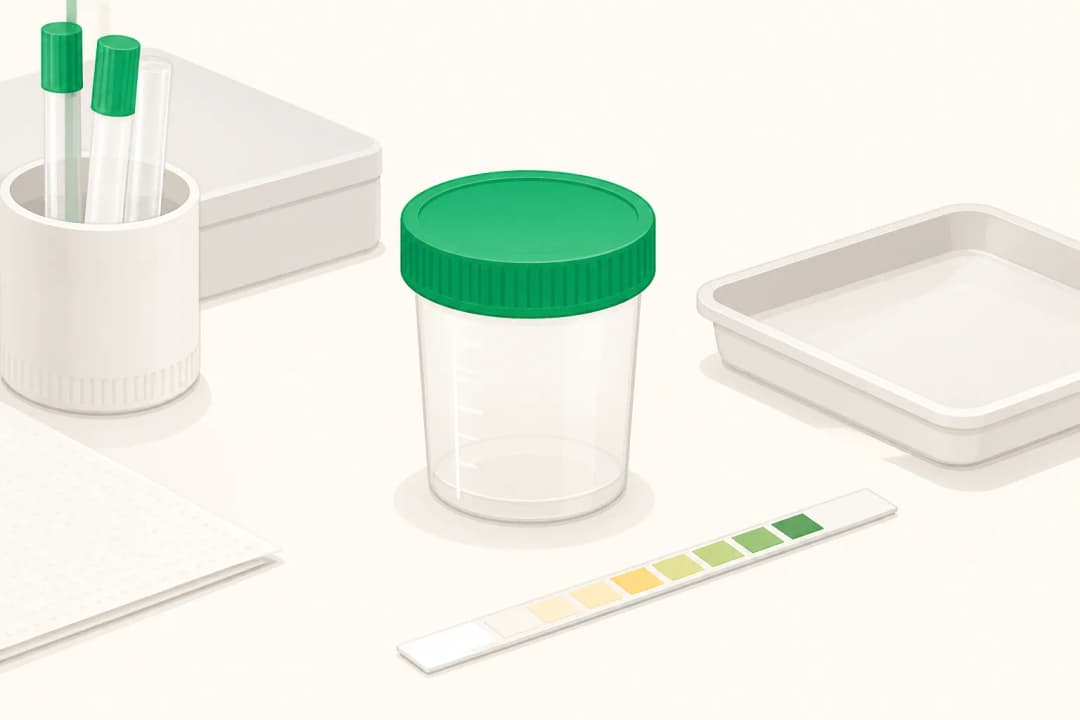
Use the container supplied by the laboratory. Wash your hands, follow any cleaning instructions, collect the requested portion without touching the inside, and close the lid firmly. Return the sample as directed. Mention pregnancy, menstruation, recent strenuous activity, urinary devices and medicines. If the result suggests infection, the clinician may request culture before choosing [Antibiotic Treatment](/treatments/medical-management/antibiotic-treatment/). More detail is available in [Urine Test](/treatments/diagnostics-and-screening/urine-test/).
Symptoms needing prompt review
Contact a healthcare professional promptly for fever with urinary symptoms, new flank pain, visible blood, vomiting, confusion or inability to urinate. Men with troublesome weak flow or retention may also need assessment for causes such as [Benign Prostatic Hyperplasia](/conditions/benign-prostatic-hyperplasia/).
Questions for your appointment
Ask which finding needs follow-up, whether the sample quality was adequate, and whether you need culture, blood testing or imaging. Ask when to repeat the examination if symptoms or an abnormal result persist.
Find care
General Clinics & Polyclinics in Abu Dhabi
That answer is general. If you want it applied to your own case, these are licensed general clinics & polyclinics listed in Abu Dhabi.
27 Ar Ruwwad St - Shakhbout City - MSH4 - Abu Dhabi - United Arab Emirates
Accepts: Daman, Thiqa, Cigna, MetLife +20 more
Al Ruwais, Al Dhafrah
Accepts: Daman, Thiqa, AXA, Cigna +16 more
Al Bahyah - Al Bahyah Old - Abu Dhabi - United Arab Emirates
Accepts: Daman, Thiqa, Cigna, Allianz Care +18 more
Abu Dhabi
Accepts: Daman, Thiqa, AXA, Cigna +27 more
Ordered by verification status and how complete each clinic's public record is, then alphabetically. This is a directory listing, not a ranking — Zavis does not rate or recommend providers.
A factual listing drawn from the DHA, DOH and MOHAP licence registers. It is not a referral, an endorsement, or advice that any of these providers is right for you.
Questions people ask
Is a routine urine examination the same as a culture?
No. Routine examination checks urine features; culture tests whether organisms grow and may guide medicine selection.
What if the report is abnormal but I feel well?
Arrange follow-up rather than self-treating. The clinician may review collection quality or repeat the test.
Related
Related reading
Keep reading
Medical disclaimer. This page is general health information, not medical advice, and it cannot diagnose you. Always consult a licensed healthcare provider about your own symptoms and treatment. In an emergency in the UAE, call 998 for an ambulance.