
What should you know about a urine copper test?
Short answer
A urine copper test measures copper excreted in urine and is interpreted with symptoms, blood tests, liver assessment, and the collection method.
This answers one question. It is not a diagnosis and does not replace an assessment by a licensed doctor.
At a glance
- Measures
- Copper passed into urine
- Collection
- Often a timed collection using a supplied container
- Interpretation
- Compared with symptoms and other tests
Why copper may be checked
Copper is a mineral used by the body, but abnormal handling can affect the liver, brain, eyes, and other tissues. The test is often requested when a clinician is considering a copper-handling disorder or is monitoring an established diagnosis. A high or low result does not confirm a diagnosis on its own. Contamination, incomplete collection, kidney function, diet, supplements, and medicines can affect interpretation, so the laboratory range and clinical context matter.
How collection works
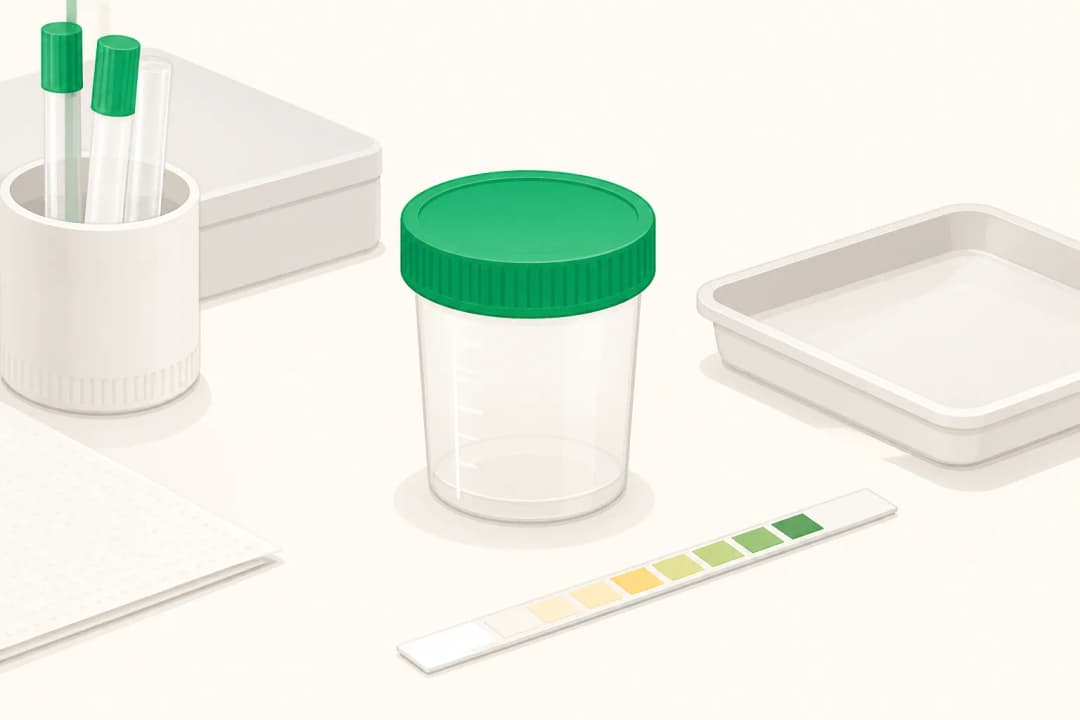
Many urine copper tests use a timed collection. You may be asked to discard the first urine at the start time, save every later sample, and include the final sample at the end time. Use the supplied container, keep it as instructed, and report spills or missed samples rather than guessing. Give the team a complete list of supplements and medicines, and do not stop treatment unless instructed. A general Urine Test may be ordered alongside blood or liver tests.
When to seek care
Contact your clinician promptly for yellowing of the skin or eyes, very dark urine, pale stools, worsening abdominal swelling, repeated vomiting, marked sleepiness, or new confusion. Severe abdominal pain, collapse, or rapidly worsening confusion needs urgent help. These symptoms require assessment regardless of the urine copper result.
Questions for your doctor
Ask why copper is being measured, whether the collection was complete, which other tests will be compared with it, and when results should be reviewed. Ask whether any supplement or medicine needs special handling before a repeat test.
Find care
General Clinics & Polyclinics in Abu Dhabi
That answer is general. If you want it applied to your own case, these are licensed general clinics & polyclinics listed in Abu Dhabi.
27 Ar Ruwwad St - Shakhbout City - MSH4 - Abu Dhabi - United Arab Emirates
Accepts: Daman, Thiqa, Cigna, MetLife +20 more
Al Ruwais, Al Dhafrah
Accepts: Daman, Thiqa, AXA, Cigna +16 more
Al Bahyah - Al Bahyah Old - Abu Dhabi - United Arab Emirates
Accepts: Daman, Thiqa, Cigna, Allianz Care +18 more
Abu Dhabi
Accepts: Daman, Thiqa, AXA, Cigna +27 more
Ordered by verification status and how complete each clinic's public record is, then alphabetically. This is a directory listing, not a ranking — Zavis does not rate or recommend providers.
A factual listing drawn from the DHA, DOH and MOHAP licence registers. It is not a referral, an endorsement, or advice that any of these providers is right for you.
Questions people ask
Does an abnormal urine copper result diagnose a condition?
No. The result is one part of an assessment and may need comparison with blood tests, liver findings, symptoms, and collection details.
What if I miss part of the collection?
Tell the laboratory or clinician. A missed sample can make the total inaccurate, and they may advise repeating the collection.
Related
Related reading
Keep reading
Medical disclaimer. This page is general health information, not medical advice, and it cannot diagnose you. Always consult a licensed healthcare provider about your own symptoms and treatment. In an emergency in the UAE, call 998 for an ambulance.