
Upper Groin Strain: What to Know
Short answer
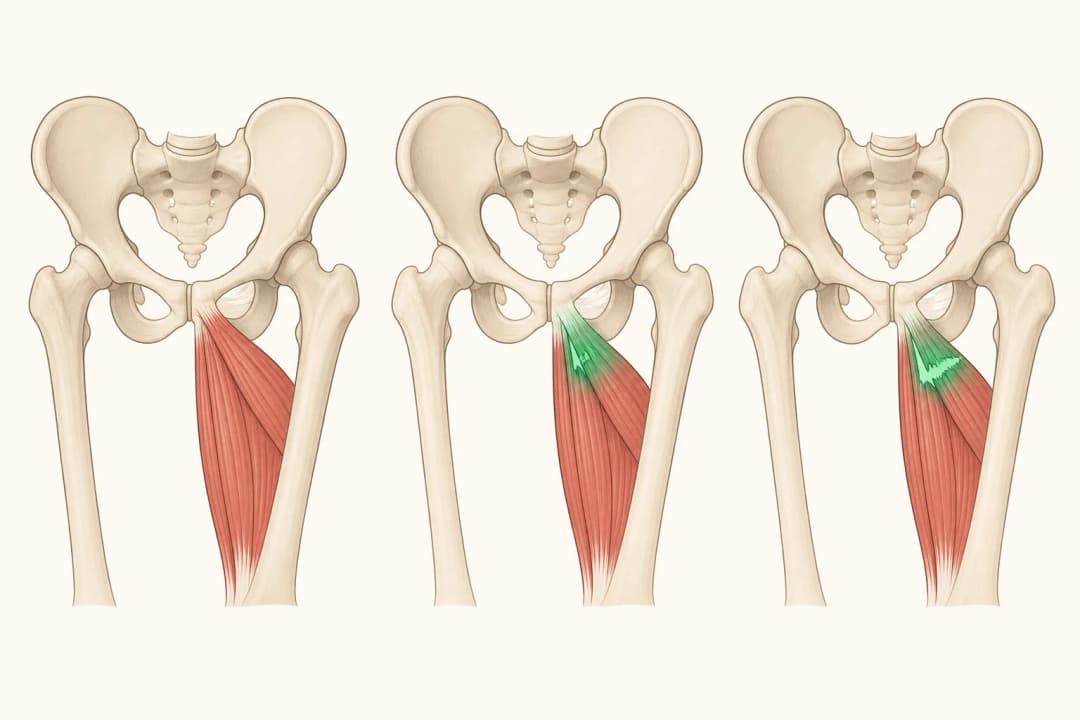
An upper groin strain is an overstretch or tear of inner-thigh muscle fibres that can make walking, running, or leg squeezing painful.
This answers one question. It is not a diagnosis and does not replace an assessment by a licensed doctor.
At a glance
- Area affected
- Inner-thigh muscles near the upper groin
- Pain-provoking tasks
- Running, turning, kicking, or squeezing the legs
- Rehabilitation aim
- Restore strength before speed and cutting
What it means
The adductor muscles draw the leg inward and help steady the pelvis. A strain may follow a sudden force, repeated high-speed activity, poor recovery, or a load that exceeds current conditioning. Pain is often high in the inner thigh and may appear during acceleration, turning, kicking, climbing stairs, or getting out of a car. Groin Pain can arise from several structures, so persistent symptoms should not be labelled a muscle strain without an examination.
Tenderness and reduced force are useful clues. A pop, bruising, a gap in the muscle, or substantial weakness may indicate a more serious injury requiring prompt review.
What to do now
Pause painful sport and avoid repeated testing. Keep comfortable daily movement, use a cold pack if soothing, and do not force the leg into a wide stretch. Once pain and walking improve, Exercise Therapy can build adductor capacity through controlled, progressive loading. Sports Physiotherapy may also review warm-up, running mechanics, hip mobility, and training changes.
A Return-to-Sport Programme should move from basic strength to jogging, acceleration, direction changes, and full practice. Each stage should be tolerated during activity and afterward before advancing.
When to seek care
Book an assessment when pain limits walking, causes a limp, keeps returning, or does not steadily improve. Get urgent help after significant trauma or when there is inability to bear weight, major swelling, extensive bruising, deformity, or new leg numbness or weakness.
Questions for your doctor
Ask whether this is a muscle strain or another source of groin pain, whether imaging is indicated, which exercises are safe, and what objective strength and movement checks should precede sport.
Find care
General Clinics & Polyclinics in Abu Dhabi
That answer is general. If you want it applied to your own case, these are licensed general clinics & polyclinics listed in Abu Dhabi.
27 Ar Ruwwad St - Shakhbout City - MSH4 - Abu Dhabi - United Arab Emirates
Accepts: Daman, Thiqa, Cigna, MetLife +20 more
Al Ruwais, Al Dhafrah
Accepts: Daman, Thiqa, AXA, Cigna +16 more
Al Bahyah - Al Bahyah Old - Abu Dhabi - United Arab Emirates
Accepts: Daman, Thiqa, Cigna, Allianz Care +18 more
Abu Dhabi
Accepts: Daman, Thiqa, AXA, Cigna +27 more
Ordered by verification status and how complete each clinic's public record is, then alphabetically. This is a directory listing, not a ranking — Zavis does not rate or recommend providers.
A factual listing drawn from the DHA, DOH and MOHAP licence registers. It is not a referral, an endorsement, or advice that any of these providers is right for you.
Questions people ask
Are a groin strain and groin pull different?
They are commonly used for the same type of inner-thigh muscle injury, although the actual severity can vary.
Can I exercise another body part?
Possibly, if it does not increase groin pain or require painful bracing; a clinician can help select safe alternatives.
Related
Related reading
Keep reading
Medical disclaimer. This page is general health information, not medical advice, and it cannot diagnose you. Always consult a licensed healthcare provider about your own symptoms and treatment. In an emergency in the UAE, call 998 for an ambulance.