
Exercise Therapy: How It Works and What to Expect
Updated
At a glance
- Format
- Guided sessions plus a tailored home programme
- Main aims
- Movement, strength, control, balance, and function
- Adjustment
- Challenge changes as symptoms and ability change
Find care
Physiotherapy & Rehabilitation in Dubai
Licensed physiotherapy & rehabilitation listed in Dubai. Appearing here means a provider holds a UAE licence in this category — not that it offers exercise therapy: how it works and what to expect, which is worth confirming with the clinic before you book.
Office 1510, SIT Tower, Dubai Silicon Oasis, Dubai, United Arab Emirates
Accepts: Daman, Thiqa, AXA, Cigna +14 more
- Physio Expert DubaiVerified
Renew and Revive Polyclinic, Al Wasl Rd, opposite J3 Mall, Umm Suqeim 2, Dubai, United Arab Emirates
Accepts: Insurance accepted
Kent Healthcare LLC, Nashwan Building - 208C Business Block, Al Mankhool Rd - above Emirates NBD Bank - Al Raffa - Dubai
Accepts: Thiqa, AXA, Cigna, MetLife +14 more
Index Building, Nad Al Hamar Road, Dubai Festival City, Dubai
Accepts: Thiqa, AXA, Cigna, MetLife +23 more
x24-1, England Z St 41/a, WARSAN FIRST, Dubai
Accepts: Daman, Thiqa, AXA, Cigna +18 more
Hilal Bin Sultan, 19a Street 19, AL RIGGA, Dubai
Accepts: Daman, AXA, Cigna, MetLife +11 more
Ordered by verification status and how complete each clinic's public record is, then alphabetically. This is a directory listing, not a ranking — Zavis does not rate or recommend providers.
A factual listing drawn from the UAE health regulators' public licence registers. It is not a referral, an endorsement, or advice that any of these providers is right for you.
What is exercise therapy?
Exercise therapy is a personalised programme of guided and home exercises that improves movement, strength, control, and everyday function.
A physiotherapist chooses movements after considering your symptoms, movement pattern, strength, balance, work, sport, and daily goals. The programme may include mobility drills, strengthening, balance practice, coordination work, aerobic activity, or graded return to a demanding task. The load is adjusted as your body responds rather than copied from a standard routine.
How fast will I feel a difference?
Some people notice an easier movement or better confidence early in a programme, while meaningful strength and activity changes usually need repeated practice. Soreness after a new exercise can occur, but it should settle rather than steadily build. Your therapist can change the range, resistance, repetitions, or rest when a response is not settling.
What are the side effects?
Temporary muscle fatigue, stiffness, or mild soreness can follow unfamiliar activity. Exercise should not create worsening pain, new weakness, marked swelling, or symptoms that continue to escalate. Stop the provoking movement and contact your clinician if those changes occur, especially after an injury or when numbness and loss of control appear.
How long will I be on it?
The programme length depends on the problem, your starting ability, and the goal you are working towards. Visits may become less frequent as you learn the exercises, while a home routine can continue as part of long-term joint, spine, or muscle care. Progress is reviewed through function, movement quality, tolerance, and your own goals.
Key facts about exercise therapy
The useful dose is individual: a therapist may begin with small, controlled movements and build challenge gradually. Good technique matters because it helps the intended muscles or joints do the work. A written plan, demonstrations, and agreed ways to monitor symptoms make home practice safer and easier to follow.
Who may benefit?
Exercise therapy may be used for persistent pain, recovery after an injury, reduced strength, stiffness, balance difficulty, or a return to work and sport. It can be part of care for conditions such as [Patellofemoral Pain Syndrome](/conditions/patellofemoral-pain-syndrome/), [Sciatica](/conditions/sciatica/), [Tennis Elbow](/conditions/tennis-elbow/), or [Sarcopenia](/conditions/sarcopenia/). The plan should reflect your diagnosis and medical history.
What happens in a session?
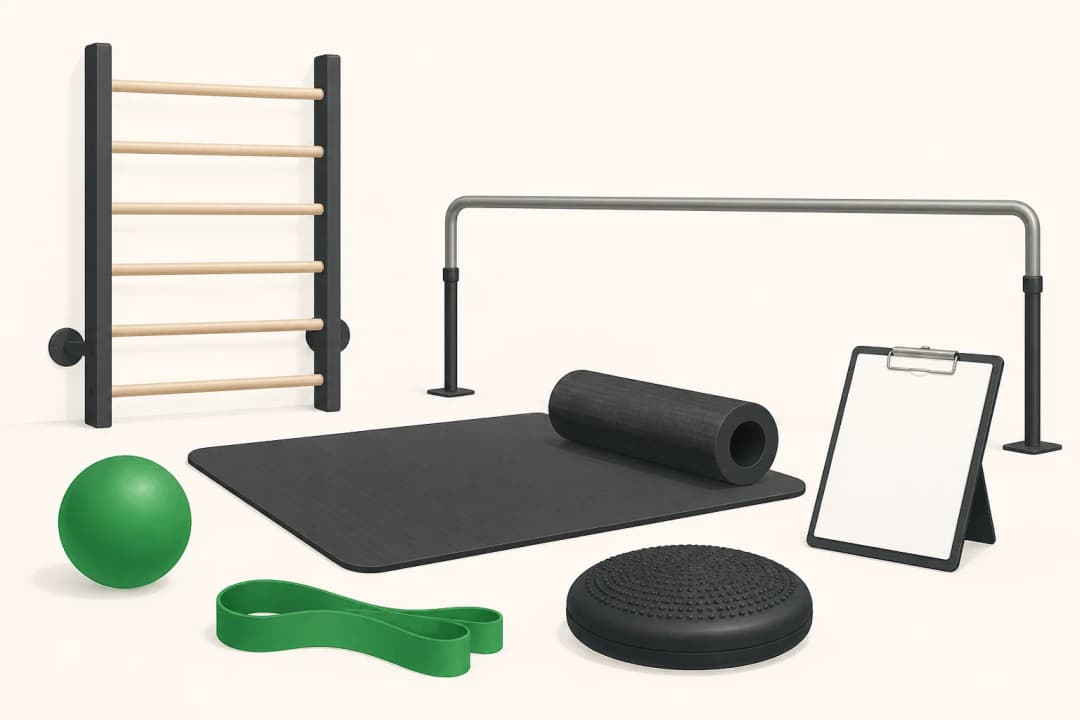
A session commonly starts with a review of symptoms and the activities that matter to you. The therapist observes movement, teaches selected exercises, checks your response, and records useful progress. You may practise with bands, weights, steps, a treatment bench, or other simple equipment. Some programmes use [EMG Biofeedback](/technology/emg-biofeedback/) to help you recognise muscle activation.
Recovery and progress
Keep the agreed exercises regular and record changes that affect walking, reaching, sitting, sleep, or sport. Improvement is not always linear: a busy day or a new progression may temporarily increase symptoms. Share that pattern at review so the plan can be refined instead of abandoned.
Risks and when to seek help
Poorly matched exercise can aggravate an existing problem, and falls or strain are possible with challenging tasks. Seek prompt medical advice for sudden severe pain, a new inability to use a limb, progressive weakness, loss of bladder or bowel control, or numbness in the saddle area. A therapist should know about new swelling, bruising, or pain that does not settle.
What are the alternatives?
Depending on the diagnosis, care may also include activity modification, education, manual techniques, prescribed medicines, supportive equipment, or another specialist treatment. Exercise is often combined with these options rather than treated as an isolated choice. For example, your clinician may discuss a graded plan alongside advice for [Repetitive Strain Injury](/conditions/repetitive-strain-injury/).
Finding a provider
Look for a licensed physiotherapist who regularly treats your body region or activity. Before starting, bring details of previous injuries, operations, medicines, and the movements you want to regain. Ask how progress will be measured, how home exercises will be modified, and what symptoms should prompt a call.
Questions people ask
Can I do exercise therapy at home?
Yes, many plans include home exercises after technique and safety have been checked in a session.
Should exercise hurt?
A manageable effort or short-lived soreness may occur, but worsening or escalating symptoms need review.
What should I wear?
Wear comfortable clothing that lets the therapist see and assess the area being treated.
Related
Related reading
Keep reading
Medical disclaimer. This page is general health information, not medical advice, and it cannot diagnose you. Always consult a licensed healthcare provider about your own symptoms and treatment. In an emergency in the UAE, call 998 for an ambulance.