
What should you know about whether type 2 diabetes is reversible?
Short answer
Type 2 diabetes may go into remission for some people, but glucose can rise again, so ongoing monitoring and follow-up remain necessary.
This answers one question. It is not a diagnosis and does not replace an assessment by a licensed doctor.
At a glance
- Possible outcome
- Remission may occur for some people.
- Ongoing need
- Glucose can rise again, so monitoring continues.
- Treatment changes
- Only make them with clinical guidance.
Remission is not a cure
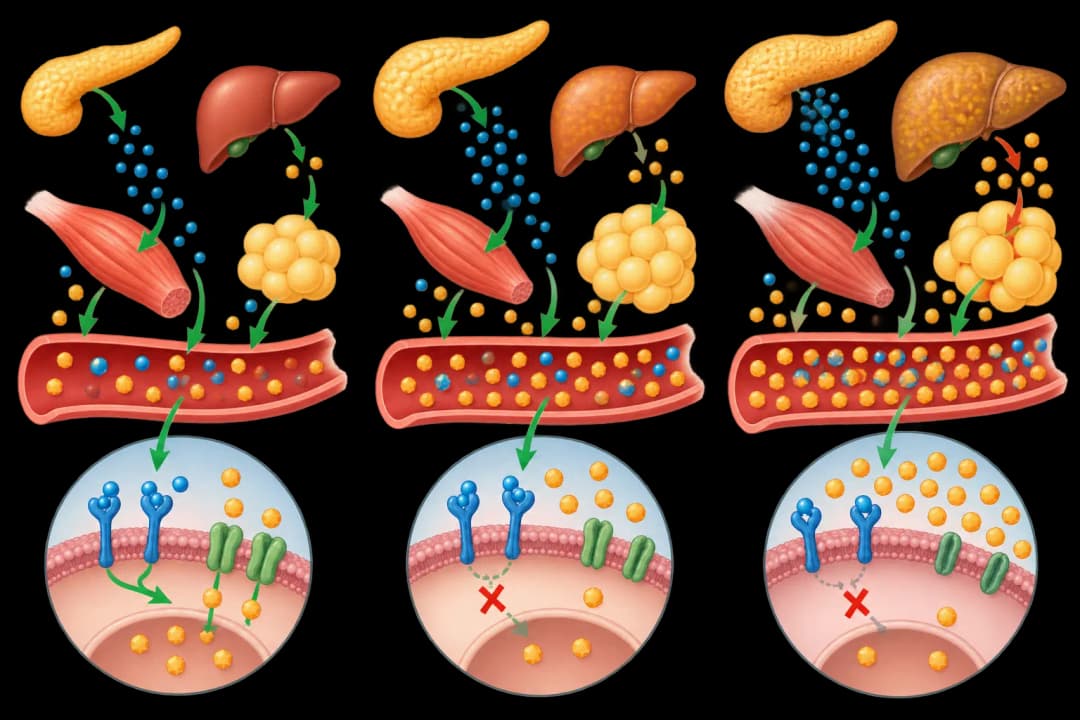
When glucose stays below the diabetes range without glucose-lowering medicine, clinicians may describe this as remission. It does not erase the underlying tendency toward insulin resistance or changeable risk factors. Glucose may rise again with weight change, illness, stress, reduced activity or progression of the condition.
Improved readings can reduce the need for some treatment, but decisions must use repeated results and professional review. Previous high glucose may also mean that kidney, eye, nerve and cardiovascular checks remain relevant.
How to support stable glucose
Continue the eating, activity and medicine plan agreed with your clinician, even when readings improve. Keep scheduled glucose and complication checks, and report side effects rather than stopping treatment independently. A sustainable routine is more useful than a short-term restriction that you cannot maintain.
If weight management is part of your plan, ask for support from a clinician or dietitian. Review medicines whenever your health, activity, eating pattern or kidney function changes.
When to seek advice
Contact your care team if readings begin rising, thirst or urination returns, or you are unsure whether to continue a medicine. Seek urgent care for vomiting, dehydration, confusion, severe drowsiness or breathing difficulty. New foot wounds or spreading redness need prompt assessment, while sudden weakness or speech trouble needs emergency help.
Questions for your doctor
Ask whether your results meet the clinical meaning of remission, how often to repeat testing, which medicines can be changed, and which kidney, eye, foot or cardiovascular checks should continue. Agree on the reading or symptom that should trigger an earlier review.
Find care
General Clinics & Polyclinics in Abu Dhabi
That answer is general. If you want it applied to your own case, these are licensed general clinics & polyclinics listed in Abu Dhabi.
27 Ar Ruwwad St - Shakhbout City - MSH4 - Abu Dhabi - United Arab Emirates
Accepts: Daman, Thiqa, Cigna, MetLife +20 more
Al Ruwais, Al Dhafrah
Accepts: Daman, Thiqa, AXA, Cigna +16 more
Al Bahyah - Al Bahyah Old - Abu Dhabi - United Arab Emirates
Accepts: Daman, Thiqa, Cigna, Allianz Care +18 more
Abu Dhabi
Accepts: Daman, Thiqa, AXA, Cigna +27 more
Ordered by verification status and how complete each clinic's public record is, then alphabetically. This is a directory listing, not a ranking — Zavis does not rate or recommend providers.
A factual listing drawn from the DHA, DOH and MOHAP licence registers. It is not a referral, an endorsement, or advice that any of these providers is right for you.
Questions people ask
Can type 2 diabetes come back after remission?
Yes. The tendency toward insulin resistance can persist, and glucose may rise again, so planned monitoring is important.
Should I stop medicine when my readings improve?
No. A clinician should review repeated results and decide whether treatment can be reduced or changed safely.
Related
Related reading
Keep reading
Medical disclaimer. This page is general health information, not medical advice, and it cannot diagnose you. Always consult a licensed healthcare provider about your own symptoms and treatment. In an emergency in the UAE, call 998 for an ambulance.