
Transesophageal electrocardiogram
Short answer
A transesophageal electrocardiogram is not a routine surface ECG; it usually refers to recording heart signals with an electrode near the oesophagus during specialist testing.
This answers one question. It is not a diagnosis and does not replace an assessment by a licensed doctor.
At a glance
- Routine ECG
- Uses skin electrodes on the chest and limbs.
- Transesophageal recording
- Uses a sensor close to the heart in the oesophagus.
- First step
- Confirm the exact test name with the clinic.
What the term may mean
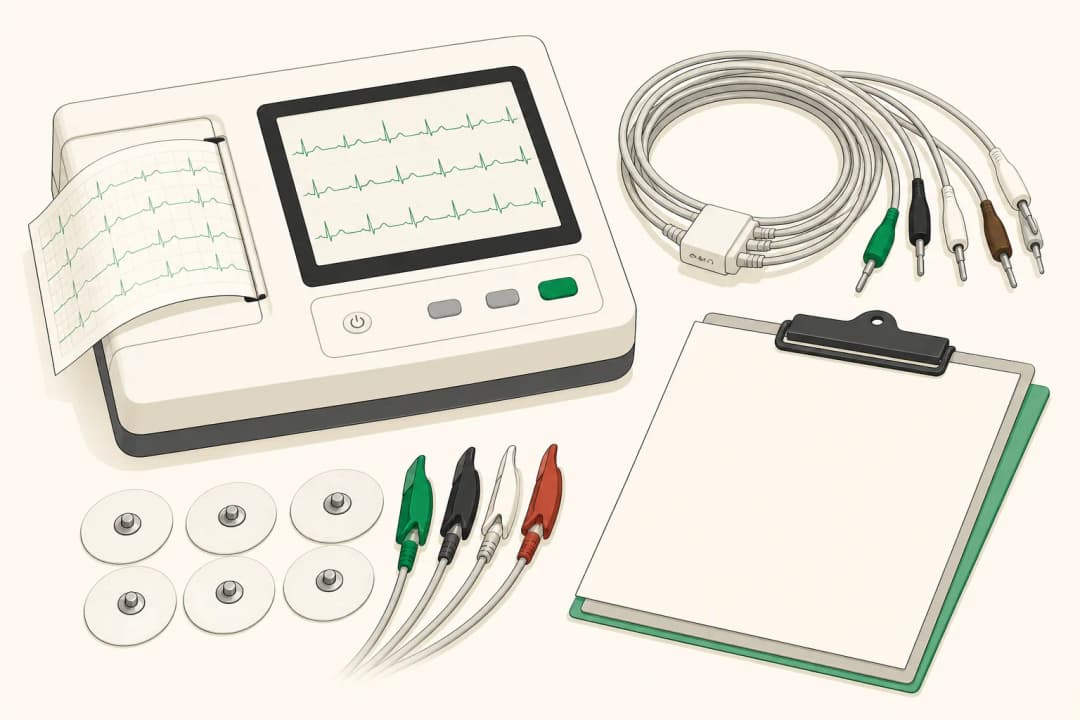
A standard ECG records electrical activity through stickers placed on the chest and limbs. A transesophageal approach places a sensor in the oesophagus, which lies close to the heart, and is used in specialist settings when a more local signal is needed. It is not the same as a transesophageal echocardiogram, which uses ultrasound to create pictures of the heart.
Because the wording can be confused, check the exact test name on your appointment letter. A clinician may have meant a standard electrocardiogram, an electrophysiology procedure or a transesophageal ultrasound examination. The reason may relate to rhythm assessment or another heart concern.
Preparing for clarification
Contact the clinic if the test name is unclear, and tell them about swallowing problems, reflux, food allergies, loose teeth, pregnancy or medicines that affect bleeding. Follow their fasting, medication and transport instructions rather than assuming the preparation for a surface ECG applies.
Bring a list of symptoms and medicines. Ask whether the test is performed with monitoring or sedation, how long you should plan to stay, and when results will be discussed. Do not stop heart medicines unless the treating team specifically tells you to.
When to get urgent help
Before testing, seek emergency help for severe chest pressure, fainting, sudden severe breathlessness or a new rapid heartbeat with weakness. After an oesophageal procedure, seek urgent advice for severe chest or throat pain, trouble breathing, vomiting blood or difficulty swallowing that is getting worse.
Questions for the team
Ask which test is planned and why, whether it is a surface ECG or an oesophageal procedure, and what preparation is required. Ask how rhythm findings will affect care if you have atrial fibrillation, angina or heart failure.
Find care
General Clinics & Polyclinics in Abu Dhabi
That answer is general. If you want it applied to your own case, these are licensed general clinics & polyclinics listed in Abu Dhabi.
27 Ar Ruwwad St - Shakhbout City - MSH4 - Abu Dhabi - United Arab Emirates
Accepts: Daman, Thiqa, Cigna, MetLife +20 more
Al Ruwais, Al Dhafrah
Accepts: Daman, Thiqa, AXA, Cigna +16 more
Al Bahyah - Al Bahyah Old - Abu Dhabi - United Arab Emirates
Accepts: Daman, Thiqa, Cigna, Allianz Care +18 more
Abu Dhabi
Accepts: Daman, Thiqa, AXA, Cigna +27 more
Ordered by verification status and how complete each clinic's public record is, then alphabetically. This is a directory listing, not a ranking — Zavis does not rate or recommend providers.
A factual listing drawn from the DHA, DOH and MOHAP licence registers. It is not a referral, an endorsement, or advice that any of these providers is right for you.
Questions people ask
Is a transesophageal ECG the same as a normal ECG?
No. A normal ECG records signals through the skin, while a transesophageal recording uses a sensor in the oesophagus during specialist assessment.
Could this phrase mean an echocardiogram instead?
It may be a wording mix-up. An echocardiogram uses ultrasound, so ask the clinic to confirm the procedure and preparation.
Related
Related reading
Keep reading
Medical disclaimer. This page is general health information, not medical advice, and it cannot diagnose you. Always consult a licensed healthcare provider about your own symptoms and treatment. In an emergency in the UAE, call 998 for an ambulance.