
Electrocardiogram (ECG)
Updated
At a glance
- Also called
- ECG or EKG
- Purpose
- Records the heart's electrical activity
- Preparation
- Usually none
- Aftercare
- Usual activities can resume straight away
Find care
General Clinics & Polyclinics in Dubai
Licensed general clinics & polyclinics listed in Dubai. Appearing here means a provider holds a UAE licence in this category — not that it offers electrocardiogram (ECG), which is worth confirming with the clinic before you book.
The Court Residence, 39B Street, Jumeirah 1, Dubai
Accepts: Tabby, Tamara
Elite Business Bay Residence - Shop 03 & 04, 34 Marasi Dr - Business Bay - Dubai - United Arab Emirates
Accepts: Tabby
Airport View Building, Al Garhoud, Dubai
Accepts: Daman, Thiqa, AXA, Cigna +25 more
IBIS Building, 5th Floor, Unit 5003, Deira, Dubai
Accepts: AXA, Cigna, MetLife, Allianz Care +18 more
- Aarna Elite Medical CenterVerified
Madeira Building, Shop 1 & 2, Al Jadaf, Dubai, UAE
- 515 Medical & Training ClinicVerified
Villa 991, Al Wasel Road, next to J3 Mall, Al Manara, Dubai, United Arab Emirates
Accepts: Thiqa, AXA, Cigna, Allianz Care +12 more
Ordered by verification status and how complete each clinic's public record is, then alphabetically. This is a directory listing, not a ranking — Zavis does not rate or recommend providers.
A factual listing drawn from the UAE health regulators' public licence registers. It is not a referral, an endorsement, or advice that any of these providers is right for you.
What an ECG shows
An electrocardiogram is a quick, non-invasive recording of the heart's electrical activity.
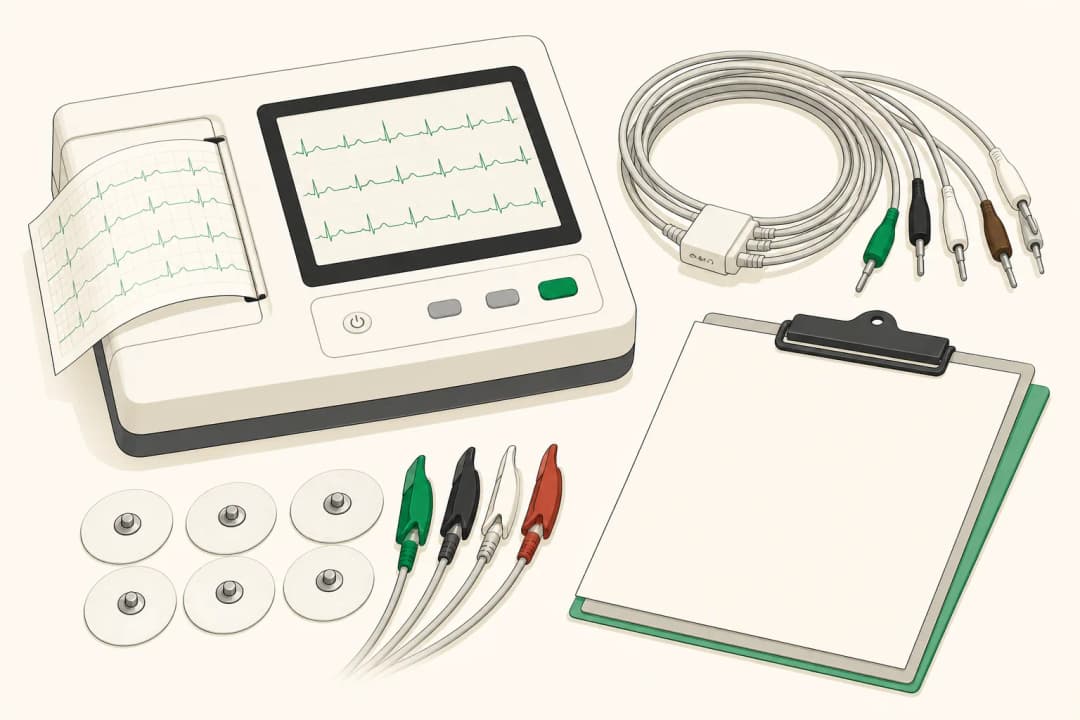
Small adhesive sensors on the chest and limbs detect electrical signals as the heart beats. A machine turns those signals into a tracing that a clinician can review for rhythm, rate and patterns that may suggest strain or reduced blood supply.
What does the test involve?
You will usually lie still on an examination couch while a healthcare professional places electrode stickers on clean, dry skin. Hair may need to be moved or clipped where a sticker is needed. Wires connect the stickers to the recorder; they do not deliver electricity into your body. The recording itself takes only a short time.
Is it safe, and how accurate is it?
An ECG is generally safe because it only records signals. Some people develop temporary skin redness where the stickers were placed. It gives a useful picture of the heart at the time of recording, but an ECG can be normal between episodes of an intermittent rhythm problem or chest symptoms. Clinicians interpret it alongside symptoms, examination findings and other tests when needed.
What happens if the result is abnormal?
An unusual tracing does not by itself give a complete diagnosis. The clinician may compare it with an earlier ECG, repeat the test, arrange blood tests, heart imaging, or a longer recording that captures the heart during everyday activity. Urgent symptoms such as ongoing chest pressure, severe breathlessness, collapse or new weakness need prompt medical assessment.
Key facts before your appointment
Most ECGs need no special preparation. Wear clothing that allows easy access to the chest, and tell the clinician about medicines, a pacemaker or any skin reaction to adhesive products. Bring previous heart test results if you have them.
Who may need an ECG
A clinician may request an ECG for palpitations, chest discomfort, breathlessness, fainting, an irregular pulse or before certain treatments. It can help assess conditions including Angina, Atrial Fibrillation, Heart Attack and Heart Failure, but it is one part of the clinical assessment rather than a standalone answer.
During the recording
The clinician confirms your details and explains the test. You lie flat and relax your arms and legs. Electrode stickers are applied, the wires are attached, and you are asked not to talk or move briefly. Once the tracing is complete, the stickers are removed and you can get dressed.
After the test
There is no recovery period after a standard ECG. You can return to usual activities straight away. If stickers leave residue, wash the area gently. Timing for the result varies with the care setting; ask who will contact you and what to do if symptoms recur before then.
Risks and limits
The main physical issue is mild, short-lived irritation from the adhesive. A normal tracing does not rule out every heart concern, especially when symptoms come and go. Seek urgent care for severe or persistent chest symptoms rather than waiting for a routine test appointment.
Other assessments
Depending on the question, a clinician may use an ECG Machine for an in-clinic recording, request a portable monitor, or arrange blood tests or imaging. A GP Consultation can help decide which assessment fits your symptoms and medical history.
Finding the right service
Book through a GP or a clinic that can arrange cardiac assessment. Tell the service if you currently have chest pain, marked breathlessness, fainting or a fast irregular heartbeat, so they can advise on the appropriate urgency.
Questions people ask
Does an ECG hurt?
The test does not send electricity through you. You may notice the stickers being removed, particularly on hairy or sensitive skin.
Can I eat and drink before an ECG?
For a standard ECG, you can usually eat and drink as normal unless the clinic gives different instructions.
What if I have palpitations but the ECG is normal?
Tell the clinician when episodes occur and what they feel like. A longer heart monitor may be considered if symptoms are intermittent.
Related
Related reading
Keep reading
Medical disclaimer. This page is general health information, not medical advice, and it cannot diagnose you. Always consult a licensed healthcare provider about your own symptoms and treatment. In an emergency in the UAE, call 998 for an ambulance.