
What does thalassaemia mean for couples?
Short answer
For couples, thalassaemia mainly raises questions about carrier status, inheritance, pregnancy planning, and the support a specialist can provide.
This answers one question. It is not a diagnosis and does not replace an assessment by a licensed doctor.
At a glance
- Main issue
- The results of both partners guide inheritance counselling.
- Useful preparation
- Bring blood-test reports and relevant family history.
What it means for both partners
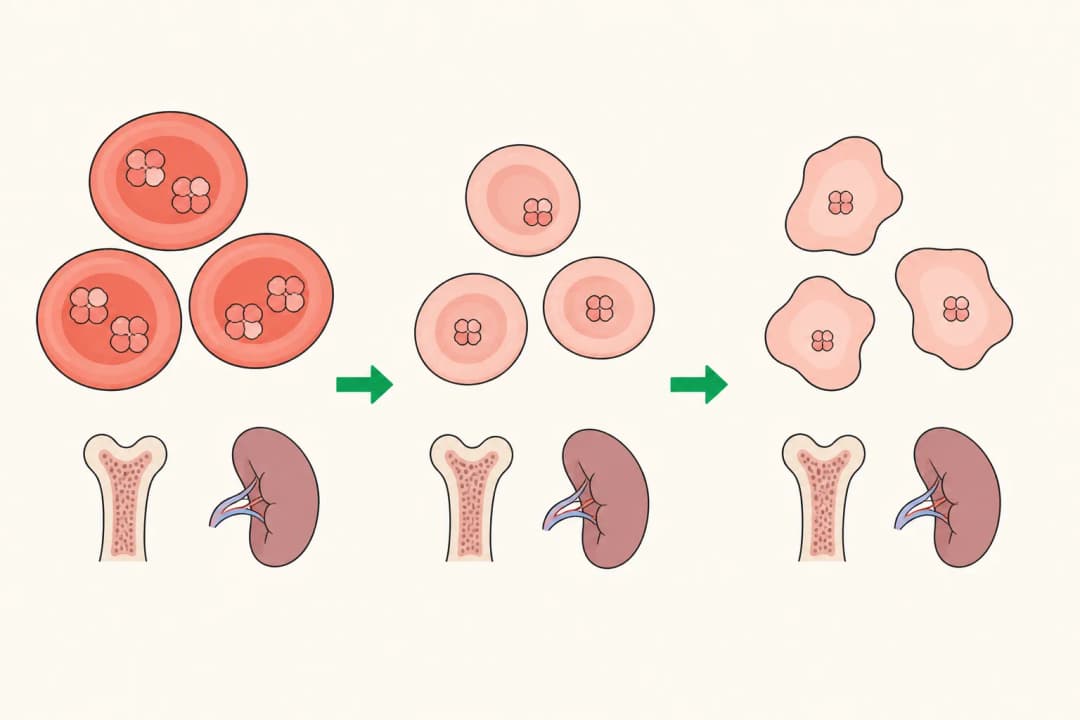
Thalassaemia is an inherited blood condition. A person may have a thalassaemia trait without needing the same care as someone with a more active form. Two people can also have different haemoglobin variants, so each partner's result matters.
If both partners carry an altered haemoglobin gene, a pregnancy may have different possible outcomes. The exact possibilities depend on the type of trait or condition identified in each person. A result does not predict a child's health by itself; it needs to be interpreted alongside the other partner's result and the family history.
Steps couples can take
Arrange a blood test and take the written results to a clinician familiar with inherited blood conditions. Ask whether further haemoglobin testing or genetic counselling is appropriate. If you are planning pregnancy, discuss options before conception where possible, so you have time to understand the choices without pressure.
Do not start iron supplements simply because a blood count is small or low. Iron deficiency and thalassaemia trait can look alike on some tests, but they are managed differently. Keep copies of both partners' results and tell the pregnancy team about them.
When to seek care
Seek prompt medical advice for marked breathlessness, chest pain, fainting, a racing heartbeat, or severe weakness. During pregnancy, contact the maternity team urgently for heavy bleeding, severe abdominal pain, reduced fetal movement later in pregnancy, or sudden breathlessness. These symptoms need assessment regardless of whether thalassaemia is present.
Questions to take to an appointment
Ask: Which type of thalassaemia or trait does each result show? Do we need testing for the other partner? What are our reproductive options? Should a haematologist or genetic counsellor be involved? How should iron status be checked?
Find care
General Clinics & Polyclinics in Abu Dhabi
That answer is general. If you want it applied to your own case, these are licensed general clinics & polyclinics listed in Abu Dhabi.
27 Ar Ruwwad St - Shakhbout City - MSH4 - Abu Dhabi - United Arab Emirates
Accepts: Daman, Thiqa, Cigna, MetLife +20 more
Al Ruwais, Al Dhafrah
Accepts: Daman, Thiqa, AXA, Cigna +16 more
Al Bahyah - Al Bahyah Old - Abu Dhabi - United Arab Emirates
Accepts: Daman, Thiqa, Cigna, Allianz Care +18 more
Abu Dhabi
Accepts: Daman, Thiqa, AXA, Cigna +27 more
Ordered by verification status and how complete each clinic's public record is, then alphabetically. This is a directory listing, not a ranking — Zavis does not rate or recommend providers.
A factual listing drawn from the DHA, DOH and MOHAP licence registers. It is not a referral, an endorsement, or advice that any of these providers is right for you.
Questions people ask
Can a person with thalassaemia have children?
Many people with thalassaemia can plan a family, but the advice depends on the person's condition, treatment, and the partner's carrier status.
Does carrying a trait mean a baby will have thalassaemia?
No. The outcome depends on the genes carried by both partners, so testing and counselling are needed for an individual explanation.
Related
Related reading
Keep reading
Medical disclaimer. This page is general health information, not medical advice, and it cannot diagnose you. Always consult a licensed healthcare provider about your own symptoms and treatment. In an emergency in the UAE, call 998 for an ambulance.