
What should you know about surgical mesh uses?
Short answer
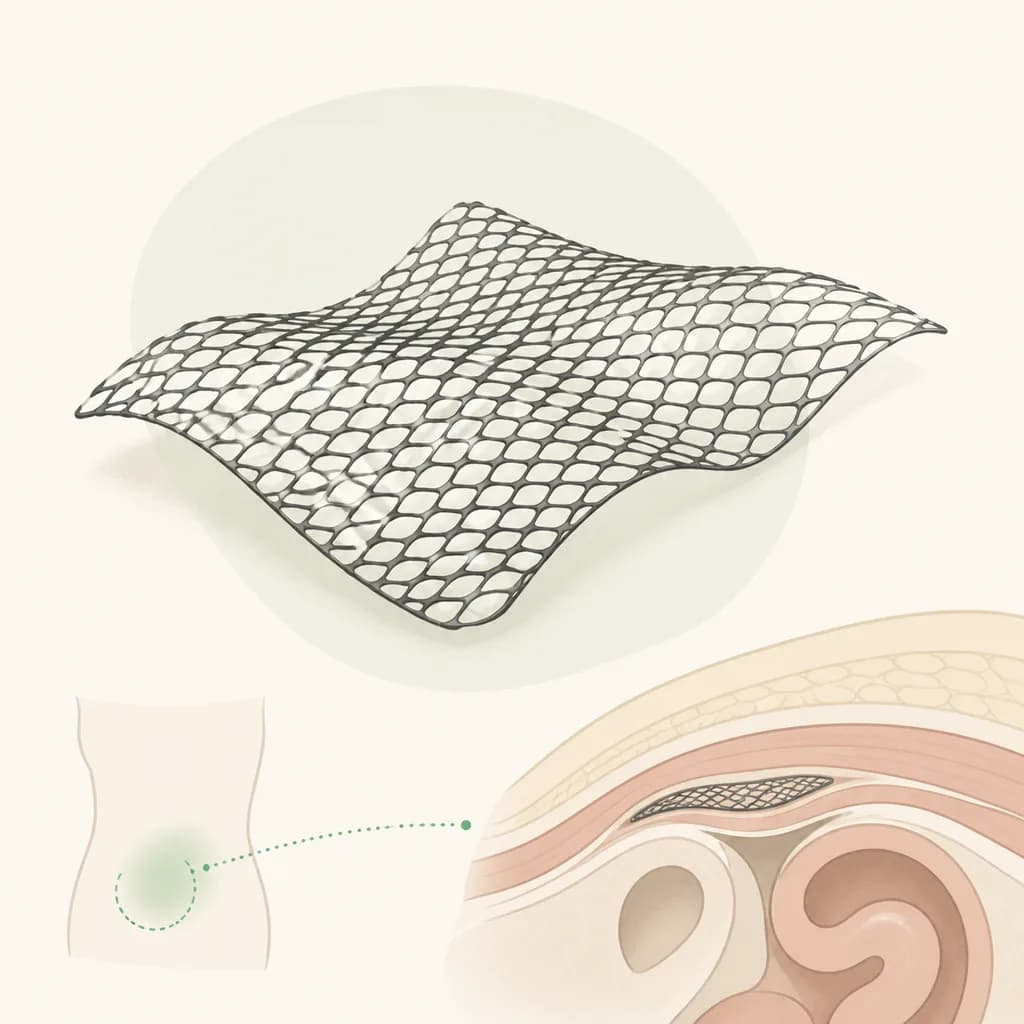
Surgical mesh is a supportive material used in selected pelvic operations to reinforce or suspend weakened tissue.
This answers one question. It is not a diagnosis and does not replace an assessment by a licensed doctor.
At a glance
- Material
- A surgical support used in selected repairs
- Decision
- Benefits and alternatives should be discussed individually
- Follow-up
- Report urinary, pain, wound or bleeding concerns
What surgical mesh does
Mesh is placed through an operation to provide a scaffold while the body heals around the repair. In gynaecological surgery, its use depends on the problem being treated, the surgical route and your previous operations. It may support pelvic organs or create a sling beneath the urethra for stress urinary leakage. Mesh is not suitable for every person or procedure, and its placement and long-term follow-up should be explained clearly.
How to prepare
Ask which symptoms the operation is intended to improve, whether a non-mesh repair is possible, and what experience the surgical team has with the proposed procedure. Tell the team about medicines, allergies, previous pelvic surgery, pregnancy plans and wound-healing problems. Request written information about recovery, activity restrictions, sexual activity and follow-up. Reading about a mid-urethral sling or sacrocolpopexy may help you compare approaches.
When to seek care
Contact your surgical team promptly for fever, worsening pelvic or abdominal pain, heavy bleeding, foul-smelling discharge, difficulty passing urine, a new wound problem or leg swelling. After healing, arrange review for persistent pain, painful intercourse, recurrent leakage, unusual vaginal bleeding or a sensation that the repair is failing. Sudden chest pain, severe breathlessness or fainting needs emergency care.
Questions for your doctor
What is the exact purpose and location of the mesh? What alternatives could treat my problem? Which symptoms may improve, and which may remain? How long might recovery take? What follow-up will I need, and whom should I contact if pain, bleeding or urinary problems develop?
Find care
General Clinics & Polyclinics in Abu Dhabi
That answer is general. If you want it applied to your own case, these are licensed general clinics & polyclinics listed in Abu Dhabi.
27 Ar Ruwwad St - Shakhbout City - MSH4 - Abu Dhabi - United Arab Emirates
Accepts: Daman, Thiqa, Cigna, MetLife +20 more
Al Ruwais, Al Dhafrah
Accepts: Daman, Thiqa, AXA, Cigna +16 more
Al Bahyah - Al Bahyah Old - Abu Dhabi - United Arab Emirates
Accepts: Daman, Thiqa, Cigna, Allianz Care +18 more
Abu Dhabi
Accepts: Daman, Thiqa, AXA, Cigna +27 more
Ordered by verification status and how complete each clinic's public record is, then alphabetically. This is a directory listing, not a ranking — Zavis does not rate or recommend providers.
A factual listing drawn from the DHA, DOH and MOHAP licence registers. It is not a referral, an endorsement, or advice that any of these providers is right for you.
Questions people ask
Is surgical mesh used for every pelvic floor operation?
No. The choice depends on the condition, procedure, patient factors and available alternatives.
Can mesh cause problems after surgery?
Complications can occur, so ask about warning signs, follow-up and what support is available if symptoms persist.
Related
Related reading
Keep reading
Medical disclaimer. This page is general health information, not medical advice, and it cannot diagnose you. Always consult a licensed healthcare provider about your own symptoms and treatment. In an emergency in the UAE, call 998 for an ambulance.