
What should you know about sunlight hives?
Short answer
Sunlight hives are raised, itchy welts triggered by light exposure; leave the sun, protect your skin, and seek urgent help for breathing or swelling symptoms.
This answers one question. It is not a diagnosis and does not replace an assessment by a licensed doctor.
At a glance
- Typical appearance
- Raised, itchy welts on light-exposed skin
- Immediate action
- Leave direct sunlight and cover the skin
How sunlight hives behave
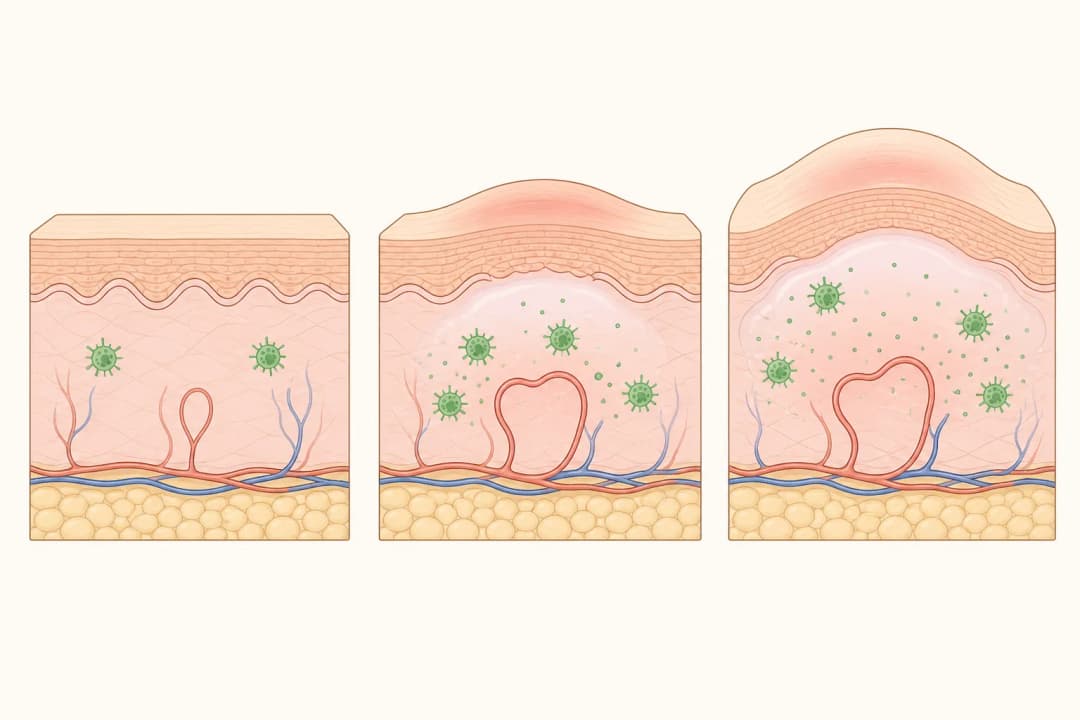
Hives can appear quickly on exposed skin as raised patches or welts that itch, sting, or change shape. They may fade as the trigger stops, but new areas can appear with further exposure. Deeper swelling around the eyes, lips, hands, or throat is called angioedema and needs particular attention. A clinician may distinguish sunlight-triggered hives from another form of urticaria by asking when the welts start, how long they last, and what else touched or entered the body.
Practical steps
Get out of direct sunlight and cover exposed skin with clothing or shade. Keep the area cool and avoid rubbing or scratching. Photographing the welts while they are present can help a clinician understand a short-lived episode. A healthcare professional may discuss an oral antihistamine and whether a supervised plan is appropriate for future exposure. Do not experiment with deliberate sun exposure to test the reaction.
Urgent warning signs
Call emergency services for trouble breathing, wheezing, dizziness, collapse, or swelling of the tongue or throat. Seek prompt medical advice for rapidly spreading welts, facial swelling, repeated episodes, or symptoms that continue after leaving sunlight. Recurrent reactions deserve assessment even when each individual welt fades.
Questions for your doctor
Ask whether your symptoms fit sunlight-triggered urticaria, whether an antihistamine plan is suitable, and how to protect your skin during necessary outdoor activities. Ask how to recognise angioedema or a more serious allergic reaction.
Find care
General Clinics & Polyclinics in Abu Dhabi
That answer is general. If you want it applied to your own case, these are licensed general clinics & polyclinics listed in Abu Dhabi.
27 Ar Ruwwad St - Shakhbout City - MSH4 - Abu Dhabi - United Arab Emirates
Accepts: Daman, Thiqa, Cigna, MetLife +20 more
Al Ruwais, Al Dhafrah
Accepts: Daman, Thiqa, AXA, Cigna +16 more
Al Bahyah - Al Bahyah Old - Abu Dhabi - United Arab Emirates
Accepts: Daman, Thiqa, Cigna, Allianz Care +18 more
Abu Dhabi
Accepts: Daman, Thiqa, AXA, Cigna +27 more
Ordered by verification status and how complete each clinic's public record is, then alphabetically. This is a directory listing, not a ranking — Zavis does not rate or recommend providers.
A factual listing drawn from the DHA, DOH and MOHAP licence registers. It is not a referral, an endorsement, or advice that any of these providers is right for you.
Questions people ask
Can sunlight hives affect the whole body?
They may spread beyond the first exposed area, especially after further exposure, so monitor for swelling or breathing symptoms.
Can I test the reaction by going back into the sun?
No. Deliberate exposure can worsen the reaction; discuss diagnosis and testing with a clinician.
Related
Related reading
Keep reading
Medical disclaimer. This page is general health information, not medical advice, and it cannot diagnose you. Always consult a licensed healthcare provider about your own symptoms and treatment. In an emergency in the UAE, call 998 for an ambulance.