
What should you know about subacute hyperthyroidism?
Short answer
Subacute hyperthyroidism is a temporary overactive-thyroid phase, often linked with thyroid inflammation, in which stored hormone enters the bloodstream.
This answers one question. It is not a diagnosis and does not replace an assessment by a licensed doctor.
At a glance
- Typical mechanism
- Release of stored thyroid hormone during inflammation
- Possible symptom
- Neck tenderness with palpitations
- Follow-up
- Repeat thyroid testing may be needed
What is happening
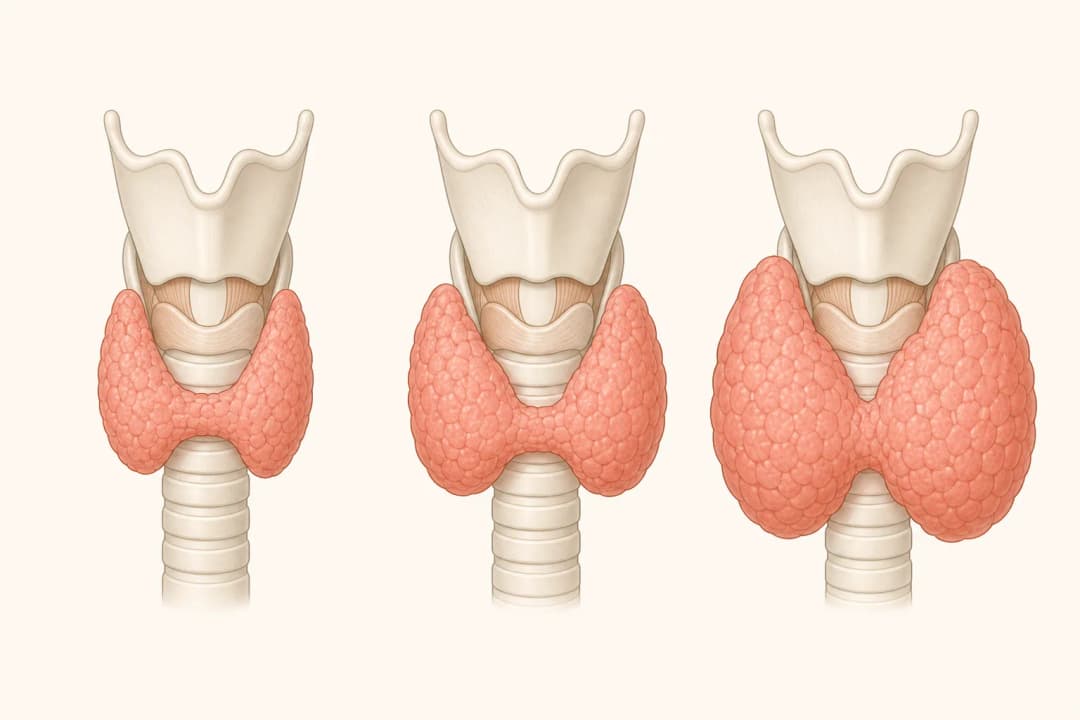
The thyroid may become painful and tender, sometimes after a recent infection. Inflamed thyroid cells can release hormone already stored in the gland, producing an overactive pattern even when the gland is not making new hormone faster. Symptoms can include a racing or pounding heartbeat, feeling hot, sweating, nervousness, poor sleep, loose stools, and tiredness. Neck pain may spread towards the jaw or ear. The overactive phase can later be followed by a period when the thyroid is underactive, so follow-up blood tests matter. Read more about Hyperthyroidism for the broader condition.
What to do next
Arrange a clinical assessment for neck pain with palpitations or other new overactive-thyroid symptoms. Testing commonly includes thyroid blood tests and may include checks for inflammation; the pattern helps distinguish thyroiditis from other causes. Rest, drink enough fluid, and limit triggers that make palpitations or shakiness worse, such as excess caffeine. Take only medicines recommended for you, because drugs that reduce thyroid production may not address hormone already released from an inflamed gland. Keep any planned follow-up even if symptoms ease.
When to seek care
Seek urgent help for chest pain, fainting, severe breathlessness, confusion, or a very fast or irregular heartbeat with marked weakness. Prompt assessment is also needed for severe neck swelling, difficulty swallowing, or rapidly worsening illness. Contact your clinician if heat intolerance, sweating, diarrhoea, anxiety, poor sleep, or palpitations interfere with daily activities. Symptoms can overlap with other conditions, so escalation should be based on severity and change rather than assuming the cause.
Questions for your doctor
Ask which thyroid tests are needed, whether your neck is tender from thyroid inflammation, how symptoms will be controlled, and when repeat testing should occur. Mention recent illness, pregnancy or pregnancy plans, heart conditions, and every medicine or supplement you use.
Find care
General Clinics & Polyclinics in Abu Dhabi
That answer is general. If you want it applied to your own case, these are licensed general clinics & polyclinics listed in Abu Dhabi.
27 Ar Ruwwad St - Shakhbout City - MSH4 - Abu Dhabi - United Arab Emirates
Accepts: Daman, Thiqa, Cigna, MetLife +20 more
Al Ruwais, Al Dhafrah
Accepts: Daman, Thiqa, AXA, Cigna +16 more
Al Bahyah - Al Bahyah Old - Abu Dhabi - United Arab Emirates
Accepts: Daman, Thiqa, Cigna, Allianz Care +18 more
Abu Dhabi
Accepts: Daman, Thiqa, AXA, Cigna +27 more
Ordered by verification status and how complete each clinic's public record is, then alphabetically. This is a directory listing, not a ranking — Zavis does not rate or recommend providers.
A factual listing drawn from the DHA, DOH and MOHAP licence registers. It is not a referral, an endorsement, or advice that any of these providers is right for you.
Questions people ask
Is subacute hyperthyroidism the same as lifelong hyperthyroidism?
No. It can be a temporary phase related to thyroid inflammation, although follow-up is needed because thyroid function can change over time.
Can subacute hyperthyroidism cause sweating and poor sleep?
Yes. Excess thyroid hormone can contribute to heat intolerance, sweating, restlessness, and difficulty sleeping.
Related
Related reading
Keep reading
Medical disclaimer. This page is general health information, not medical advice, and it cannot diagnose you. Always consult a licensed healthcare provider about your own symptoms and treatment. In an emergency in the UAE, call 998 for an ambulance.