
What should you know about a spot urine ACR test?
Short answer
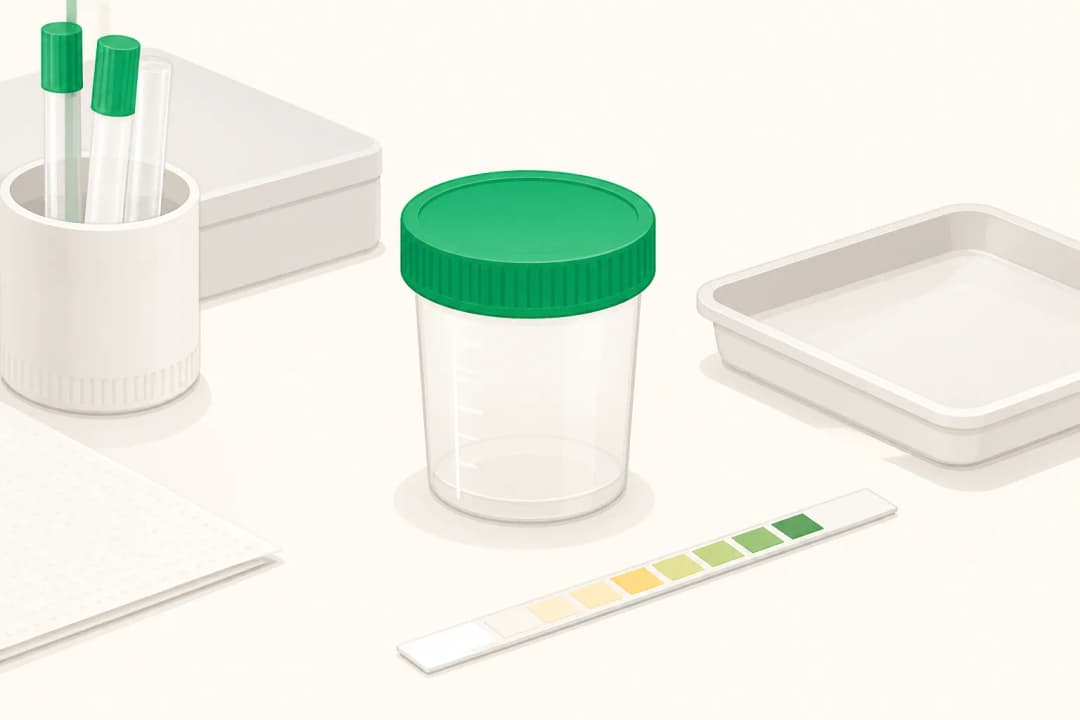
A spot urine ACR test checks for albumin leaking into urine and helps assess kidney health.
This answers one question. It is not a diagnosis and does not replace an assessment by a licensed doctor.
At a glance
- Sample
- One urine sample collected at a single time
- Checks
- Albumin compared with creatinine in urine
- Result
- A finding to interpret with symptoms and other tests
What is a spot urine ACR test?
A spot urine ACR test checks for albumin leaking into urine and helps assess kidney health. ACR means albumin-to-creatinine ratio. Albumin is a protein that normally stays in the bloodstream, while creatinine provides a way to account for how concentrated the urine is. The test uses one urine sample rather than urine collected throughout the day.
What the result can mean
A raised ACR can indicate albuminuria, which may be a sign that the kidney filters are allowing protein to pass through. A single abnormal result does not establish the cause. Temporary changes can occur with dehydration, strenuous exercise, fever, an infection, or blood in the urine. Your clinician may repeat the test and consider blood pressure, blood tests, diabetes risk, medicines, and other urine findings. A normal result does not rule out every kidney or urinary problem.
How to prepare and follow up
Follow the laboratory instructions for collecting a clean-catch sample. Tell the clinician about recent fever, hard exercise, menstrual bleeding, urinary symptoms, and all medicines or supplements. Do not stop prescribed treatment unless your clinician tells you to. Ask when and how the result will be reviewed, whether a repeat sample is needed, and whether kidney blood tests or blood-pressure checks are appropriate.
When to seek care
Arrange prompt medical advice for visible blood in the urine, burning or frequent urination with fever, pain in the side or back, swelling around the eyes or ankles, or noticeably reduced urine. Seek urgent care for severe side pain with vomiting, confusion, fainting, breathing difficulty, or inability to pass urine. These symptoms can need assessment for problems such as a urinary tract infection, kidney infection, or urinary blockage.
Questions for your doctor
Useful questions include: What does my ACR result mean alongside my other tests? Could an infection, exercise, bleeding, or dehydration have affected it? Should the sample be repeated? Do I need a kidney blood test or blood-pressure review? Which symptoms should make me contact the clinic sooner?
Find care
General Clinics & Polyclinics in Abu Dhabi
That answer is general. If you want it applied to your own case, these are licensed general clinics & polyclinics listed in Abu Dhabi.
27 Ar Ruwwad St - Shakhbout City - MSH4 - Abu Dhabi - United Arab Emirates
Accepts: Daman, Thiqa, Cigna, MetLife +20 more
Al Ruwais, Al Dhafrah
Accepts: Daman, Thiqa, AXA, Cigna +16 more
Al Bahyah - Al Bahyah Old - Abu Dhabi - United Arab Emirates
Accepts: Daman, Thiqa, Cigna, Allianz Care +18 more
Abu Dhabi
Accepts: Daman, Thiqa, AXA, Cigna +27 more
Ordered by verification status and how complete each clinic's public record is, then alphabetically. This is a directory listing, not a ranking — Zavis does not rate or recommend providers.
A factual listing drawn from the DHA, DOH and MOHAP licence registers. It is not a referral, an endorsement, or advice that any of these providers is right for you.
Questions people ask
Does a spot urine ACR test require a full-day urine collection?
No. It uses a single urine sample, although your clinician may request another sample or a timed collection when more information is needed.
Can an infection affect the ACR result?
Yes. Fever, urinary infection, blood in the urine, dehydration, and strenuous exercise can temporarily affect urine findings, so mention these before the result is interpreted.
Related
Related reading
Keep reading
Medical disclaimer. This page is general health information, not medical advice, and it cannot diagnose you. Always consult a licensed healthcare provider about your own symptoms and treatment. In an emergency in the UAE, call 998 for an ambulance.