
What should you know about splenic sequestration in sickle cell disease?
Short answer
Splenic sequestration is an urgent sickle cell complication in which blood becomes trapped in the spleen and the body can become dangerously anaemic.
This answers one question. It is not a diagnosis and does not replace an assessment by a licensed doctor.
At a glance
- Main concern
- Sudden blood pooling in the spleen
- Typical response
- Immediate emergency assessment
- Useful test
- Clinical examination and blood count
What it means
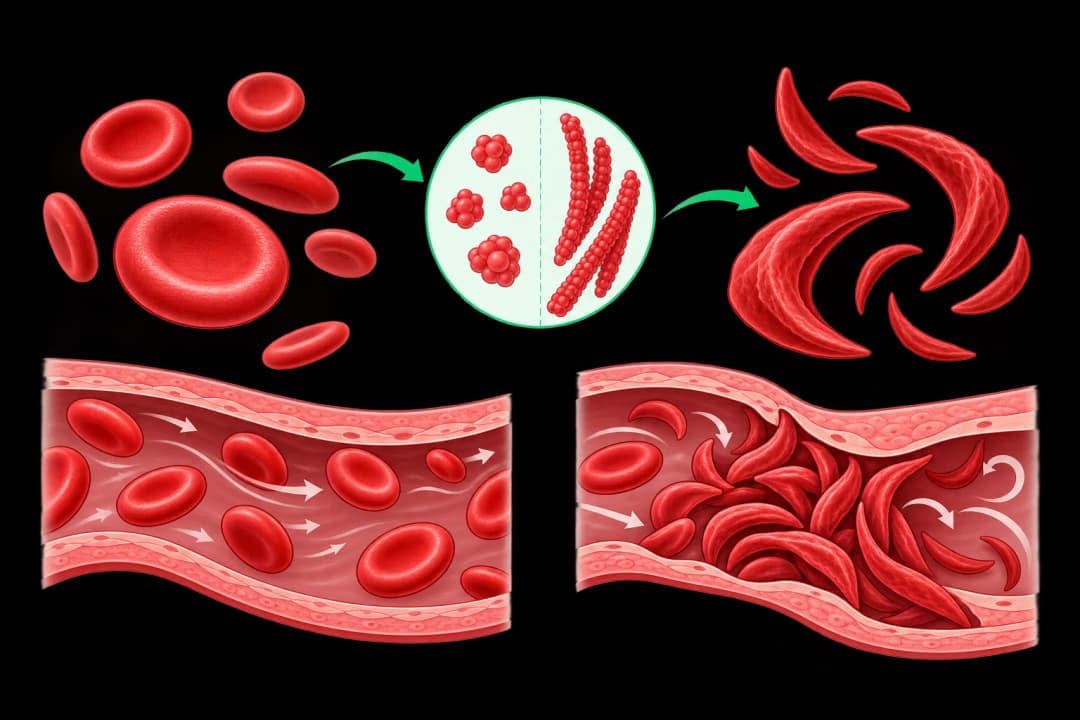
The spleen filters blood and supports immune function. During a sequestration episode, it suddenly enlarges as blood pools inside it instead of circulating normally. This can reduce oxygen delivery and may cause marked tiredness, weakness, dizziness, rapid breathing, a fast heartbeat, or pale skin. A child may have a swollen or painful abdomen on the upper left side. Splenic sequestration is a presentation of sickle cell disease, not proof that every abdominal symptom is caused by it.
A clinician may check the abdomen, pulse, breathing, blood pressure and blood count. A blood test can help show anaemia and guide urgent treatment, but it should not delay emergency assessment.
What to do now
If someone with sickle cell disease may be having splenic sequestration, seek emergency medical care immediately. Keep them resting, do not leave them alone, and tell the clinical team about the sickle cell diagnosis, the change in symptoms and any prescribed medicines. Do not massage a swollen abdomen or rely on fluids and home observation. Treatment may include close monitoring, fluids, oxygen when needed, and a blood transfusion decided by the treating team.
When to seek care
Call emergency services for sudden abdominal swelling, severe weakness, fainting, confusion, breathing difficulty, unusual sleepiness, a very fast heartbeat, or skin that looks markedly pale. Urgent assessment is also needed when a person with sickle cell disease becomes much less active or appears suddenly unwell, even without obvious pain. Symptoms can worsen quickly, so do not wait for a routine appointment.
Questions for your doctor
Ask how to recognise an enlarging spleen, which emergency number to use, whether your family should keep a written action plan, and how previous blood counts or transfusions affect future care.
Find care
General Clinics & Polyclinics in Abu Dhabi
That answer is general. If you want it applied to your own case, these are licensed general clinics & polyclinics listed in Abu Dhabi.
27 Ar Ruwwad St - Shakhbout City - MSH4 - Abu Dhabi - United Arab Emirates
Accepts: Daman, Thiqa, Cigna, MetLife +20 more
Al Ruwais, Al Dhafrah
Accepts: Daman, Thiqa, AXA, Cigna +16 more
Al Bahyah - Al Bahyah Old - Abu Dhabi - United Arab Emirates
Accepts: Daman, Thiqa, Cigna, Allianz Care +18 more
Abu Dhabi
Accepts: Daman, Thiqa, AXA, Cigna +27 more
Ordered by verification status and how complete each clinic's public record is, then alphabetically. This is a directory listing, not a ranking — Zavis does not rate or recommend providers.
A factual listing drawn from the DHA, DOH and MOHAP licence registers. It is not a referral, an endorsement, or advice that any of these providers is right for you.
Questions people ask
Is splenic sequestration the same as a pain crisis?
No. It involves blood collecting in the spleen and can cause rapidly worsening anaemia; it needs urgent assessment even if pain is mild.
Can it happen without severe pain?
Yes. Weakness, pallor, dizziness, abdominal enlargement or unusual sleepiness may be more noticeable than pain.
Related
Related reading
Keep reading
Medical disclaimer. This page is general health information, not medical advice, and it cannot diagnose you. Always consult a licensed healthcare provider about your own symptoms and treatment. In an emergency in the UAE, call 998 for an ambulance.