
Sickle cell disease: symptoms, care and inheritance
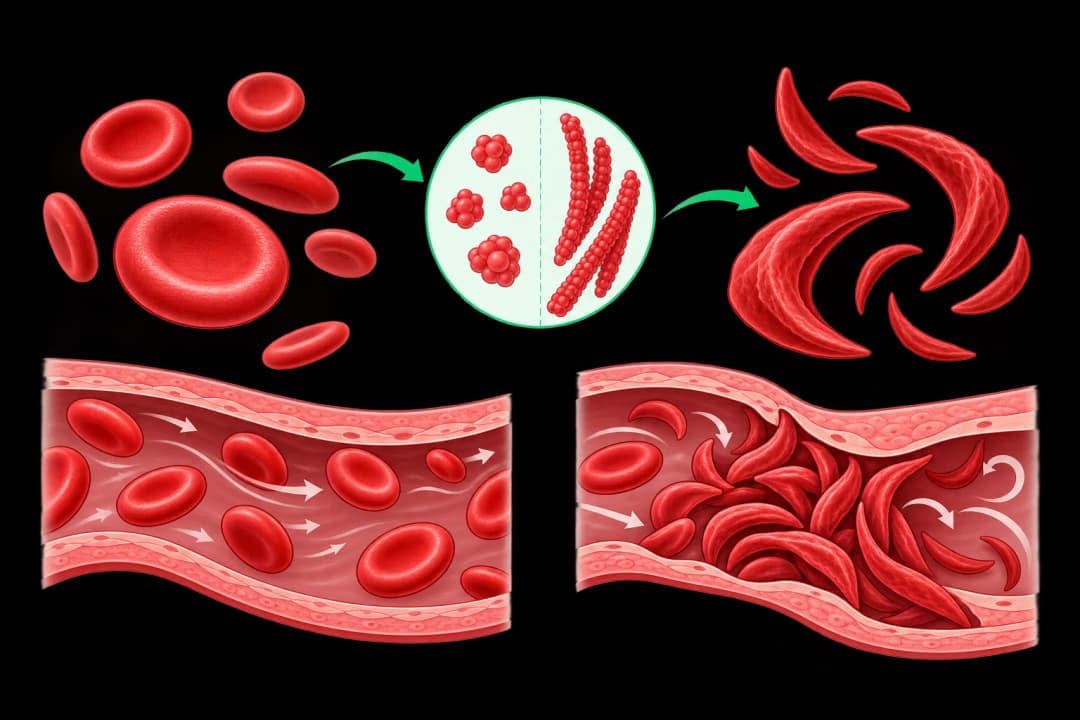
At a glance
- Cause
- Inherited haemoglobin gene changes
- Main effect
- Red cells can block small blood vessels
- Key specialist
- Haematology team
Understanding sickle cell disease
Sickle cell disease is an inherited blood condition in which red blood cells can change shape and block blood flow.
The altered cells may break down sooner than usual and can become stuck in small blood vessels. This can lead to anaemia, episodes of pain and injury to organs over time. It is not contagious.
Symptoms and pain episodes
Pain can develop when sickled cells restrict blood flow, often in bones, joints, chest or abdomen. Fatigue, jaundice, pale skin, joint pain and blood in urine are common presentations of sickle cell disease. Fever, chest pain, breathing difficulty, severe headache, weakness on one side, or a painful erection require urgent assessment.
Inheritance and red blood cells
A child develops sickle cell disease by inheriting a changed haemoglobin gene from each parent. Haemoglobin carries oxygen inside red blood cells. Lower oxygen levels, dehydration, illness, temperature extremes and stress can encourage cells to sickle and may trigger symptoms in some people.
How it varies over time
The condition lasts throughout life, but its pattern differs between people. Some have long stable periods, while others experience repeated pain episodes or anaemia-related symptoms. Regular review helps a clinical team notice changes early and adjust a care plan around school, work, travel and family life.
Factors linked with complications
Complications are more likely during infections, dehydration and other situations that reduce oxygen delivery or increase physical stress. Young children need particular protection from infection. Pregnancy, surgery and long-distance travel should be planned with the team managing the condition.
Testing and family planning
A blood test can identify the type of haemoglobin present. Testing may be arranged after newborn screening, when symptoms raise concern, or when family history is known. Genetic counselling and premarital screening can explain carrier status and support informed reproductive decisions.
Treatment and monitoring
Care may include medicines to reduce pain episodes, pain relief during crises, vaccinations, antibiotics in selected situations, blood transfusion for particular complications, and medicines that modify haemoglobin production. The right plan is individual and is usually led by a haematology team.
Everyday self-care
Drink regularly, avoid becoming overheated or very cold, pace demanding activity and keep planned appointments. Carry a summary of your condition and usual medicines when travelling. A written plan for pain episodes can help you and people around you recognise when home measures are no longer enough.
Complications clinicians watch for
Blocked blood flow and ongoing breakdown of red cells can affect the lungs, spleen, kidneys, eyes, bones and brain. Clinicians monitor for anaemia, infection, stroke, chest complications and kidney problems. New or unusual symptoms deserve prompt attention because they may need targeted treatment.
Prevention and preparation
The inherited condition cannot be prevented after birth, but many triggers and complications can be addressed. Infection prevention, adequate fluids, recommended vaccines and early care for fever are practical safeguards. Carrier testing can help prospective parents understand how the condition may be passed on.
Finding ongoing support
A haematologist usually guides long-term care, with GP support for routine health needs. Seek emergency care for severe pain that is not settling, fever, chest symptoms, sudden weakness or confusion. Tell all clinicians about sickle cell disease before a procedure or new medicine is prescribed.
Questions people ask
Is sickle cell disease the same as sickle cell trait?
No. Sickle cell trait means a person carries one changed gene and is usually managed differently from someone with sickle cell disease, who has inherited gene changes that cause the condition.
Why is fever urgent in sickle cell disease?
Fever can be a sign of infection, and infection may become serious quickly in people with sickle cell disease. Contact urgent medical services or the care team without delay.
Keep reading
Find care
General Clinics & Polyclinics in Abu Dhabi
Where sickle cell disease: symptoms, care and inheritance is assessed depends on what is causing it. These are licensed general clinics & polyclinics listed in Abu Dhabi.
27 Ar Ruwwad St - Shakhbout City - MSH4 - Abu Dhabi - United Arab Emirates
Accepts: Daman, Thiqa, Cigna, MetLife +20 more
Al Ruwais, Al Dhafrah
Accepts: Daman, Thiqa, AXA, Cigna +16 more
Al Bahyah - Al Bahyah Old - Abu Dhabi - United Arab Emirates
Accepts: Daman, Thiqa, Cigna, Allianz Care +18 more
Abu Dhabi
Accepts: Daman, Thiqa, AXA, Cigna +27 more
Ordered by verification status and how complete each clinic's public record is, then alphabetically. This is a directory listing, not a ranking — Zavis does not rate or recommend providers.
A factual listing drawn from the DHA, DOH and MOHAP licence registers. It is not a referral, an endorsement, or advice that any of these providers is right for you.
Medical disclaimer. This page is general health information, not medical advice, and it cannot diagnose you. Always consult a licensed healthcare provider about your own symptoms and treatment. In an emergency in the UAE, call 998 for an ambulance.