
What should you know about spinal melanoma?
Short answer
Spinal melanoma requires specialist assessment to confirm its origin, extent, and appropriate treatment plan.
This answers one question. It is not a diagnosis and does not replace an assessment by a licensed doctor.
At a glance
- Condition
- Melanoma involving the spinal area or spread to the spine
- Assessment
- Pathology, examination, and appropriate imaging
- Urgent signs
- New weakness, saddle numbness, or bladder and bowel changes
What the term can mean
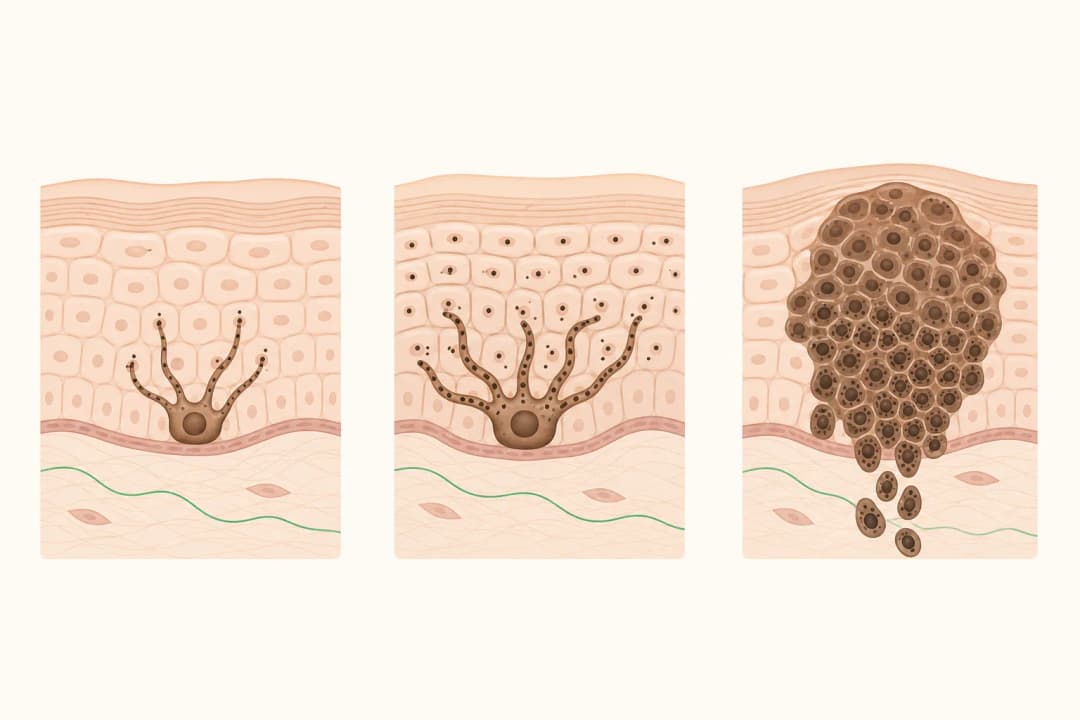
The phrase may describe melanoma arising in skin over the back, melanoma affecting tissue near the spinal column, or melanoma that has spread to the spine from another site. These situations are not interchangeable. A pathology report, examination, and imaging help the care team identify the starting point and whether the spinal cord or nearby nerves are involved.
Symptoms can include a new or changing pigmented lesion on the back, persistent back pain, weakness, altered sensation, or difficulty walking. A symptom does not establish melanoma; many spinal and skin problems have other causes. The broader condition is explained in the melanoma overview.
What usually happens next
Arrange prompt review with a dermatologist or oncology team, especially if melanoma has already been found. Assessment may include examination of the skin and lymph nodes, tissue sampling, and scans selected for the suspected location. If a skin lesion is involved, surgical excision may provide both diagnosis and local treatment.
The team may discuss sentinel lymph node biopsy, wider tumour removal surgery, or skin cancer surgery according to the pathology and scan findings. If disease is advanced or has spread, immunotherapy may be considered. Keep copies of pathology and imaging reports, and tell clinicians about new neurological symptoms.
When to seek urgent care
Seek emergency care for rapidly worsening leg weakness, numbness around the groin, loss of bladder or bowel control, or sudden difficulty walking. These symptoms can signal pressure on spinal nerves and need urgent assessment, regardless of the cause.
Contact the treating team promptly for increasing back pain, night pain, new limb symptoms, or a skin lesion that changes, bleeds, or fails to heal. If scans identify spread to the brain, the brain metastases page may help explain that term while your clinicians interpret your results.
Questions for your doctor
Ask where the melanoma began, what the pathology shows, whether the spinal cord or nerves are affected, which scans are needed, and how the findings change treatment choices. Ask how symptoms should be monitored and whom to contact outside appointments.
Find care
General Clinics & Polyclinics in Abu Dhabi
That answer is general. If you want it applied to your own case, these are licensed general clinics & polyclinics listed in Abu Dhabi.
27 Ar Ruwwad St - Shakhbout City - MSH4 - Abu Dhabi - United Arab Emirates
Accepts: Daman, Thiqa, Cigna, MetLife +20 more
Al Ruwais, Al Dhafrah
Accepts: Daman, Thiqa, AXA, Cigna +16 more
Al Bahyah - Al Bahyah Old - Abu Dhabi - United Arab Emirates
Accepts: Daman, Thiqa, Cigna, Allianz Care +18 more
Abu Dhabi
Accepts: Daman, Thiqa, AXA, Cigna +27 more
Ordered by verification status and how complete each clinic's public record is, then alphabetically. This is a directory listing, not a ranking — Zavis does not rate or recommend providers.
A factual listing drawn from the DHA, DOH and MOHAP licence registers. It is not a referral, an endorsement, or advice that any of these providers is right for you.
Questions people ask
Does spinal melanoma always start in the spine?
No. The term can refer to melanoma near the spine or melanoma that has spread there, so the original site must be established.
Can back pain confirm spinal melanoma?
No. Back pain has many possible causes, but persistent or neurological symptoms need timely clinical assessment.
Related
Related reading
Keep reading
Medical disclaimer. This page is general health information, not medical advice, and it cannot diagnose you. Always consult a licensed healthcare provider about your own symptoms and treatment. In an emergency in the UAE, call 998 for an ambulance.