
Melanoma: signs, diagnosis and treatment
At a glance
- Condition type
- Skin cancer involving pigment-making cells
- Common presentation
- A new or changing pigmented skin lesion
- Diagnosis
- Clinical examination and laboratory assessment of a tissue sample
- Main treatment
- Usually surgical removal, with additional treatment when indicated
What melanoma is
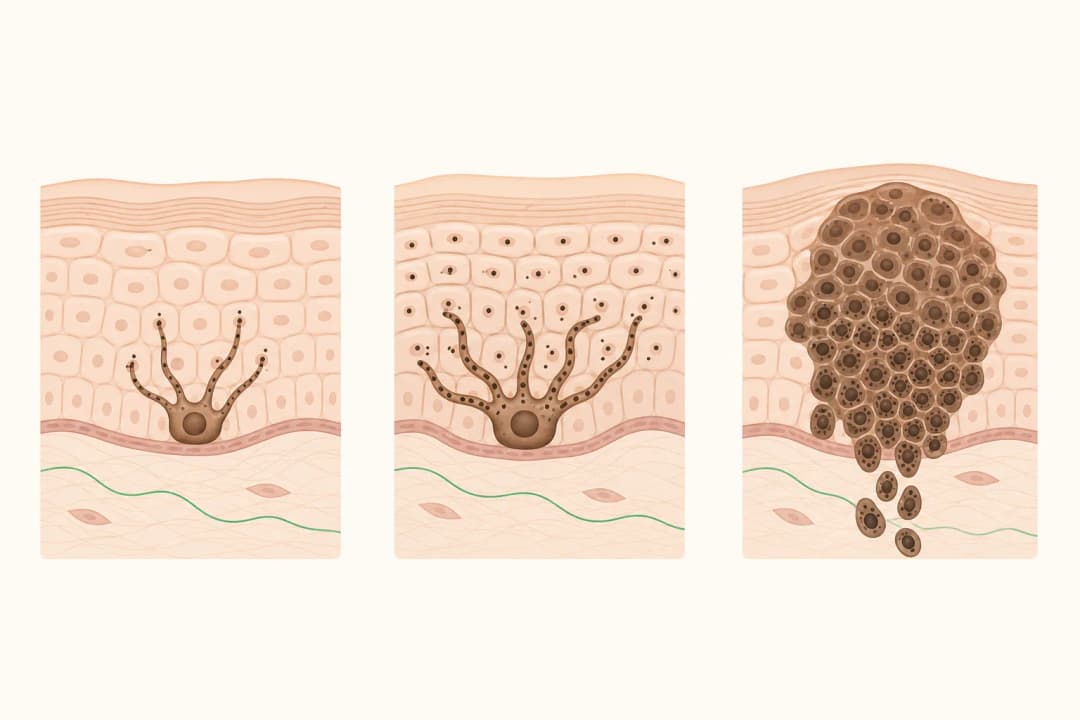
Melanoma is a skin cancer that may develop in a mole or in previously normal-looking skin.
It begins in pigment-making cells called melanocytes. Early assessment matters because melanoma can grow deeper into the skin and, in some cases, travel beyond the original site. It can occur on sun-exposed or covered skin, including the scalp, nails, soles, and between the toes.
Changes worth checking
Changing Mole is a very common presentation of melanoma. A spot may enlarge, alter in colour, develop an uneven outline, look different from nearby moles, itch, crust, or bleed. A Bleeding Mole is also a common presentation. These changes need assessment, but they do not by themselves diagnose melanoma.
Arrange a prompt skin examination for a new or changing pigmented mark, especially if it continues to evolve. Seek urgent medical care for heavy bleeding, a rapidly enlarging lesion, or a wound that will not stop bleeding.
How it develops
Melanoma develops when melanocytes acquire changes that let them multiply out of control. Ultraviolet exposure can damage skin cells, while inherited traits and a person’s mole pattern can also contribute. A melanoma may arise within an existing mole, but many arise separately from one.
Course and progression
Some melanomas change gradually, while others become noticeable over a shorter period. Clinicians assess the thickness of the lesion and whether cells have reached nearby lymph nodes or other areas. That information guides treatment planning and the intensity of follow-up.
Factors that can raise risk
Risk can be higher with repeated ultraviolet exposure, episodes of sunburn, naturally fair or easily freckled skin, many moles, atypical moles, a personal history of skin cancer, or melanoma in close relatives. Having a risk factor does not mean melanoma will develop, and people without an obvious risk factor can still develop it.
How melanoma is diagnosed
A dermatologist usually examines the whole skin surface, not only the spot that prompted the visit. Dermoscopy uses a lighted magnifier to inspect pigment patterns. If a lesion is suspicious, removal of all or part of it for laboratory examination confirms the diagnosis. Further examinations or scans may be considered when staging is needed.
Treatment options
Surgery is commonly used to remove melanoma and a margin of surrounding skin. Depending on the diagnosis, the team may discuss lymph-node assessment, further surgery, medicines that help the immune system recognise cancer cells, or medicines aimed at particular tumour changes. Your plan depends on the site, depth, stage, general health, and your preferences.
After treatment and everyday care
Follow-up visits are a chance to examine the treated area, review the rest of the skin, and discuss new symptoms. Learn where the scar and nearby lymph-node areas are so you can notice a new lump or persistent change. Emotional support can be helpful if skin checks or a cancer diagnosis create ongoing worry.
Possible complications
Treatment can leave a scar, altered sensation, tightness, or swelling near the operation site. Melanoma that has spread can cause symptoms related to the affected area. Report a new persistent headache, unexplained neurological change, breathlessness, bone pain, or new lump to your treating team so it can be assessed in context.
Skin protection and self-awareness
Use shade, protective clothing, sunglasses, and a broad-spectrum sunscreen as part of routine sun protection. Avoid deliberate tanning and check your skin in good light, including less visible areas. Comparing a mark with its own previous appearance is often more useful than trying to decide whether it matches a single checklist.
Finding the right care
A dermatologist can assess a suspicious mole and coordinate biopsy or surgery. If melanoma is confirmed, care may also involve surgical, medical oncology, pathology, radiology, and nursing professionals. Bring a list of changes you have noticed, relevant family history, and photographs that show how a lesion has changed over time.
Questions people ask
Can melanoma occur where the sun does not usually reach?
Yes. It can appear on covered skin as well as on the scalp, nails, palms, soles, and other less visible sites.
Does a changing mole mean I have melanoma?
No. Changing Mole is a very common presentation of melanoma, but many changing moles have other causes. A clinician should examine a change that persists or looks concerning.
What should I bring to a skin appointment?
Bring details of when the mark changed, medicines you use, relevant family history, and any clear photographs that show its earlier appearance.
Related
Related reading
Keep reading
Find care
Dermatology & Skin Care in Dubai
Where melanoma: signs, diagnosis and treatment is assessed depends on what is causing it. These are licensed dermatology & skin care listed in Dubai.
Wafi Mall - 1st Floor - Code “B”/ Entrance - Gate 3 Oud Metha Rd - inside the mall - Umm Hurair Second - Dubai Healthcare City - Dubai - United Arab Emirates
Accepts: Insurance Accepted
Al Ferdous 4, Al Wasl Road 603, AL SAFFA FIRST, Dubai
Accepts: Daman, Thiqa, AXA, Cigna +24 more
The mall, Jumeira Street 856a, UM SUQAIM SECOND, Dubai
Accepts: Thiqa, AXA, Bupa Global, Dubai Insurance Company +10 more
The Arcade, 4 Street 8, Al Garhoud, Dubai
Accepts: Daman, Thiqa, AXA, Cigna +26 more
Ordered by verification status and how complete each clinic's public record is, then alphabetically. This is a directory listing, not a ranking — Zavis does not rate or recommend providers.
A factual listing drawn from the DHA, DOH and MOHAP licence registers. It is not a referral, an endorsement, or advice that any of these providers is right for you.
Medical disclaimer. This page is general health information, not medical advice, and it cannot diagnose you. Always consult a licensed healthcare provider about your own symptoms and treatment. In an emergency in the UAE, call 998 for an ambulance.