
What should you know about sinonasal mucosal melanoma?
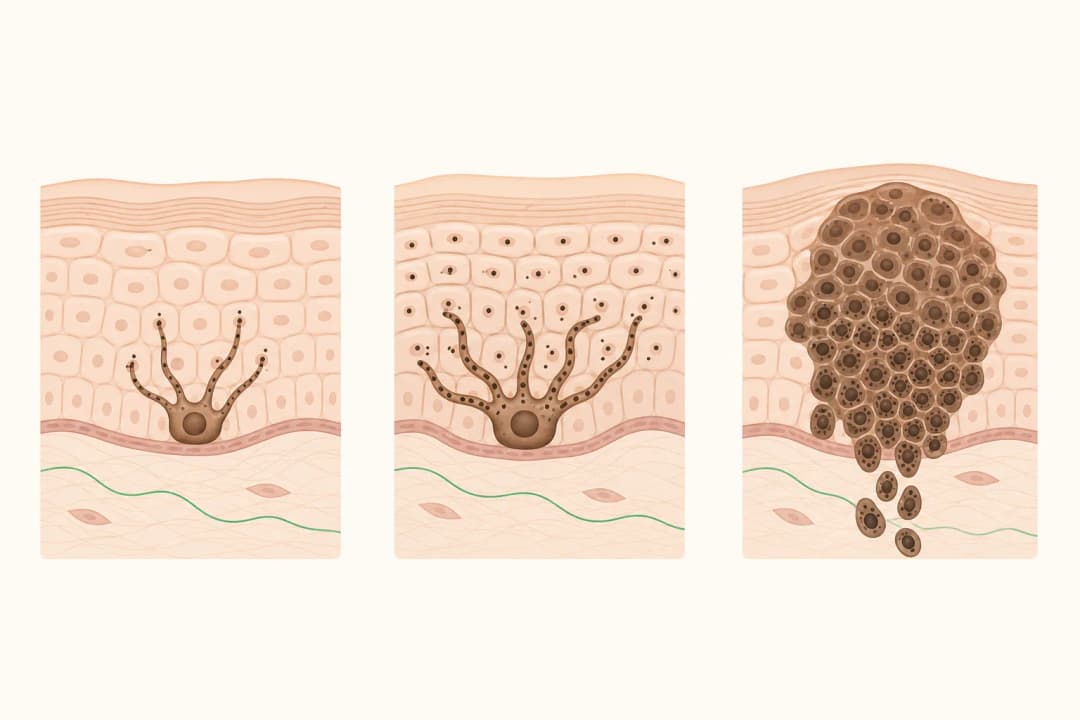
Short answer
Sinonasal mucosal melanoma is a rare cancer of the pigment-producing cells in the lining of the nose or sinuses, requiring specialist assessment and coordinated treatment.
This answers one question. It is not a diagnosis and does not replace an assessment by a licensed doctor.
At a glance
- Site
- Nasal or sinus lining
- Diagnosis
- Specialist examination, imaging and biopsy
- Care
- Often coordinated by a multidisciplinary team
What it means
It develops in mucosal tissue rather than the more familiar skin surface. Symptoms can include one-sided nasal blockage, recurrent nosebleeds, reduced sense of smell, facial pressure or a mass in the nose. These symptoms have many possible causes, so they do not establish melanoma on their own. Examination by an ear, nose and throat specialist, nasal endoscopy and a biopsy may be used to identify the tumour. Imaging helps show its local extent and whether other areas need assessment.
The treatment plan depends on the tumour's position, size, spread and the person's general health. Melanoma information can help explain the disease family, while this mucosal form needs site-specific planning.
What to do next
Arrange prompt specialist review for persistent one-sided blockage, repeated bleeding or a visible nasal growth. Bring a list of medicines, previous scans and questions about the biopsy result. A team may discuss tumour removal surgery, surgical excision or other cancer surgery, followed by treatment based on pathology and staging. Immunotherapy may be considered in selected situations. Sentinel lymph node biopsy is a staging procedure in some melanoma pathways, but suitability depends on the tumour site.
When to seek care
Seek urgent medical help for heavy or ongoing nosebleeding, trouble breathing, sudden vision changes, severe facial swelling, confusion or a rapidly worsening headache. New neurological symptoms such as weakness, seizures or difficulty speaking need emergency assessment because cancer can sometimes spread to distant organs, including the brain.
Questions for your doctor
Ask where the tumour started, what the biopsy shows, which scans are needed, whether surgery can remove it fully, and which specialists will coordinate care. Ask how treatment could affect breathing, smell, vision and appearance, and what follow-up schedule will monitor for recurrence.
Find care
General Clinics & Polyclinics in Abu Dhabi
That answer is general. If you want it applied to your own case, these are licensed general clinics & polyclinics listed in Abu Dhabi.
27 Ar Ruwwad St - Shakhbout City - MSH4 - Abu Dhabi - United Arab Emirates
Accepts: Daman, Thiqa, Cigna, MetLife +20 more
Al Ruwais, Al Dhafrah
Accepts: Daman, Thiqa, AXA, Cigna +16 more
Al Bahyah - Al Bahyah Old - Abu Dhabi - United Arab Emirates
Accepts: Daman, Thiqa, Cigna, Allianz Care +18 more
Abu Dhabi
Accepts: Daman, Thiqa, AXA, Cigna +27 more
Ordered by verification status and how complete each clinic's public record is, then alphabetically. This is a directory listing, not a ranking — Zavis does not rate or recommend providers.
A factual listing drawn from the DHA, DOH and MOHAP licence registers. It is not a referral, an endorsement, or advice that any of these providers is right for you.
Questions people ask
Is sinonasal mucosal melanoma the same as ordinary skin melanoma?
It belongs to the melanoma family but starts in mucosal lining, so symptoms, surgery and staging require site-specific specialist planning.
Can a nosebleed confirm sinonasal mucosal melanoma?
No. Nosebleeds have many causes; recurrent or one-sided bleeding should be assessed, especially when accompanied by blockage or a nasal mass.
Related
Related reading
Keep reading
Medical disclaimer. This page is general health information, not medical advice, and it cannot diagnose you. Always consult a licensed healthcare provider about your own symptoms and treatment. In an emergency in the UAE, call 998 for an ambulance.