
What to know about a signal-averaged electrocardiogram
Short answer
A signal-averaged electrocardiogram is a specialised ECG that combines repeated heartbeats to detect small electrical signals that a standard ECG may not show.
This answers one question. It is not a diagnosis and does not replace an assessment by a licensed doctor.
At a glance
- Recording
- Skin electrodes capture repeated heartbeats while you remain still
- Purpose
- Computer processing looks for subtle electrical signals in the heart waveform
- Meaning
- The result is interpreted with symptoms, history, examination, and other tests
What the test measures
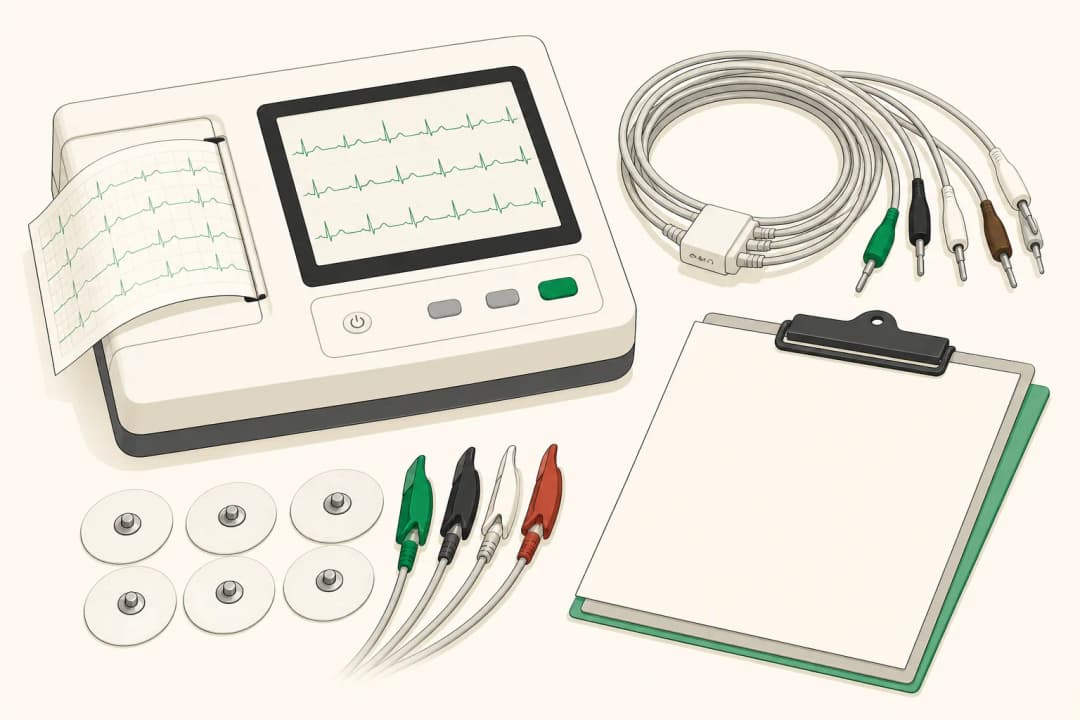
A signal-averaged ECG uses skin electrodes to record the heart's electrical activity. Computer processing aligns multiple beats and reduces background noise, allowing the clinician to examine very low-amplitude signals near the end of the electrical waveform. It is different from a routine ECG, which displays the heart rhythm and electrical pattern from a shorter recording.
The test may be considered when a clinician is assessing the risk of particular rhythm problems or interpreting symptoms alongside other findings. A result is not a diagnosis on its own and must be interpreted with your history, examination, and other tests.
Preparing for the appointment
Wear clothing that allows access to the chest and tell the team about medicines, implanted devices, skin sensitivity, and recent symptoms. The electrodes are placed on clean skin while you remain still and quiet. The recording is non-invasive; removing electrodes may briefly irritate sensitive skin.
Ask whether you should also have a routine Electrocardiogram, longer rhythm monitoring, or another assessment. Bring previous results if available so the clinician can compare patterns over time.
When not to wait for testing
Do not wait for a planned ECG if you develop chest pressure, severe breathlessness, fainting, sudden weakness, a sustained racing or irregular heartbeat, or new confusion. Seek emergency care for symptoms that are severe, sudden, or worsening. A planned test is not a substitute for urgent assessment.
Questions to discuss
Ask why this specialised recording is being recommended, what question it is intended to answer, how the result may change your care, whether other rhythm tests are needed, and when you should expect an explanation of the findings.
Find care
General Clinics & Polyclinics in Abu Dhabi
That answer is general. If you want it applied to your own case, these are licensed general clinics & polyclinics listed in Abu Dhabi.
27 Ar Ruwwad St - Shakhbout City - MSH4 - Abu Dhabi - United Arab Emirates
Accepts: Daman, Thiqa, Cigna, MetLife +20 more
Al Ruwais, Al Dhafrah
Accepts: Daman, Thiqa, AXA, Cigna +16 more
Al Bahyah - Al Bahyah Old - Abu Dhabi - United Arab Emirates
Accepts: Daman, Thiqa, Cigna, Allianz Care +18 more
Abu Dhabi
Accepts: Daman, Thiqa, AXA, Cigna +27 more
Ordered by verification status and how complete each clinic's public record is, then alphabetically. This is a directory listing, not a ranking — Zavis does not rate or recommend providers.
A factual listing drawn from the DHA, DOH and MOHAP licence registers. It is not a referral, an endorsement, or advice that any of these providers is right for you.
Questions people ask
Is a signal-averaged ECG painful?
The recording itself is non-invasive. Electrode removal can cause brief discomfort or mild skin irritation in some people.
Does an abnormal result confirm a heart rhythm disorder?
No. It is one part of an assessment and may need to be considered with other ECGs or rhythm monitoring.
Related
Related reading
Keep reading
Medical disclaimer. This page is general health information, not medical advice, and it cannot diagnose you. Always consult a licensed healthcare provider about your own symptoms and treatment. In an emergency in the UAE, call 998 for an ambulance.