
Sickle cell disease and race: what to know
Short answer
Sickle cell disease is more frequent in several ancestry groups, but race alone cannot diagnose or exclude the condition.
This answers one question. It is not a diagnosis and does not replace an assessment by a licensed doctor.
At a glance
- Race and diagnosis
- Race or ethnicity cannot confirm sickle cell disease.
- Confirmation
- A suitable blood test identifies the relevant haemoglobin pattern.
Why patterns differ
The inherited gene changes linked with sickle haemoglobin are more common in people whose ancestry includes sub-Saharan Africa, the Middle East, India or Mediterranean regions. This reflects population history and inheritance, not a biological boundary between races. People who identify with the same race can have different family origins and different haemoglobin genes.
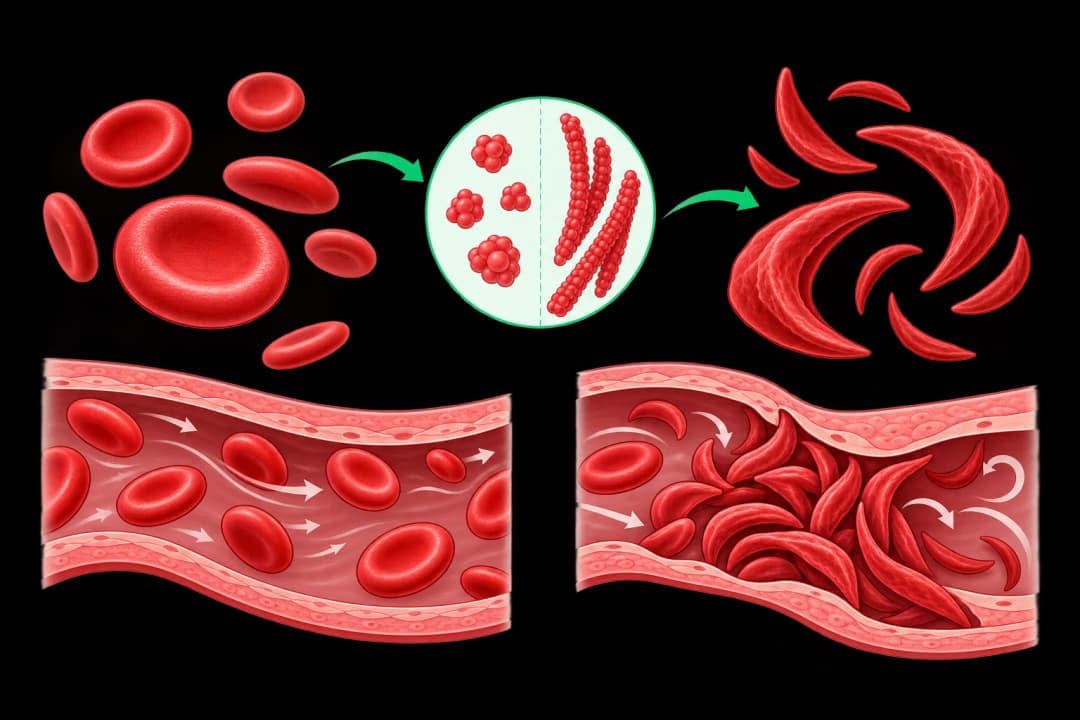
Sickle cell trait and sickle cell disease are different. A person with the trait may have no symptoms, while disease can cause episodes of joint pain, fatigue or pale skin. Symptoms alone cannot determine which haemoglobin pattern is present.
Use testing, not labels
If you have a family history, come from a region where the trait is more common, or want information before pregnancy, ask about a blood test. Testing can identify the haemoglobin pattern and guide appropriate counselling. Premarital screening is another setting in which couples may discuss inherited blood conditions with a qualified professional.
When symptoms need attention
Seek urgent medical help for severe pain, fever, chest pain, breathing difficulty, confusion, fainting or sudden weakness. These warning signs should be assessed promptly whether or not a person has had testing and regardless of racial or ethnic identity.
Questions for your doctor
Ask which haemoglobin test is appropriate, how results distinguish trait from disease, and whether a relative should be tested. If pregnancy is being considered, ask about partner testing and genetic counselling.
Find care
General Clinics & Polyclinics in Abu Dhabi
That answer is general. If you want it applied to your own case, these are licensed general clinics & polyclinics listed in Abu Dhabi.
27 Ar Ruwwad St - Shakhbout City - MSH4 - Abu Dhabi - United Arab Emirates
Accepts: Daman, Thiqa, Cigna, MetLife +20 more
Al Ruwais, Al Dhafrah
Accepts: Daman, Thiqa, AXA, Cigna +16 more
Al Bahyah - Al Bahyah Old - Abu Dhabi - United Arab Emirates
Accepts: Daman, Thiqa, Cigna, Allianz Care +18 more
Abu Dhabi
Accepts: Daman, Thiqa, AXA, Cigna +27 more
Ordered by verification status and how complete each clinic's public record is, then alphabetically. This is a directory listing, not a ranking — Zavis does not rate or recommend providers.
A factual listing drawn from the DHA, DOH and MOHAP licence registers. It is not a referral, an endorsement, or advice that any of these providers is right for you.
Questions people ask
Is sickle cell disease limited to one race?
No. It occurs in people with ancestry from several regions, and family history is more informative than a racial label.
Can symptoms show whether someone has the trait or disease?
No. Symptoms may raise a question, but testing is needed to distinguish the haemoglobin conditions.
Related
Related reading
Keep reading
Medical disclaimer. This page is general health information, not medical advice, and it cannot diagnose you. Always consult a licensed healthcare provider about your own symptoms and treatment. In an emergency in the UAE, call 998 for an ambulance.