
What should you know about secondary hyperthyroidism symptoms?
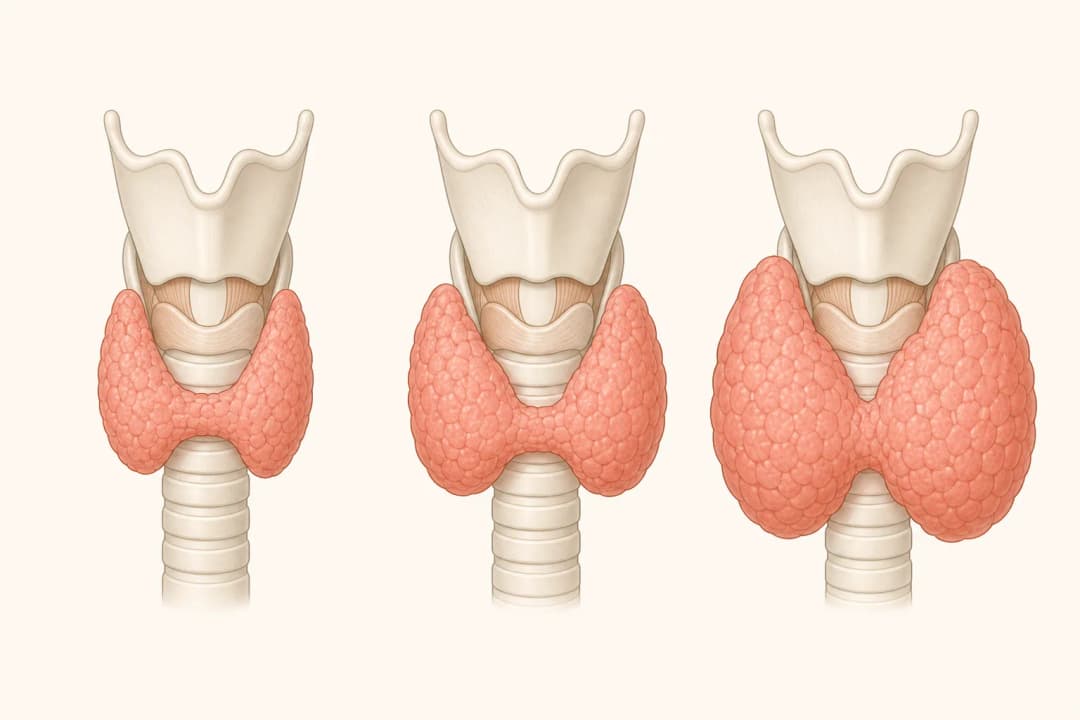
Short answer
Secondary hyperthyroidism symptoms can include palpitations, heat intolerance, sweating, diarrhoea, anxiety and difficulty sleeping, so medical assessment can identify the cause.
This answers one question. It is not a diagnosis and does not replace an assessment by a licensed doctor.
At a glance
- Possible pattern
- Palpitations with heat intolerance, sweating, bowel changes or poor sleep
- Assessment
- A clinician may combine examination with thyroid blood tests
What the symptoms can mean
Hyperthyroidism means thyroid hormone activity is higher than the body needs. In secondary hyperthyroidism, the thyroid is being driven by a problem outside the thyroid itself, so the underlying cause matters. People may notice a fast or forceful heartbeat, feeling unusually warm, excessive sweating, night sweats, loose stools, restlessness or trouble sleeping. Feeling anxious can occur because excess thyroid hormone stimulates body systems involved in alertness. Symptoms may appear together or develop gradually, and their intensity does not by itself identify the cause.
What to do next
Arrange a clinical review if these symptoms are persistent, new, or occurring in combination. Keep a brief record of when palpitations, sweating, bowel changes or sleep disruption occur, and list medicines, supplements and recent illnesses. A clinician may examine your pulse and neck and request blood tests that assess thyroid activity and its control signals. Do not change prescribed treatment or start thyroid products without advice. For background, see Hyperthyroidism and the symptom pages for Palpitations, Heat Intolerance, Excessive Sweating, Night Sweats, Diarrhoea, Feeling Anxious and Difficulty Sleeping.
When to seek care
Seek urgent medical help for chest pain, fainting, severe breathlessness, confusion, or a very rapid or irregular heartbeat with marked weakness. Contact a clinician promptly if vomiting, diarrhoea, sweating or heat intolerance is causing difficulty keeping fluids down, or if symptoms are worsening quickly. Urgency is based on the symptom and how unwell you feel, not on assuming that a symptom proves a thyroid disorder.
Questions for your doctor
Could another condition, medicine or supplement be driving these thyroid symptoms? Which blood tests are needed, and when should they be repeated? What symptoms should prompt urgent help?
Find care
General Clinics & Polyclinics in Abu Dhabi
That answer is general. If you want it applied to your own case, these are licensed general clinics & polyclinics listed in Abu Dhabi.
27 Ar Ruwwad St - Shakhbout City - MSH4 - Abu Dhabi - United Arab Emirates
Accepts: Daman, Thiqa, Cigna, MetLife +20 more
Al Ruwais, Al Dhafrah
Accepts: Daman, Thiqa, AXA, Cigna +16 more
Al Bahyah - Al Bahyah Old - Abu Dhabi - United Arab Emirates
Accepts: Daman, Thiqa, Cigna, Allianz Care +18 more
Abu Dhabi
Accepts: Daman, Thiqa, AXA, Cigna +27 more
Ordered by verification status and how complete each clinic's public record is, then alphabetically. This is a directory listing, not a ranking — Zavis does not rate or recommend providers.
A factual listing drawn from the DHA, DOH and MOHAP licence registers. It is not a referral, an endorsement, or advice that any of these providers is right for you.
Questions people ask
Can anxiety be part of secondary hyperthyroidism symptoms?
Feeling anxious can occur alongside excess thyroid activity, but anxiety alone does not establish the cause.
Do symptoms always appear together?
No. Symptoms can occur separately or in changing combinations, which is why the overall pattern and examination matter.
Related
Related reading
Keep reading
Medical disclaimer. This page is general health information, not medical advice, and it cannot diagnose you. Always consult a licensed healthcare provider about your own symptoms and treatment. In an emergency in the UAE, call 998 for an ambulance.