
What should you know about salpingectomy without oophorectomy?
Short answer
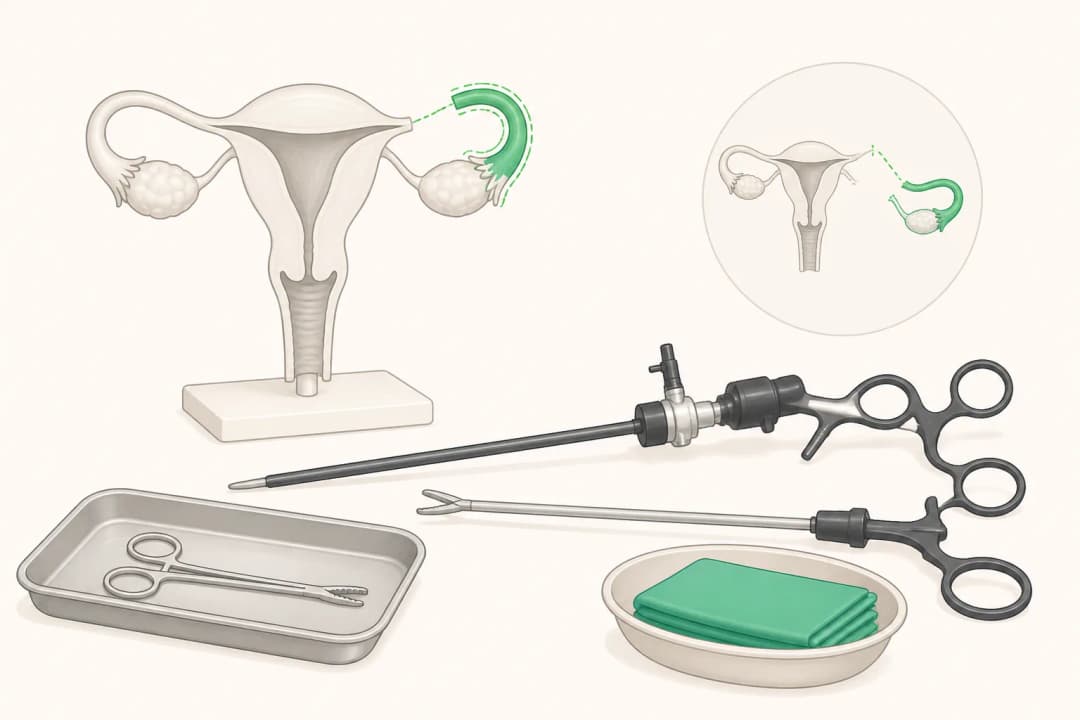
Salpingectomy without oophorectomy removes one or both fallopian tubes while leaving the ovaries in place, so it is not ovary-removal surgery.
This answers one question. It is not a diagnosis and does not replace an assessment by a licensed doctor.
At a glance
- Removed
- One or both fallopian tubes
- Preserved
- The ovaries, unless another operation is planned
- Fertility effect
- Depends on the remaining reproductive anatomy
Tube removal and ovary preservation
The tubes carry an egg from an ovary toward the uterus. Oophorectomy means removing an ovary; salpingectomy does not mean this. When the ovaries remain, they can continue their hormone-producing function. The exact effect on fertility depends on whether one tube remains, the condition of the reproductive organs and why surgery is needed.
The operation may be advised for a damaged or blocked tube, a fluid-filled tube, an ectopic pregnancy or another gynaecological concern. It can be performed with small laparoscopic incisions or through a larger abdominal incision, depending on the clinical situation.
Planning before and after surgery
Ask the surgeon to confirm whether one or both tubes will be removed and whether any other procedure may be needed. Share your pregnancy plans, medicines and previous abdominal or pelvic surgery. Plan transport home and support with household tasks during early recovery.
Keep incisions clean and follow instructions about bathing, sex, driving, exercise and lifting. Walk gently as advised and use pain relief according to the discharge plan. If you are trying to conceive, request a clear plan for fertility review rather than assuming the operation has the same effect for everyone.
Warning signs after the operation
Call the surgical team about pain that is worsening instead of settling, a hot or draining wound, persistent vomiting, fever or trouble passing urine. Seek urgent care for fainting, severe abdominal pain, heavy bleeding, chest pain, breathing difficulty or a painful swollen calf.
Questions to take along
Ask whether the ovaries and uterus will remain, how many tubes are affected, what fertility options may be available, which approach is planned and what recovery limits apply. Also ask which symptoms require same-day advice and who to contact outside clinic hours.
Find care
General Clinics & Polyclinics in Abu Dhabi
That answer is general. If you want it applied to your own case, these are licensed general clinics & polyclinics listed in Abu Dhabi.
27 Ar Ruwwad St - Shakhbout City - MSH4 - Abu Dhabi - United Arab Emirates
Accepts: Daman, Thiqa, Cigna, MetLife +20 more
Al Ruwais, Al Dhafrah
Accepts: Daman, Thiqa, AXA, Cigna +16 more
Al Bahyah - Al Bahyah Old - Abu Dhabi - United Arab Emirates
Accepts: Daman, Thiqa, Cigna, Allianz Care +18 more
Abu Dhabi
Accepts: Daman, Thiqa, AXA, Cigna +27 more
Ordered by verification status and how complete each clinic's public record is, then alphabetically. This is a directory listing, not a ranking — Zavis does not rate or recommend providers.
A factual listing drawn from the DHA, DOH and MOHAP licence registers. It is not a referral, an endorsement, or advice that any of these providers is right for you.
Questions people ask
Is this the same as an oophorectomy?
No. Oophorectomy removes an ovary; salpingectomy removes a fallopian tube.
Will the ovaries still produce hormones?
Ovaries left in place can continue producing hormones, although your own medical situation determines what to expect.
Related
Related reading
Keep reading
Medical disclaimer. This page is general health information, not medical advice, and it cannot diagnose you. Always consult a licensed healthcare provider about your own symptoms and treatment. In an emergency in the UAE, call 998 for an ambulance.