
Salpingectomy: Fallopian Tube Removal
At a glance
- Also called
- Fallopian tube removal
- Anaesthesia
- Usually general anaesthesia
- Scope
- One tube or both tubes
Find care
Hospitals & Medical Centers in Abu Dhabi
Licensed hospitals & medical centers listed in Abu Dhabi. Appearing here means a provider holds a UAE licence in this category — not that it offers salpingectomy: fallopian tube removal, which is worth confirming with the clinic before you book.
Ahalia Hospital Musaffah Building - Musaffah - Musaffah Industrial - Abu Dhabi - United Arab Emirates
Accepts: Daman, Thiqa, AXA, Cigna +26 more
Al Ruwais Industrial City - Abu Dhabi - United Arab Emirates
Accepts: Daman, Thiqa, AXA, Cigna +30 more
Abu Dhabi, Abu Dhabi
Accepts: Daman, Thiqa, AXA, Cigna +30 more
Plot No. 11-12, SE 44 Khalifa City A - مدينة خليفة - جنوب شرق 44 - أبو ظبي - United Arab Emirates
Accepts: Daman, Thiqa, AXA, Cigna +26 more
7 Al Kawadir 2 St - Khalifa City - SE44 - Abu Dhabi - United Arab Emirates
Accepts: Daman, Thiqa, AXA, Cigna +25 more
Mohammed Bin Khalif Street 669, Al Mussala, Abu Dhabi, Abu Dhai - 35453 - 669 Mohammed Bin Khalifa St - Al Manhal - W15 02 - Abu Dhabi - United Arab Emirates
Accepts: Daman, Thiqa, AXA, Cigna +22 more
Ordered by verification status and how complete each clinic's public record is, then alphabetically. This is a directory listing, not a ranking — Zavis does not rate or recommend providers.
A factual listing drawn from the DHA, DOH and MOHAP licence registers. It is not a referral, an endorsement, or advice that any of these providers is right for you.
What is a salpingectomy?
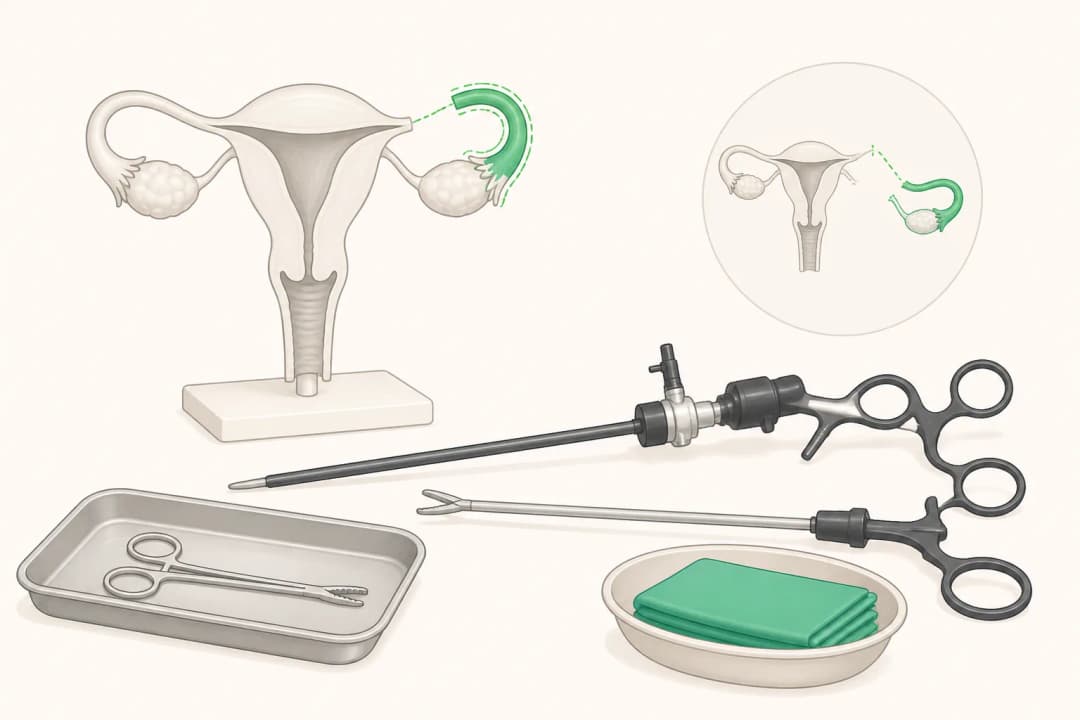
Salpingectomy is an operation to remove one fallopian tube (unilateral) or both tubes (bilateral).
The tubes carry an egg from an ovary towards the uterus. Removing a tube does not remove the ovary, so the remaining ovary can continue releasing hormones and eggs. The operation may be performed through small abdominal cuts using keyhole surgery, or through a larger incision when the situation is urgent or more extensive surgery is needed.
What does recovery actually involve?
After surgery, expect tiredness, abdominal soreness and sometimes shoulder-tip discomfort from the gas used during keyhole surgery. Walking gently, taking prescribed pain relief and keeping the wounds clean can support recovery. Bowel habits may change briefly. Your surgeon will explain when to shower, drive, exercise, have sex and return to work; these timings depend on the operation and your healing.
What can go wrong, and how often?
Every operation has possible complications, although many people recover without a serious problem. Bleeding, infection, blood clots, a reaction to anaesthesia or injury to nearby organs can occur. Keyhole surgery may need to change to an open operation if visibility or safety becomes a concern. Contact your surgical team promptly for fever, worsening pain, heavy bleeding, wound redness or discharge, leg swelling, chest pain or breathing difficulty.
Will it fix the problem, and for how long?
Salpingectomy removes the treated tube, so a blockage or disease limited to that tube cannot return in the same tube. It can treat the affected tube in an ectopic pregnancy or hydrosalpinx, but it may not address other causes of pelvic pain or difficulty conceiving. If both tubes are removed, natural pregnancy cannot occur because sperm and egg cannot meet through the tubes; fertility treatment may still be discussed.
Key facts at a glance
The operation is usually carried out under general anaesthesia. The surgical plan depends on whether one or both tubes are removed and on the reason for surgery.
Who might need salpingectomy?
A gynaecologist may recommend it for an ectopic pregnancy, a severely damaged or blocked tube, hydrosalpinx, infection, twisting or a mass involving a tube, or as part of selected risk-reducing surgery. The recommendation considers your symptoms, scan findings, pregnancy plans and whether the other tube and ovary look healthy.
What happens during the procedure?
You meet the anaesthesia and surgical team, confirm the planned operation and receive instructions about eating, drinking and medicines. During surgery, the surgeon examines the pelvis, separates the tube from surrounding tissue, seals blood vessels and removes the tube. The tissue may be sent for laboratory examination. The team then closes the incisions and monitors you as you wake.
Recovery timeline
You may go home the same day after uncomplicated keyhole surgery, while urgent or open surgery can require longer observation. Soreness and low energy often improve gradually over the first days. Increase activity in small steps and attend the wound or follow-up review arranged for you. Seek urgent help for severe or increasing abdominal pain, fainting, heavy bleeding, fever, or new breathing symptoms.
Possible risks
Risks include wound infection, bleeding, blood clots, anaesthetic problems, scar tissue and injury to the bowel, bladder, blood vessels or ureter. There can also be persistent pain or a need for further treatment if the underlying condition affects another part of the pelvis. Ask which risks are especially relevant to your planned route and medical history.
Alternatives to salpingectomy
Alternatives depend on the diagnosis. A damaged tube may sometimes be monitored or repaired, while an ectopic pregnancy may be managed with medicine or another operation in suitable circumstances. Fertility planning may include assisted reproduction when the tubes are blocked or absent. Your clinician can compare these choices with your symptoms, pregnancy plans and urgency.
Finding a provider
Look for a gynaecologist or minimally invasive gynaecological surgeon who can explain why tube removal is recommended, whether one or both tubes are involved, and how the operation may affect fertility. Before consenting, ask about the surgical route, expected recovery, warning signs and the follow-up plan.
Questions people ask
Can I become pregnant after one tube is removed?
Pregnancy may still be possible if the remaining tube, ovary and other fertility factors are healthy.
Will removing both tubes cause early menopause?
Tube removal alone does not remove the ovaries, which produce the hormones involved in the menstrual cycle.
When should I seek help after surgery?
Contact your team for fever, worsening pain, heavy bleeding, wound discharge, fainting, chest pain or breathing difficulty.
Related
Related reading
Keep reading
Medical disclaimer. This page is general health information, not medical advice, and it cannot diagnose you. Always consult a licensed healthcare provider about your own symptoms and treatment. In an emergency in the UAE, call 998 for an ambulance.