
What should you know about salpingectomy surgery?
Short answer
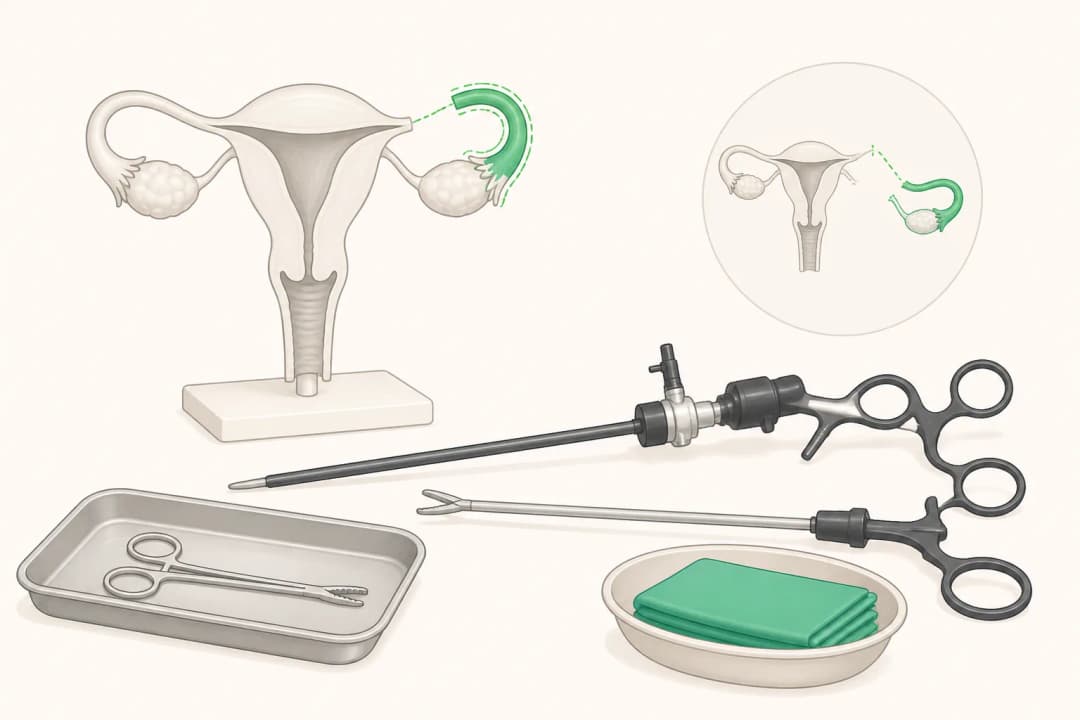
Salpingectomy surgery removes one or both fallopian tubes, usually through keyhole or open abdominal surgery, depending on the reason and your circumstances.
This answers one question. It is not a diagnosis and does not replace an assessment by a licensed doctor.
At a glance
- Also called
- Fallopian tube removal
- May involve
- One tube or both tubes
- Approaches
- Laparoscopic or open surgery
What the operation means
The fallopian tubes connect the ovaries with the uterus and are where sperm and egg can meet. Removing a tube can treat a damaged, blocked or swollen tube, or manage an ectopic pregnancy. A salpingectomy may be one-sided or bilateral. The ovaries are not removed by this operation, so it is different from ovary removal.
A surgeon may use laparoscopic surgery through small abdominal openings, or an open approach when there is bleeding, extensive disease or another reason for a larger incision. Removing both tubes prevents natural movement of an egg into the uterus, but it does not itself remove the uterus or ovaries.
Preparing for recovery
Before surgery, discuss the reason for the operation, which tube is involved, the planned approach and how it may affect future pregnancy options. Tell the team about medicines, allergies, previous operations and any possibility of pregnancy. Arrange help with meals, transport and lifting while your abdomen heals.
Afterward, follow wound-care and activity instructions. Gentle walking can support movement, while strenuous exercise and heavy lifting may need to wait. Take prescribed pain relief as directed and keep follow-up appointments. If pregnancy is a future goal, ask whether fertility assessment or assisted treatment is relevant to you.
When to seek medical care
Contact your surgical team promptly for worsening pain, increasing redness or swelling around an incision, pus, persistent vomiting, difficulty passing urine or a fever. Seek urgent help for severe abdominal pain, fainting, heavy bleeding, chest pain, breathlessness or a painful swollen leg. These symptoms need assessment rather than home observation.
Questions for your doctor
Ask: Why do I need a salpingectomy? Will one or both tubes be removed? Which surgical approach is planned? What will happen to fertility and pregnancy planning? Which symptoms should prompt urgent review, and when can I return to work, driving and exercise?
Find care
General Clinics & Polyclinics in Abu Dhabi
That answer is general. If you want it applied to your own case, these are licensed general clinics & polyclinics listed in Abu Dhabi.
27 Ar Ruwwad St - Shakhbout City - MSH4 - Abu Dhabi - United Arab Emirates
Accepts: Daman, Thiqa, Cigna, MetLife +20 more
Al Ruwais, Al Dhafrah
Accepts: Daman, Thiqa, AXA, Cigna +16 more
Al Bahyah - Al Bahyah Old - Abu Dhabi - United Arab Emirates
Accepts: Daman, Thiqa, Cigna, Allianz Care +18 more
Abu Dhabi
Accepts: Daman, Thiqa, AXA, Cigna +27 more
Ordered by verification status and how complete each clinic's public record is, then alphabetically. This is a directory listing, not a ranking — Zavis does not rate or recommend providers.
A factual listing drawn from the DHA, DOH and MOHAP licence registers. It is not a referral, an endorsement, or advice that any of these providers is right for you.
Questions people ask
Does salpingectomy remove the ovaries?
No. Salpingectomy removes the fallopian tubes; ovary removal is a separate operation.
Can pregnancy happen after salpingectomy?
It depends on whether one tube remains, the health of the reproductive organs and your individual fertility circumstances.
Related
Related reading
Keep reading
Medical disclaimer. This page is general health information, not medical advice, and it cannot diagnose you. Always consult a licensed healthcare provider about your own symptoms and treatment. In an emergency in the UAE, call 998 for an ambulance.