
What should you know about robotic donor hepatectomy?
Short answer
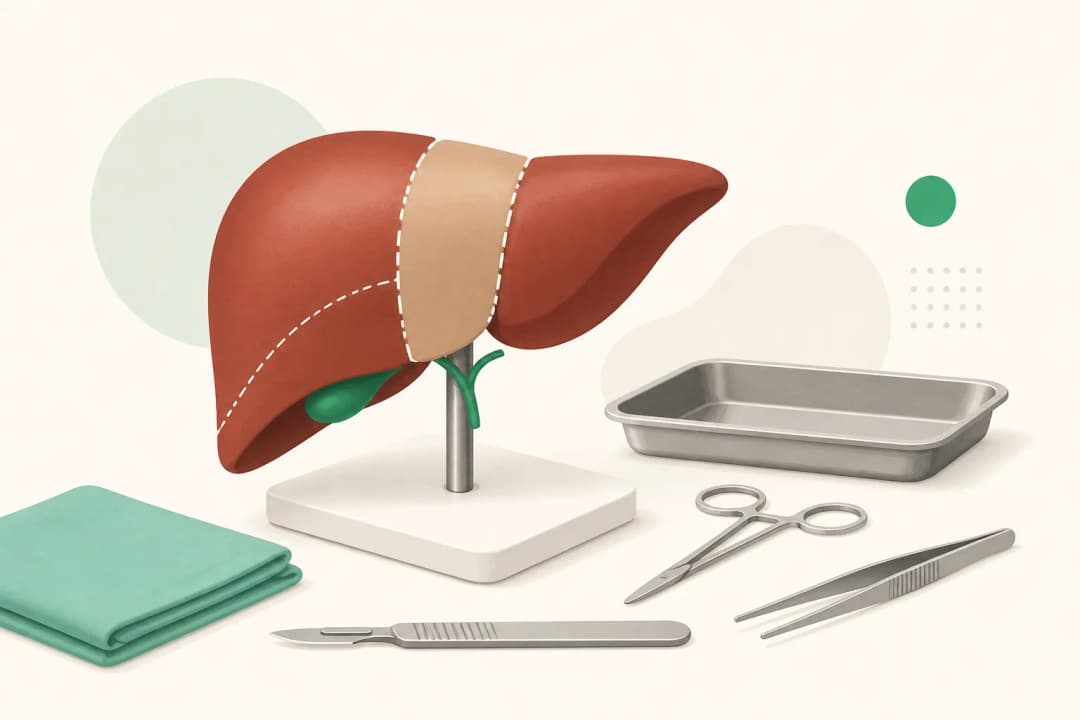
Robotic donor hepatectomy removes a planned portion of a healthy donor’s liver for transplantation using small surgical openings.
This answers one question. It is not a diagnosis and does not replace an assessment by a licensed doctor.
At a glance
- Reason
- Living donation for liver transplantation
- Assessment
- Imaging and health checks map anatomy and reserve
- Recovery
- Gradual activity with wound and liver-function monitoring
What donor hepatectomy involves
A donor hepatectomy is performed for someone giving part of their liver to a recipient. The liver can regrow enough tissue to support normal function, but donation is still major surgery and requires a careful independent assessment. Robotic instruments and a camera are inserted through small openings; the surgeon separates blood vessels and bile ducts, then removes the planned liver segment through an incision designed for extraction. Imaging is used to map the donor’s anatomy and confirm that the remaining liver is suitable.
The operation is different from a liver resection for removing a tumour. A donor is selected for safety, not because of a liver disease. The transplant team should explain alternatives, consent, privacy and the right to pause or decline.
Preparing as a donor
Expect assessments of liver health, general fitness, blood vessels and bile-duct anatomy, along with conversations about emotional wellbeing and practical support. Share every medicine, supplement and health condition. Plan several weeks of reduced activity, help with shopping and transport, and a reliable contact for concerns. Recovery includes gradual walking, wound care, hydration, nutrition and scheduled blood tests to check liver function and blood counts.
When to seek urgent help
After discharge, contact the transplant team for fever, worsening abdominal pain, repeated vomiting, increasing jaundice, pale stools, dark urine, wound discharge or a swollen abdomen. Seek emergency care for fainting, severe breathlessness, chest pain, sudden confusion or heavy bleeding. These symptoms can signal bleeding, infection, bile leakage or another complication requiring assessment.
Questions to ask
Ask which liver segment will be removed, how your anatomy affects the plan, how donor independence is protected, what support is available during recovery, when you may lift objects or work, and which blood-test changes require a same-day call.
Questions people ask
Is robotic donor hepatectomy minor surgery?
No. Small openings do not remove the need for extensive assessment, hospital recovery and careful follow-up.
Why is imaging important before donation?
It maps blood vessels, bile ducts and liver segments so the team can plan donation while preserving the donor’s remaining liver.
Related
Related reading
Keep reading
Cancer care in the UAE
Hospitals & Medical Centers in Abu Dhabi
Most UAE cancer care is delivered inside hospital services rather than by standalone oncology clinics, so these are licensed hospitals & medical centers listed in Abu Dhabi. Confirm the specific cancer service exists before you travel, and know that asking for a second opinion is routine.
Ahalia Hospital Musaffah Building - Musaffah - Musaffah Industrial - Abu Dhabi - United Arab Emirates
Accepts: Daman, Thiqa, AXA, Cigna +26 more
Al Ruwais Industrial City - Abu Dhabi - United Arab Emirates
Accepts: Daman, Thiqa, AXA, Cigna +30 more
Abu Dhabi, Abu Dhabi
Accepts: Daman, Thiqa, AXA, Cigna +30 more
Second opinions are routine in cancer care and asking for one does not affect your treatment. How to arrange a second opinion in the UAE.
Ordered by verification status and how complete each clinic's public record is, then alphabetically. This is a directory listing, not a ranking — Zavis does not rate or recommend providers.
A factual listing drawn from the DHA, DOH and MOHAP licence registers. It is not a referral, an endorsement, or advice that any of these providers is right for you.
Medical disclaimer. This page is general health information, not medical advice, and it cannot diagnose you. Always consult a licensed healthcare provider about your own symptoms and treatment. In an emergency in the UAE, call 998 for an ambulance.