
Liver Resection: What to Expect
Updated
At a glance
- Also called
- Hepatectomy
- Main aim
- Remove tumour while preserving working liver
- Planning tools
- Imaging, liver blood tests, and specialist review
What is liver resection?
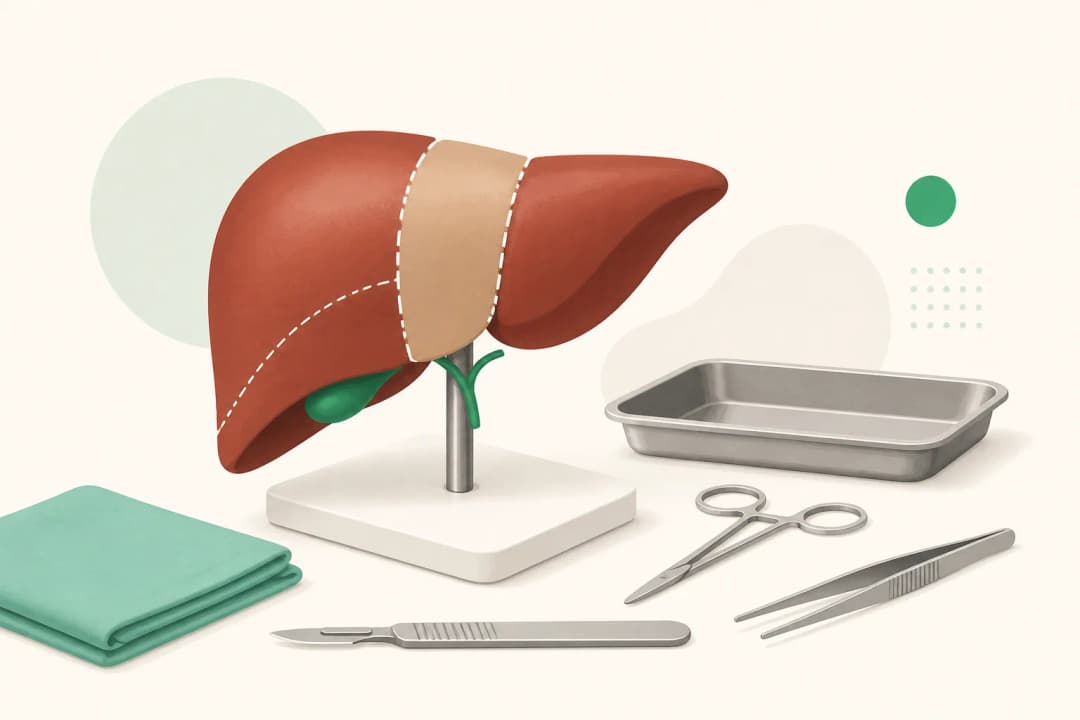
Liver resection is an operation that removes a tumour and a margin of nearby liver tissue while preserving enough healthy liver to work normally.
Also called hepatectomy, it may remove a wedge, segment, or lobe. The amount that can be safely removed depends on liver health, tumour position, and how much liver remains.
What does treatment involve?
Before surgery, imaging helps map the tumour, blood tests assess liver function, and the team reviews medicines and general fitness. Under anaesthesia, the surgeon reaches the liver through an abdominal incision or, in selected cases, keyhole instruments. The affected segment or lobe is removed, and the specimen is examined to assess the tumour and surgical margin. Some people need treatment before or after surgery as part of a wider cancer plan.
What are the side effects, and which are serious?
Expected effects can include pain around the incision, tiredness, nausea, reduced appetite, and temporary changes in liver blood tests. Serious problems can include bleeding, infection, a bile leak, blood clots, or liver function that worsens rather than improves. Fever, increasing abdominal pain, yellowing of the skin, confusion, breathing difficulty, or heavy wound bleeding after discharge needs urgent medical advice.
What does the evidence say about outcomes?
Outcomes depend on the tumour type, its location and spread, the condition of the remaining liver, and whether other treatments are needed. The operation can provide local control when the disease can be removed safely, but follow-up is needed because cancer can return or appear elsewhere. Your team uses scans, examination, and blood tests to plan surveillance and decide whether further treatment is appropriate.
Key facts
A liver resection may remove a wedge, a segment, or a larger section of liver. The surgical plan is individualised rather than based on tumour size alone.
Who may need liver resection?
It may be considered for selected people with primary liver cancer, liver metastases, or cancer that has spread to the liver from the bowel. A specialist team weighs whether all visible disease can be removed while leaving a functioning liver. A diagnosis of [Liver Cancer](/conditions/liver-cancer/) or [Liver Metastases](/conditions/liver-metastases/) does not by itself decide whether surgery is suitable.
What happens around the operation?
The pathway usually includes a surgical assessment, anaesthetic review, pre-operative scans and blood tests, the operation itself, monitoring in hospital, and discharge planning. You may receive exercises for breathing and movement, pain relief, and guidance on eating and wound care. The pathology result helps the team discuss the next stage of care.
Recovery after liver resection
Hospital recovery varies with the extent of surgery and your health. Early goals include sitting out of bed, walking safely, breathing exercises, and gradually returning to food. At home, tiredness may last for weeks; avoid lifting and strenuous activity until the surgical team clears it. Keep follow-up appointments even if the wound looks healed.
Risks to discuss
Ask how the planned resection affects bile ducts, blood vessels, and the remaining liver. Your team can explain the signs of a bile leak, infection, bleeding, or clot and give a personal plan for contacting the hospital. Risks also depend on previous operations, medicines, nutrition, and other medical conditions.
Possible alternatives
When surgery is not suitable or would remove too much liver, options may include systemic cancer treatment, radiotherapy, or a local procedure such as [Tumour Ablation](/treatments/surgical-oncology/tumour-ablation/). For some people with [Bowel Cancer](/conditions/colorectal-cancer/), treatment is combined in a planned sequence.
Finding the right specialist
Look for a multidisciplinary team with expertise in liver and cancer surgery. Take your scan reports, medication list, and previous treatment details to the consultation. Ask who will coordinate pathology, oncology, nutrition, and follow-up after discharge.
Questions people ask
Can the liver work after part is removed?
The remaining liver can often perform its functions, but suitability depends on liver health and the amount left behind.
How is the decision made?
Surgeons and oncology specialists review scans, tumour biology, liver reserve, and your overall health together.
When should I seek help after surgery?
Contact the surgical team urgently for fever, worsening pain, jaundice, confusion, breathing difficulty, or heavy bleeding.
Related
Related reading
Keep reading
Cancer care in the UAE
Hospitals & Medical Centers in Abu Dhabi
Most UAE cancer care is delivered inside hospital services rather than by standalone oncology clinics, so these are licensed hospitals & medical centers listed in Abu Dhabi. Confirm the specific cancer service exists before you travel, and know that asking for a second opinion is routine.
Ahalia Hospital Musaffah Building - Musaffah - Musaffah Industrial - Abu Dhabi - United Arab Emirates
Accepts: Daman, Thiqa, AXA, Cigna +13 more
Al Ruwais Industrial City - Abu Dhabi - United Arab Emirates
Accepts: Daman, Thiqa, AXA, Cigna +18 more
Abu Dhabi, Abu Dhabi
Accepts: Daman, Thiqa, AXA, Cigna +21 more
Second opinions are routine in cancer care and asking for one does not affect your treatment. How to arrange a second opinion in the UAE.
Ordered by verification status and how complete each clinic's public record is, then alphabetically. This is a directory listing, not a ranking — Zavis does not rate or recommend providers.
A factual listing drawn from the UAE health regulators' public licence registers. It is not a referral, an endorsement, or advice that any of these providers is right for you.
Medical disclaimer. This page is general health information, not medical advice, and it cannot diagnose you. Always consult a licensed healthcare provider about your own symptoms and treatment. In an emergency in the UAE, call 998 for an ambulance.