
What should you know about recurrent groin strain?
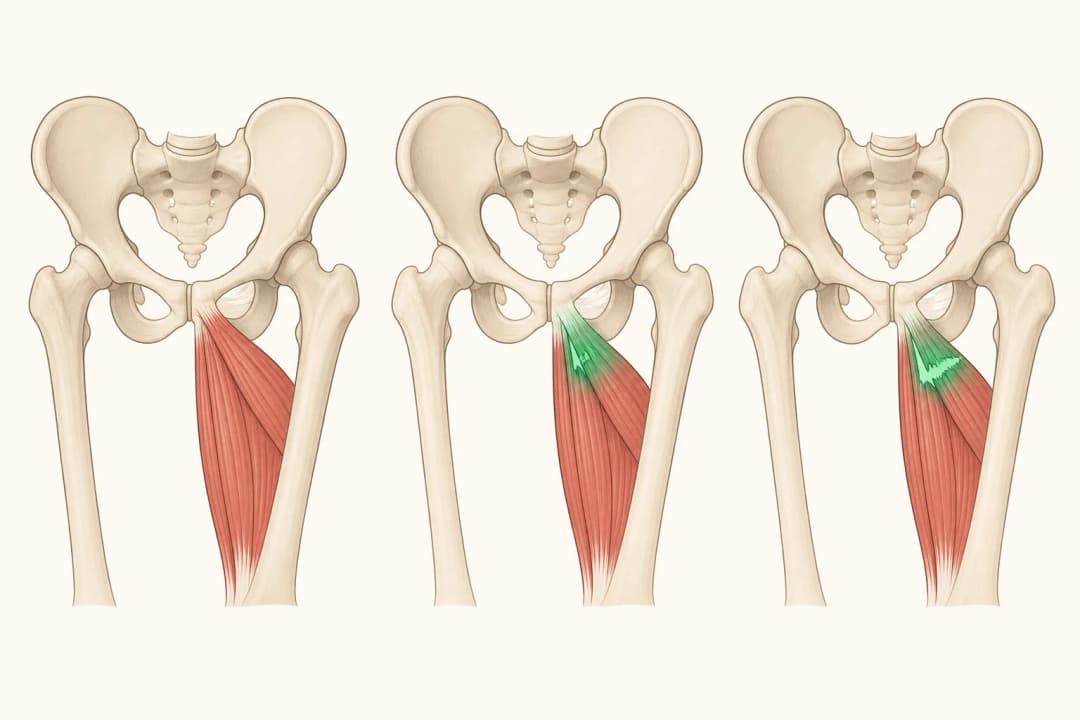
Short answer
Recurrent groin strain is repeated injury to the inner-thigh muscles, often linked to incomplete rehabilitation or demanding changes in activity.
This answers one question. It is not a diagnosis and does not replace an assessment by a licensed doctor.
At a glance
- Main area
- Inner thigh and groin
- Common triggers
- Sprint, cut, kick or leg squeeze
- Rehabilitation focus
- Progressive adductor and hip loading
The short answer
Recurrent groin strain is repeated injury to the inner-thigh muscles, often linked to incomplete rehabilitation or demanding changes in activity. Pain may return with sprinting, cutting, kicking or squeezing the legs together. A proper assessment also checks the hip, pelvis and nearby structures.
Why it may keep returning
The adductor muscles help stabilise the pelvis and control sideways leg movement. Recurrence can follow a rapid return to sport, reduced strength, poor load progression, limited hip movement or a different source of groin pain. Persistent symptoms do not prove that the original strain is the only problem.
A clinician may compare both sides, test resisted adduction, assess hip range and observe sport-specific movement. This helps match rehabilitation to the actual impairment rather than treating pain alone.
How to manage it
Pause sprinting, cutting and kicking when they reproduce pain, but maintain comfortable general movement. Exercise therapy can build adductor, hip and trunk strength in stages. Sports physiotherapy may adjust training loads and technique, while a return-to-sport programme can use progressive running and direction-change tests before full participation.
When to seek care
Book an assessment if groin pain returns repeatedly, affects walking or persists despite reduced training. Seek prompt care after a forceful injury with marked swelling, inability to bear weight, a visible bulge, numbness or severe testicular or abdominal pain.
Questions for your doctor
Ask whether the pain is coming from an adductor, hip joint, tendon or another pelvic structure. Clarify which strengthening stage fits now, how training volume should change, what tests define readiness, and how to respond if pain returns during a session.
Find care
General Clinics & Polyclinics in Abu Dhabi
That answer is general. If you want it applied to your own case, these are licensed general clinics & polyclinics listed in Abu Dhabi.
27 Ar Ruwwad St - Shakhbout City - MSH4 - Abu Dhabi - United Arab Emirates
Accepts: Daman, Thiqa, Cigna, MetLife +20 more
Al Ruwais, Al Dhafrah
Accepts: Daman, Thiqa, AXA, Cigna +16 more
Al Bahyah - Al Bahyah Old - Abu Dhabi - United Arab Emirates
Accepts: Daman, Thiqa, Cigna, Allianz Care +18 more
Abu Dhabi
Accepts: Daman, Thiqa, AXA, Cigna +27 more
Ordered by verification status and how complete each clinic's public record is, then alphabetically. This is a directory listing, not a ranking — Zavis does not rate or recommend providers.
A factual listing drawn from the DHA, DOH and MOHAP licence registers. It is not a referral, an endorsement, or advice that any of these providers is right for you.
Questions people ask
Can I keep training with recurrent groin pain?
Continuing the exact activity that provokes pain can delay recovery. A clinician can help you substitute tolerable training while strength and load tolerance are rebuilt.
Why is a return-to-sport plan useful?
It tests strength, running, change of direction and sport demands in stages, helping identify problems before full participation.
Related
Related reading
Keep reading
Medical disclaimer. This page is general health information, not medical advice, and it cannot diagnose you. Always consult a licensed healthcare provider about your own symptoms and treatment. In an emergency in the UAE, call 998 for an ambulance.