
What should you know about pulled left groin muscle?
Short answer
A pulled left groin muscle is treated by reducing painful loads, preserving comfortable movement, and progressing adductor strength before sport or demanding activity.
This answers one question. It is not a diagnosis and does not replace an assessment by a licensed doctor.
At a glance
- Protect initially
- Avoid sprinting, kicking, lunges, and wide stretching
- Rebuild with
- Adductor control, resistance, and balance
- Return target
- Pain-free progression toward running and cutting
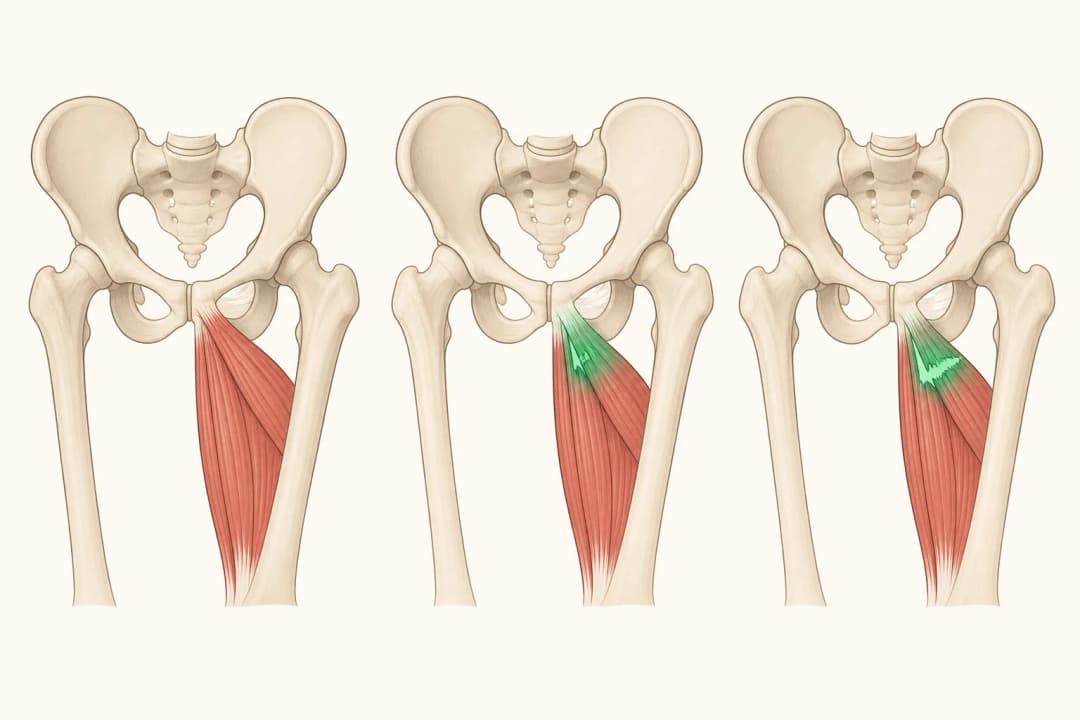
What a left groin strain involves
The groin includes muscles that draw the thigh inward and help stabilise the pelvis. A strain can occur during a sudden change of direction, kick, slip, sprint, or wide step. Pain may be local to the left groin and can increase when squeezing the knees together, walking quickly, climbing, or getting in and out of a car. Bruising or weakness may occur. Hip-joint, abdominal-wall, and hernia-related problems can overlap with groin symptoms, so persistent or unusual pain merits assessment.
Practical treatment
Stop sprinting, kicking, lunging, and wide stretching at first. Keep gentle walking if your stride is comfortable, and use a cold pack through cloth for soreness when helpful. As pain settles, rehabilitation can introduce controlled hip movement, isometric squeezing, then progressive resistance and balance work. Exercise Therapy may provide a structured progression. Increase one demand at a time, and judge the response later that day and the next morning rather than chasing a quick return.
When to seek care
Seek prompt care if you cannot walk normally, felt a pop with immediate weakness, have substantial bruising or swelling, or developed pain after a fall. Urgent assessment is needed for severe abdominal or groin pain, a painful bulge, vomiting, fever, or inability to pass urine. A Sports Physiotherapy assessment can help when symptoms recur or when a safe return to cutting, kicking, or running is the goal.
Questions for your clinician
Ask which adductor test is appropriate, when strengthening should start, how to modify training, and which criteria should be met before joining a Return-to-Sport Programme.
Find care
General Clinics & Polyclinics in Abu Dhabi
That answer is general. If you want it applied to your own case, these are licensed general clinics & polyclinics listed in Abu Dhabi.
27 Ar Ruwwad St - Shakhbout City - MSH4 - Abu Dhabi - United Arab Emirates
Accepts: Daman, Thiqa, Cigna, MetLife +20 more
Al Ruwais, Al Dhafrah
Accepts: Daman, Thiqa, AXA, Cigna +16 more
Al Bahyah - Al Bahyah Old - Abu Dhabi - United Arab Emirates
Accepts: Daman, Thiqa, Cigna, Allianz Care +18 more
Abu Dhabi
Accepts: Daman, Thiqa, AXA, Cigna +27 more
Ordered by verification status and how complete each clinic's public record is, then alphabetically. This is a directory listing, not a ranking — Zavis does not rate or recommend providers.
A factual listing drawn from the DHA, DOH and MOHAP licence registers. It is not a referral, an endorsement, or advice that any of these providers is right for you.
Questions people ask
Is walking helpful with a pulled left groin muscle?
Easy walking may be suitable if it does not cause limping or a later increase in pain; shorten the distance and pace when needed.
When is physiotherapy useful?
Physiotherapy is useful when pain limits activity, strength needs rebuilding, symptoms recur, or return to sport requires staged testing.
Related
Related reading
Keep reading
Medical disclaimer. This page is general health information, not medical advice, and it cannot diagnose you. Always consult a licensed healthcare provider about your own symptoms and treatment. In an emergency in the UAE, call 998 for an ambulance.