
What should you know about a pulled groin inner thigh muscle?
Short answer
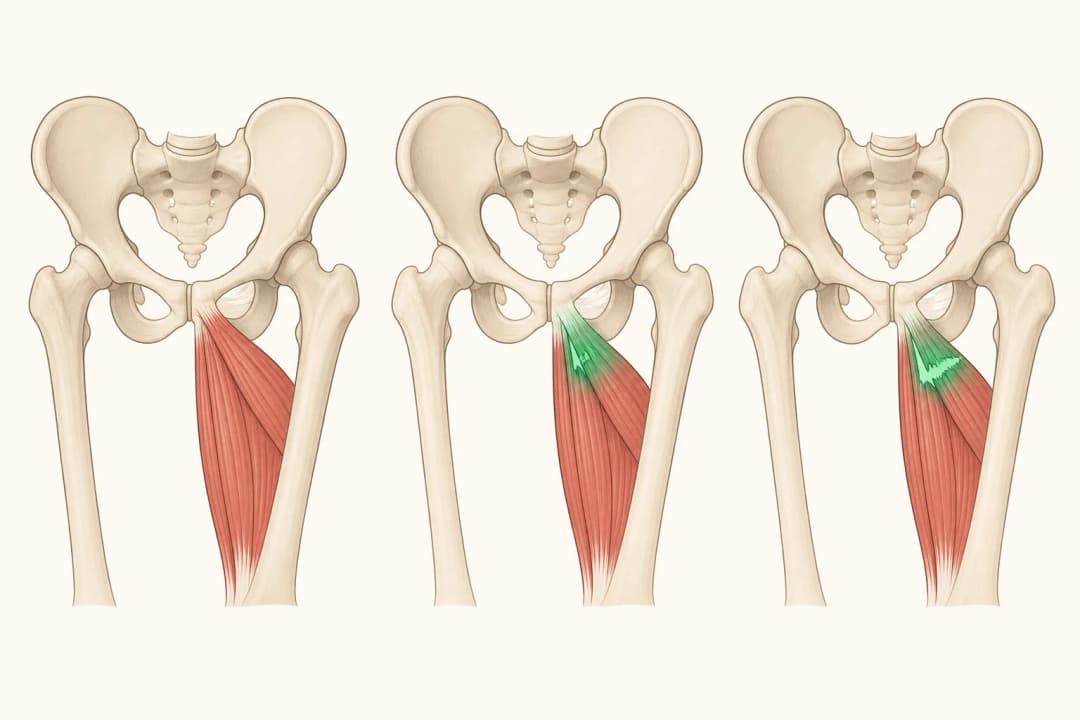
A pulled inner-thigh muscle is commonly an adductor strain, with pain during leg movement, squeezing or activities that load the groin.
This answers one question. It is not a diagnosis and does not replace an assessment by a licensed doctor.
At a glance
- Main muscles
- The adductors on the inner thigh
- Pain triggers
- Leg movement inward, squeezing, sprinting or kicking
- Progression
- Comfortable motion, strength, then sport-specific loading
Understanding the inner-thigh pain
Adductors help draw the leg inward and stabilise the pelvis. They may be strained by a sudden change of direction, sliding movement, kick, sprint or unusually demanding exercise. Symptoms can include a sudden twinge, local tenderness, stiffness, weakness with squeezing and sometimes bruising. The amount of pain does not reveal the full extent of an injury.
A health professional can test gentle hip motion and resisted adduction, examine the abdomen and hip, and observe walking. Pain that persists at rest, spreads beyond the inner thigh or comes with tingling may need a broader assessment. See [Groin Pain](/symptoms/groin-pain/) for related symptom patterns.
Recovery steps
In the early phase, avoid the action that caused the pain and keep activity within a comfortable range. Cold wrapped in cloth may reduce soreness after a recent injury. Do not massage deeply, stretch forcefully or test the muscle repeatedly when it is acutely painful. When walking and gentle hip movement are easier, begin a graded strengthening plan. [Exercise Therapy](/treatments/physiotherapy-and-rehabilitation/exercise-therapy/) can help build from controlled exercises toward normal activity.
A physiotherapist can adjust the load if symptoms rise later that day or the next morning. Sport-specific drills should come after basic strength and movement are comfortable.
When professional help is needed
Seek assessment if you cannot walk normally, notice substantial bruising or weakness, feel a pop, or have recurring pain after rest. Get urgent care for severe swelling, inability to bear weight, a groin lump that is painful, fever, or sudden testicular symptoms. These features require prompt evaluation rather than home rehabilitation alone.
Questions to ask
Ask whether the adductor is the likely source, which exercises are suitable, how to judge improvement, and what tests should precede running or cutting. Explain the injury mechanism, exact tender spot, bruising and activities that reproduce the pain.
Find care
General Clinics & Polyclinics in Abu Dhabi
That answer is general. If you want it applied to your own case, these are licensed general clinics & polyclinics listed in Abu Dhabi.
27 Ar Ruwwad St - Shakhbout City - MSH4 - Abu Dhabi - United Arab Emirates
Accepts: Daman, Thiqa, Cigna, MetLife +20 more
Al Ruwais, Al Dhafrah
Accepts: Daman, Thiqa, AXA, Cigna +16 more
Al Bahyah - Al Bahyah Old - Abu Dhabi - United Arab Emirates
Accepts: Daman, Thiqa, Cigna, Allianz Care +18 more
Abu Dhabi
Accepts: Daman, Thiqa, AXA, Cigna +27 more
Ordered by verification status and how complete each clinic's public record is, then alphabetically. This is a directory listing, not a ranking — Zavis does not rate or recommend providers.
A factual listing drawn from the DHA, DOH and MOHAP licence registers. It is not a referral, an endorsement, or advice that any of these providers is right for you.
Questions people ask
Does inner-thigh pain always mean a pulled muscle?
No. Hip, abdominal, nerve and other groin conditions can cause inner-thigh pain, especially when symptoms do not follow an injury.
Can you exercise with an inner-thigh strain?
Gentle, pain-limited movement may be reasonable, but sprinting, kicking and forceful stretching should wait until a graded plan allows them.
Related
Related reading
Keep reading
Medical disclaimer. This page is general health information, not medical advice, and it cannot diagnose you. Always consult a licensed healthcare provider about your own symptoms and treatment. In an emergency in the UAE, call 998 for an ambulance.