
What should you know about a pulled groin feeling?
Short answer
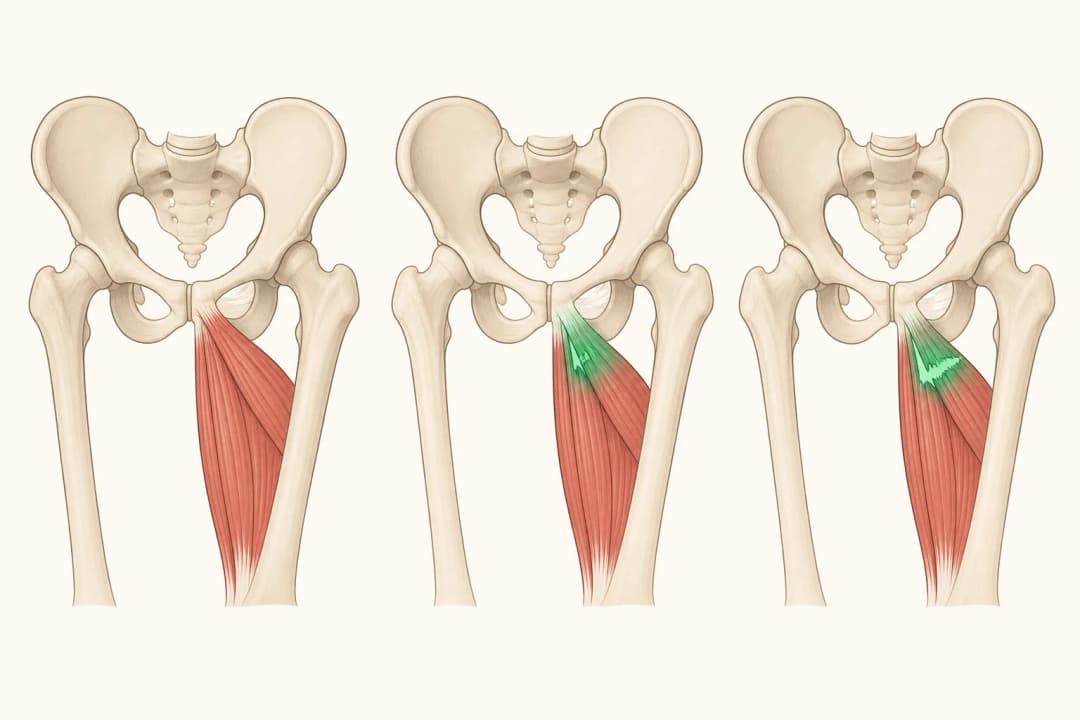
A pulled groin feeling often comes from an adductor muscle strain, causing pain when the leg is moved inward or loaded.
This answers one question. It is not a diagnosis and does not replace an assessment by a licensed doctor.
At a glance
- Typical area
- Inner thigh and groin near the adductor muscles
- Common trigger
- Sprint, kick, sudden turn, slip or wide step
- Rehabilitation
- Progress from comfortable movement to strength and sport tasks
How it may present
The adductor muscles run along the inner thigh and help bring the leg toward the body. A sudden sprint, change of direction, kick, slip or wide step can overload them. Pain may be sharp at the moment of injury, followed by tenderness, tightness, weakness or bruising. Coughing or hip movement can sometimes increase discomfort. [Groin Pain](/symptoms/groin-pain/) has other possible causes, including hip, abdominal and nerve problems, so the sensation alone does not establish a strain.
An examination can compare hip range, resisted leg movement, walking and the tender area. The clinician may also check the abdomen and hip when the history does not fit a straightforward muscle injury.
What to do now
Stop the movement that caused the pain and use comfortable walking if possible. For a recent injury, a wrapped cold pack may ease discomfort. Avoid sprinting, kicking, deep side lunges and forceful groin stretching while pain is easily provoked. Once ordinary movement is comfortable, rehabilitation can progress from gentle motion to strengthening and then faster or sport-specific tasks. [Exercise Therapy](/treatments/physiotherapy-and-rehabilitation/exercise-therapy/) can provide a structured progression.
A sports physiotherapist can assess running mechanics and training load. Do not return to competition simply because walking feels better; hopping, cutting and kicking may place a different demand on the groin.
When to seek care
Arrange assessment for marked bruising, weakness, a palpable gap, repeated pain or difficulty walking. Seek urgent care after major trauma, for severe swelling, inability to bear weight, a painful groin bulge, fever, or testicular pain or swelling. These signs can indicate an issue beyond an uncomplicated muscle strain.
Useful questions
Ask which tissue is affected, what activity is safe, how to increase load, and what functional checks should come before sport. Mention the exact motion that caused the feeling, bruising, pain with coughing, and any hip or abdominal symptoms.
Find care
General Clinics & Polyclinics in Abu Dhabi
That answer is general. If you want it applied to your own case, these are licensed general clinics & polyclinics listed in Abu Dhabi.
27 Ar Ruwwad St - Shakhbout City - MSH4 - Abu Dhabi - United Arab Emirates
Accepts: Daman, Thiqa, Cigna, MetLife +20 more
Al Ruwais, Al Dhafrah
Accepts: Daman, Thiqa, AXA, Cigna +16 more
Al Bahyah - Al Bahyah Old - Abu Dhabi - United Arab Emirates
Accepts: Daman, Thiqa, Cigna, Allianz Care +18 more
Abu Dhabi
Accepts: Daman, Thiqa, AXA, Cigna +27 more
Ordered by verification status and how complete each clinic's public record is, then alphabetically. This is a directory listing, not a ranking — Zavis does not rate or recommend providers.
A factual listing drawn from the DHA, DOH and MOHAP licence registers. It is not a referral, an endorsement, or advice that any of these providers is right for you.
Questions people ask
Is every pulled groin feeling a muscle strain?
No. Hip, abdominal, nerve and other groin problems can feel similar, so persistent or unusual symptoms deserve an examination.
When can you return to sport?
Return when daily movement and progressive sport drills are comfortable, strength is restored and a clinician or physiotherapist considers the load appropriate.
Related
Related reading
Keep reading
Medical disclaimer. This page is general health information, not medical advice, and it cannot diagnose you. Always consult a licensed healthcare provider about your own symptoms and treatment. In an emergency in the UAE, call 998 for an ambulance.