
What should you know about pt1b melanoma?
Short answer
pT1b melanoma is an invasive melanoma with a thin measured depth and a pathology feature that places it in the pT1b category.
This answers one question. It is not a diagnosis and does not replace an assessment by a licensed doctor.
At a glance
- pT1b
- A primary-tumour category based on thin melanoma features and pathology findings.
- Next discussion
- Excision, margin review, and whether sentinel node assessment is appropriate.
- Follow-up
- Regular skin and lymph-node checks are part of ongoing care.
What the label means
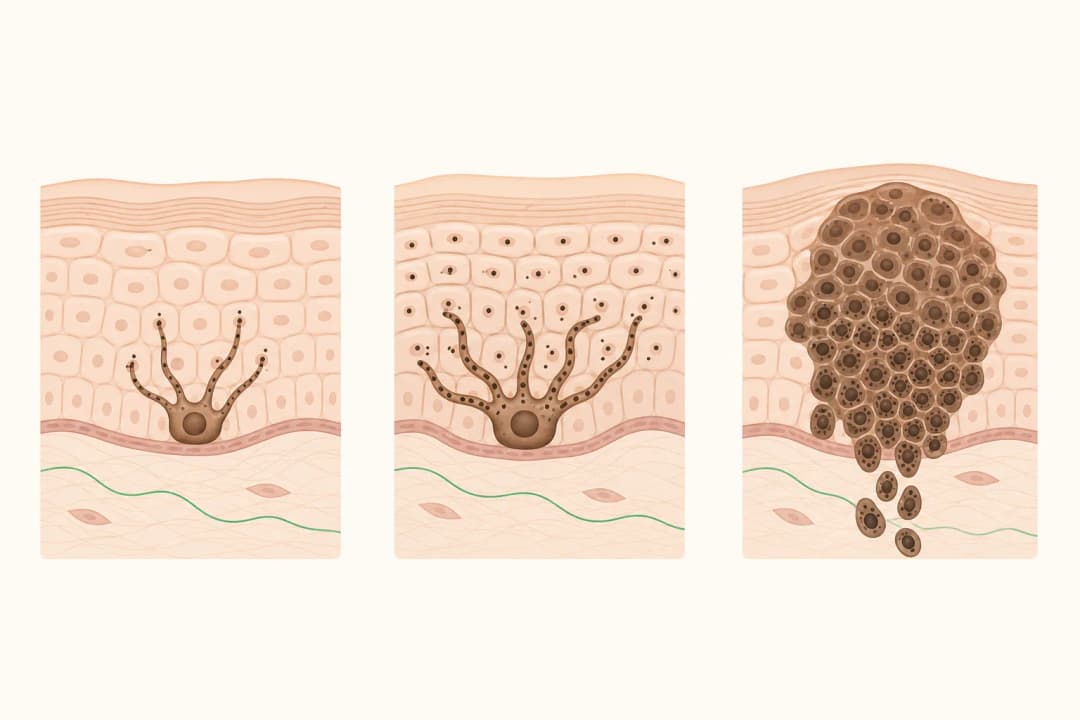
The pT part describes the primary skin tumour, based mainly on its thickness and whether the pathologist sees ulceration. The b category means the report contains a feature that makes it more concerning than the matching a category. This label does not by itself show that melanoma has reached lymph nodes or distant organs. Your clinician combines the biopsy findings with examination and any indicated staging tests to establish the full stage.
A pathology report may also mention margins, mitotic activity, and the exact site. These details help the team plan treatment, but they do not replace the formal stage assessment. Read the report with your dermatologist or skin cancer specialist so unfamiliar terms are explained in context.
What usually happens next
Treatment commonly begins with surgical excision to remove the melanoma and a planned margin of surrounding skin. The removed tissue is checked so the diagnosis and margins can be confirmed. Depending on the tumour features and the examination, your team may discuss a sentinel lymph node biopsy. It samples the first draining node or nodes to look for microscopic spread and is a decision to make with a specialist.
Keep the wound clean according to the surgical instructions, protect healing skin from strong sun, and attend every pathology and treatment appointment. Ask whether you need a baseline skin examination and how to check your skin and nearby lymph-node areas.
When to seek care
Arrange prompt medical review for a changing, bleeding, crusting, or newly growing pigmented spot, or for a new lump near the treated area. After surgery, contact the care team promptly for spreading redness, increasing swelling, drainage, fever, wound separation, or pain that is worsening rather than settling. Sudden neurological symptoms such as weakness, confusion, a seizure, or a severe new headache need emergency assessment; they are not proof of brain metastases, but should never be ignored.
Questions for your doctor
Ask: What were the measured thickness and ulceration findings? Are the surgical margins clear? Do you recommend sentinel lymph node biopsy, and why? What skin checks and follow-up schedule fit my result? Which symptoms should lead me to call the clinic urgently?
Find care
General Clinics & Polyclinics in Abu Dhabi
That answer is general. If you want it applied to your own case, these are licensed general clinics & polyclinics listed in Abu Dhabi.
27 Ar Ruwwad St - Shakhbout City - MSH4 - Abu Dhabi - United Arab Emirates
Accepts: Daman, Thiqa, Cigna, MetLife +20 more
Al Ruwais, Al Dhafrah
Accepts: Daman, Thiqa, AXA, Cigna +16 more
Al Bahyah - Al Bahyah Old - Abu Dhabi - United Arab Emirates
Accepts: Daman, Thiqa, Cigna, Allianz Care +18 more
Abu Dhabi
Accepts: Daman, Thiqa, AXA, Cigna +27 more
Ordered by verification status and how complete each clinic's public record is, then alphabetically. This is a directory listing, not a ranking — Zavis does not rate or recommend providers.
A factual listing drawn from the DHA, DOH and MOHAP licence registers. It is not a referral, an endorsement, or advice that any of these providers is right for you.
Questions people ask
Does pT1b prove melanoma has spread?
No. It describes the primary tumour; lymph-node or distant spread requires separate assessment.
Will pT1b melanoma need more surgery?
A specialist may recommend excision with an appropriate margin after the diagnostic biopsy, depending on the report and site.
Related
Related reading
Keep reading
Medical disclaimer. This page is general health information, not medical advice, and it cannot diagnose you. Always consult a licensed healthcare provider about your own symptoms and treatment. In an emergency in the UAE, call 998 for an ambulance.