
What should you know about PCR urine test?
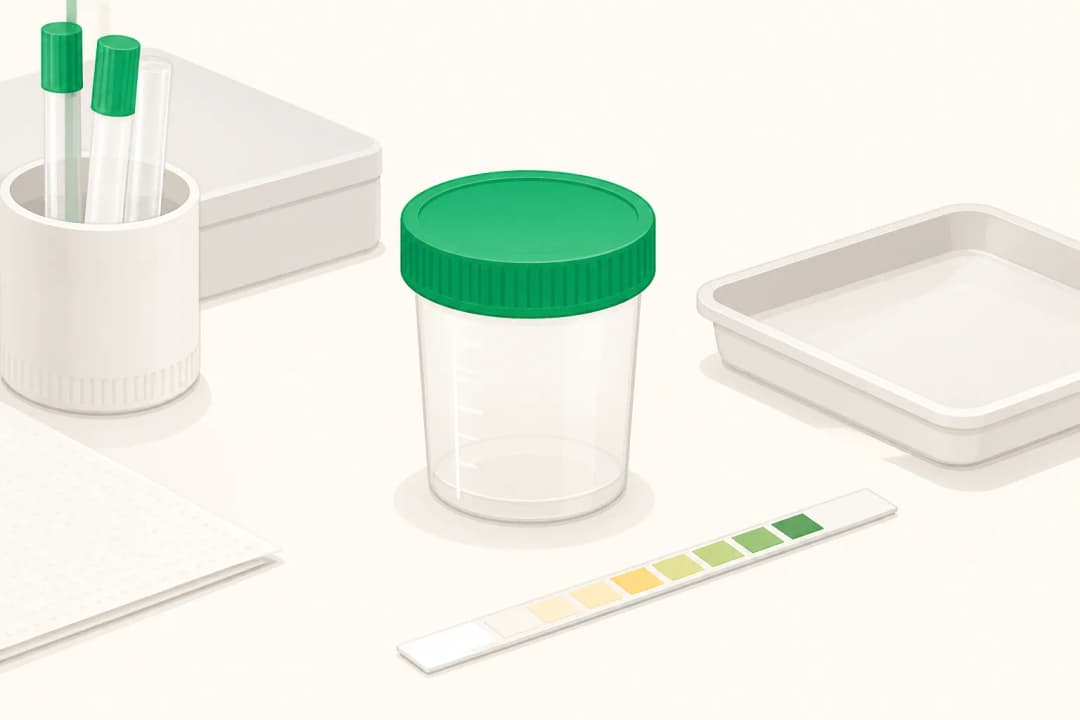
Short answer
A PCR urine test looks for genetic material from selected infections in a urine sample and helps guide the next clinical step.
This answers one question. It is not a diagnosis and does not replace an assessment by a licensed doctor.
At a glance
- Sample
- Urine collected in a sterile container
- Method
- Detects selected genetic material
- Result
- Interpret alongside symptoms and examination
What the result can mean
PCR stands for polymerase chain reaction. The laboratory uses the method to detect tiny amounts of a target organism’s genetic material. A detected result can support an infection diagnosis, but your symptoms, examination and the specific test panel still matter. A not-detected result does not explain every urinary symptom and may need clinical review if problems continue.
The sample may be used when urinary symptoms, sexual-health concerns or a clinician’s examination point toward infection. A urine test can be part of the assessment for a urinary tract infection or kidney infection; urinary symptoms can also have non-infectious causes, including prostate enlargement.
What to do before and after testing
Follow the collection instructions closely. Use the supplied container, avoid touching its inside, and provide the requested part of the urine stream. Tell the clinic about recent antibiotics, urinary medicines, pregnancy or difficulty producing a sample, because these details can affect interpretation or the plan.
Do not start, stop or share antibiotics based only on a result. A clinician may match the finding to your symptoms and decide whether antibiotic treatment is appropriate. Ask when and how the result will be communicated, and what to do if symptoms remain after treatment.
When to seek medical care
Arrange prompt medical assessment for fever with urinary symptoms, pain in the side or back, vomiting, visible blood in the urine, confusion, or difficulty passing urine. These features can signal a more serious urinary problem and should not wait for a routine result discussion. Seek emergency help for severe illness, fainting or inability to keep fluids down.
Questions for your doctor
Ask which infection the PCR panel checks, whether another urine examination or culture is needed, how the result fits your symptoms, and whether a partner or household contact needs assessment. Confirm when to repeat testing and which changes should prompt an earlier review.
Find care
General Clinics & Polyclinics in Abu Dhabi
That answer is general. If you want it applied to your own case, these are licensed general clinics & polyclinics listed in Abu Dhabi.
27 Ar Ruwwad St - Shakhbout City - MSH4 - Abu Dhabi - United Arab Emirates
Accepts: Daman, Thiqa, Cigna, MetLife +20 more
Al Ruwais, Al Dhafrah
Accepts: Daman, Thiqa, AXA, Cigna +16 more
Al Bahyah - Al Bahyah Old - Abu Dhabi - United Arab Emirates
Accepts: Daman, Thiqa, Cigna, Allianz Care +18 more
Abu Dhabi
Accepts: Daman, Thiqa, AXA, Cigna +27 more
Ordered by verification status and how complete each clinic's public record is, then alphabetically. This is a directory listing, not a ranking — Zavis does not rate or recommend providers.
A factual listing drawn from the DHA, DOH and MOHAP licence registers. It is not a referral, an endorsement, or advice that any of these providers is right for you.
Questions people ask
Is a PCR urine test the same as a routine urine test?
No. PCR looks for genetic material from selected targets, while routine urine testing may assess cells, blood, chemical markers or other features.
Can antibiotics affect the result?
Recent antibiotics may influence testing and treatment decisions, so tell the clinician what you have taken.
Related
Related reading
Keep reading
Medical disclaimer. This page is general health information, not medical advice, and it cannot diagnose you. Always consult a licensed healthcare provider about your own symptoms and treatment. In an emergency in the UAE, call 998 for an ambulance.