
What should you know about osmolality urine test?
Short answer
A urine osmolality test measures how concentrated your urine is and helps assess fluid balance and kidney function.
This answers one question. It is not a diagnosis and does not replace an assessment by a licensed doctor.
At a glance
- Sample
- Fresh urine
- Measures
- Urine concentration
- Interpretation
- Read with symptoms and other tests
What the result can show
The test usually uses a fresh urine sample. Concentration changes with fluid intake, sweating, vomiting, diarrhoea, and some medicines. Your clinician interprets the result with blood tests, symptoms, urine volume, and medical history rather than treating one value as a diagnosis.
A result that is more concentrated or more dilute than expected can reflect how the kidneys are responding to the body’s water and salt balance. It may be considered during assessment of excessive thirst, frequent urination, dehydration, or suspected kidney problems. A urinary infection can require a separate urine test because osmolality alone does not identify the organism.
Preparing for the sample
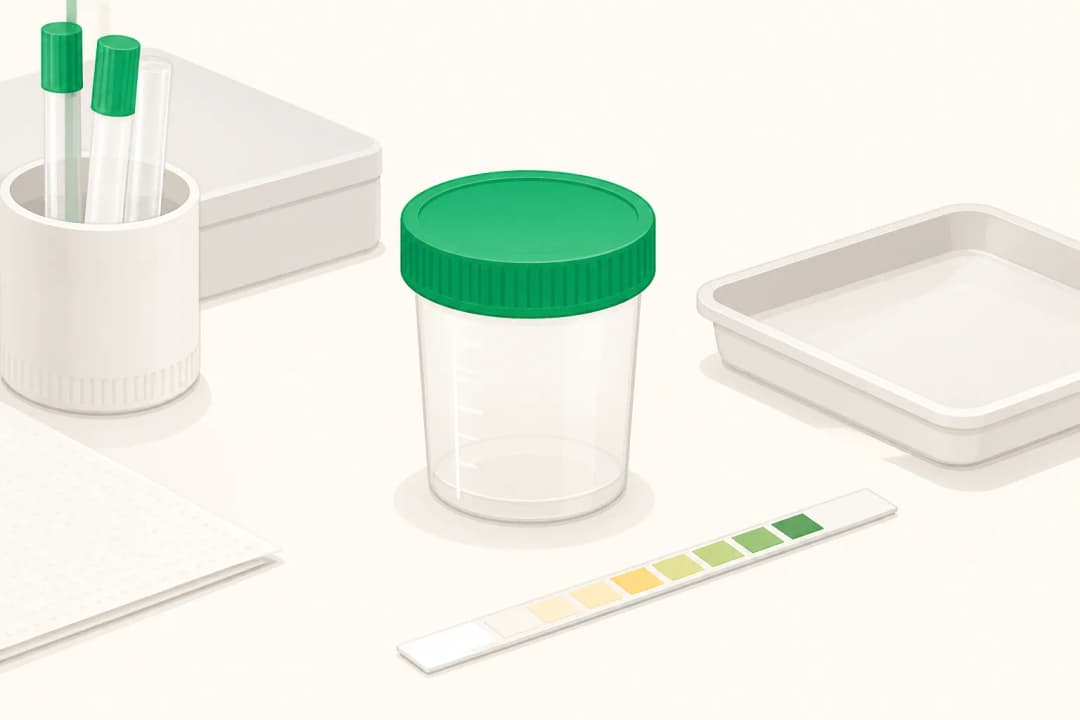
Ask whether you should avoid unusual amounts of water before collection and whether to pause any medicine; do not stop prescribed treatment without instructions. Use the container provided, avoid touching its inside, and deliver the sample as directed. Tell the team if collecting urine was difficult or if you were unwell that day.
If your clinician is investigating urinary symptoms, mention burning, urgency, lower abdominal discomfort, fever, or pain in the side or back. A urine test may be paired with a blood test or imaging, depending on the findings.
When to seek care
Get prompt medical care for fever with back or side pain, vomiting, confusion, fainting, very little urine, or inability to drink. These symptoms can occur with significant dehydration or a kidney infection. Arrange follow-up if thirst or urination remains unusual, even when the sample result is described as reassuring.
Questions for your doctor
Ask why the test was requested, whether other urine or blood tests are needed, how fluid intake affects interpretation, and when your result will be reviewed.
Find care
General Clinics & Polyclinics in Abu Dhabi
That answer is general. If you want it applied to your own case, these are licensed general clinics & polyclinics listed in Abu Dhabi.
27 Ar Ruwwad St - Shakhbout City - MSH4 - Abu Dhabi - United Arab Emirates
Accepts: Daman, Thiqa, Cigna, MetLife +20 more
Al Ruwais, Al Dhafrah
Accepts: Daman, Thiqa, AXA, Cigna +16 more
Al Bahyah - Al Bahyah Old - Abu Dhabi - United Arab Emirates
Accepts: Daman, Thiqa, Cigna, Allianz Care +18 more
Abu Dhabi
Accepts: Daman, Thiqa, AXA, Cigna +27 more
Ordered by verification status and how complete each clinic's public record is, then alphabetically. This is a directory listing, not a ranking — Zavis does not rate or recommend providers.
A factual listing drawn from the DHA, DOH and MOHAP licence registers. It is not a referral, an endorsement, or advice that any of these providers is right for you.
Questions people ask
Is urine osmolality the same as a urine infection test?
No. It measures concentration; infection may need different urine testing.
Can drinking water change the result?
Yes. Fluid intake can make urine more dilute, so follow the collection instructions.
Related
Related reading
Keep reading
Medical disclaimer. This page is general health information, not medical advice, and it cannot diagnose you. Always consult a licensed healthcare provider about your own symptoms and treatment. In an emergency in the UAE, call 998 for an ambulance.