
What should you know about opportunistic salpingectomy?
Short answer
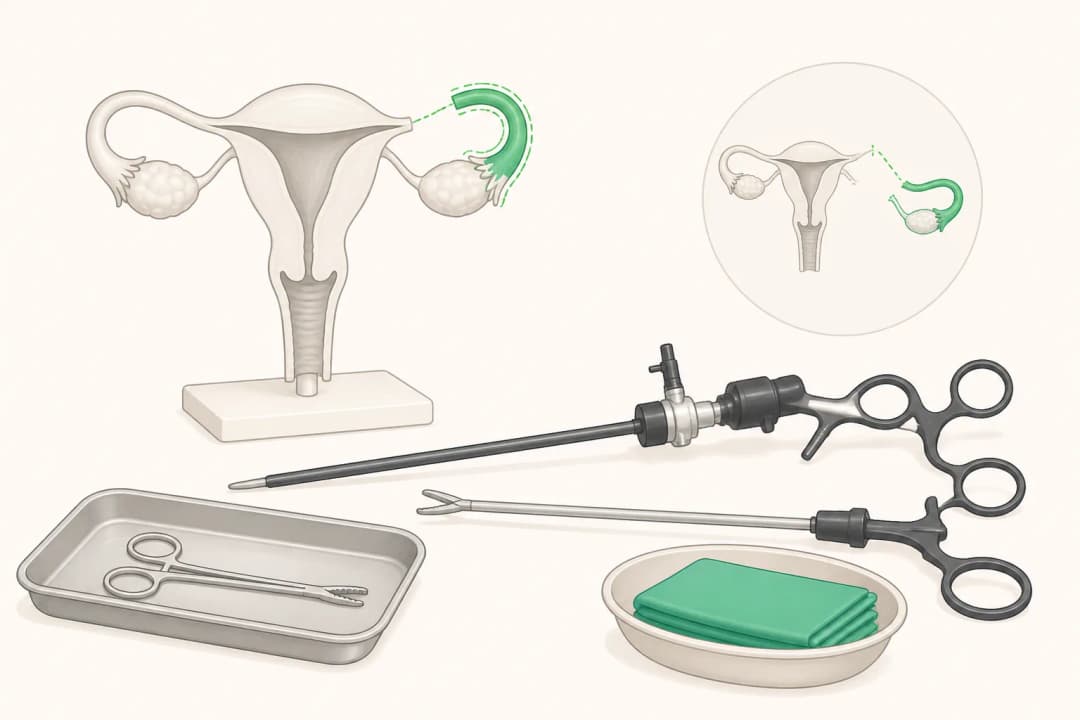
Opportunistic salpingectomy is removal of the fallopian tubes during another planned pelvic operation when it is considered suitable and consented to beforehand.
This answers one question. It is not a diagnosis and does not replace an assessment by a licensed doctor.
At a glance
- Timing
- During another planned pelvic operation
- What remains
- The ovaries remain unless separately removed
Why it may be discussed
The fallopian tubes connect the ovaries with the uterus. Removing both tubes prevents eggs from travelling through them and therefore provides permanent contraception, but it does not remove the ovaries or uterus. Some people discuss tube removal during planned surgery because certain ovarian cancers may begin in tissue associated with the tubes; the operation is a risk-reduction choice, not a guarantee that cancer will be prevented.
It may be considered during sterilisation, a caesarean birth, hysterectomy, or another pelvic procedure, depending on anatomy, medical history, surgical access, and personal wishes. It cannot treat an ectopic pregnancy unless the operation is being performed for that condition.
Discussing the option before surgery
Ask the surgeon whether removing one or both tubes changes the planned operation, recovery, fertility, or ovarian function. Confirm that the decision is voluntary and recorded before the procedure, and ask what happens if the tubes cannot be safely reached. Review alternatives, future pregnancy plans, contraception needs, and whether tissue will be sent for examination. Follow the main operation's instructions for medicines, fasting, transport, and wound care.
When to seek help after surgery
Call the surgical team for increasing abdominal pain, fever, repeated vomiting, heavy bleeding, wound redness or drainage, difficulty passing urine, or feeling progressively unwell. Seek emergency care for fainting, sudden severe pain, chest pain, breathing trouble, or a painful swollen leg.
Questions for your doctor
Ask why tube removal is being offered, whether it changes the main procedure, how it affects future fertility and contraception, what risks apply to your anatomy, and what recovery symptoms should prompt a call. Ask whether ovarian hormone production is expected to continue.
Find care
General Clinics & Polyclinics in Abu Dhabi
That answer is general. If you want it applied to your own case, these are licensed general clinics & polyclinics listed in Abu Dhabi.
27 Ar Ruwwad St - Shakhbout City - MSH4 - Abu Dhabi - United Arab Emirates
Accepts: Daman, Thiqa, Cigna, MetLife +20 more
Al Ruwais, Al Dhafrah
Accepts: Daman, Thiqa, AXA, Cigna +16 more
Al Bahyah - Al Bahyah Old - Abu Dhabi - United Arab Emirates
Accepts: Daman, Thiqa, Cigna, Allianz Care +18 more
Abu Dhabi
Accepts: Daman, Thiqa, AXA, Cigna +27 more
Ordered by verification status and how complete each clinic's public record is, then alphabetically. This is a directory listing, not a ranking — Zavis does not rate or recommend providers.
A factual listing drawn from the DHA, DOH and MOHAP licence registers. It is not a referral, an endorsement, or advice that any of these providers is right for you.
Questions people ask
Does opportunistic salpingectomy cause menopause?
Removing the tubes alone does not remove the ovaries, which produce ovarian hormones.
Is it reversible?
It should be treated as permanent contraception; discuss future fertility plans before consenting.
Related
Related reading
Keep reading
Medical disclaimer. This page is general health information, not medical advice, and it cannot diagnose you. Always consult a licensed healthcare provider about your own symptoms and treatment. In an emergency in the UAE, call 998 for an ambulance.