
What should you know about non-Graves hyperthyroidism?
Short answer
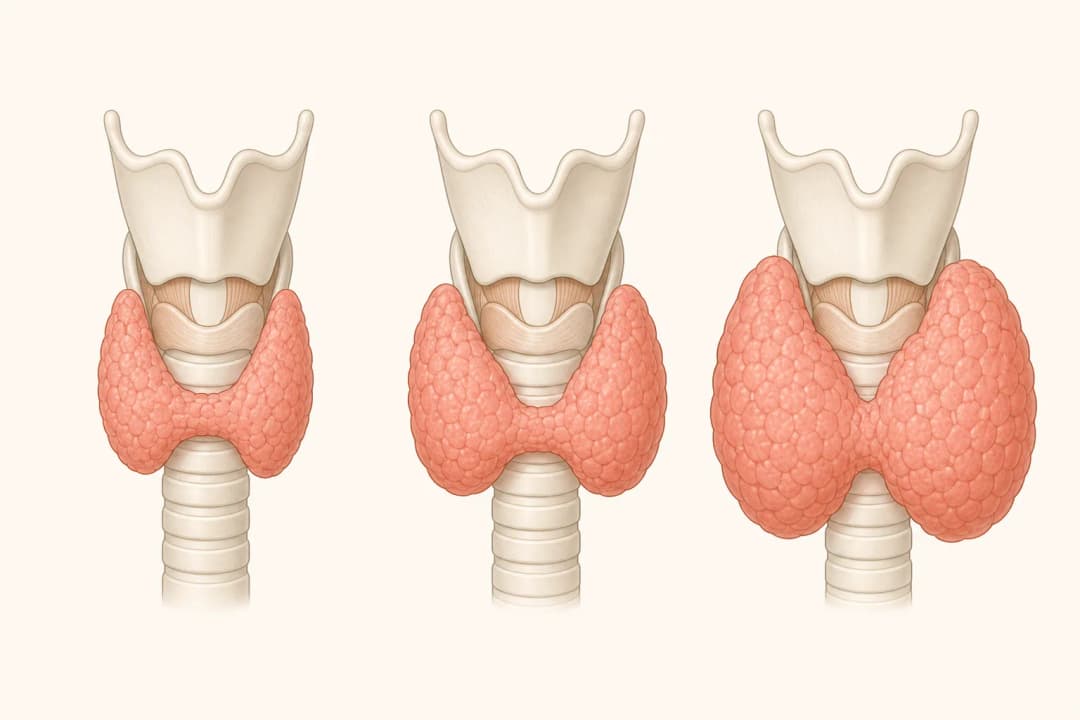
Non-Graves hyperthyroidism means an overactive thyroid caused by something other than Graves disease, such as thyroid inflammation, a thyroid nodule, or excess thyroid medicine.
This answers one question. It is not a diagnosis and does not replace an assessment by a licensed doctor.
At a glance
- Other name
- Overactive thyroid
- Assessment
- Thyroid blood tests plus cause-focused review
- Treatment
- Depends on whether hormone release is temporary or ongoing
What it means
The thyroid releases hormones that influence heart rate, temperature control, digestion and energy use. When hormone levels are too high, you may notice a racing or irregular heartbeat, tremor, heat intolerance, excessive sweating, diarrhoea, difficulty sleeping, feeling anxious or unexplained weight loss.
Thyroiditis can release stored hormone for a limited period and may later lead to an underactive phase. A toxic nodule or multinodular thyroid can make hormone independently. Medicines containing thyroid hormone, iodine exposure and some other medicines can also contribute. Blood tests usually include thyroid-stimulating hormone and thyroid hormones; an examination and, when needed, antibody tests or imaging help identify the cause.
What to do next
Arrange a clinical review if symptoms persist or a blood test shows an overactive thyroid. Bring a list of medicines, supplements and recent scans, and mention pregnancy, heart disease or osteoporosis if relevant. Treatment depends on the cause: a temporary thyroid inflammation may need symptom relief and monitoring, while ongoing hormone production may be treated with medicine, radioactive iodine or surgery. Do not change thyroid medicine without guidance.
Limit triggers that worsen palpitations or anxiety, such as excess caffeine, and keep follow-up blood tests so treatment can be adjusted safely.
When to seek care
Seek urgent help for chest pain, fainting, severe breathlessness, confusion, or a very fast or irregular heartbeat. Fever with marked agitation, vomiting or worsening weakness can signal a serious escalation and needs emergency assessment. New eye pain or vision changes also deserve prompt review, even though eye involvement is more associated with Graves disease.
Questions for your doctor
Which cause best fits my test results? Do I need repeat thyroid tests, an ultrasound or a nuclear scan? Is my condition expected to settle, and what symptoms should prompt an earlier review? Which treatment is suitable if I am pregnant or planning pregnancy?
Find care
General Clinics & Polyclinics in Abu Dhabi
That answer is general. If you want it applied to your own case, these are licensed general clinics & polyclinics listed in Abu Dhabi.
27 Ar Ruwwad St - Shakhbout City - MSH4 - Abu Dhabi - United Arab Emirates
Accepts: Daman, Thiqa, Cigna, MetLife +20 more
Al Ruwais, Al Dhafrah
Accepts: Daman, Thiqa, AXA, Cigna +16 more
Al Bahyah - Al Bahyah Old - Abu Dhabi - United Arab Emirates
Accepts: Daman, Thiqa, Cigna, Allianz Care +18 more
Abu Dhabi
Accepts: Daman, Thiqa, AXA, Cigna +27 more
Ordered by verification status and how complete each clinic's public record is, then alphabetically. This is a directory listing, not a ranking — Zavis does not rate or recommend providers.
A factual listing drawn from the DHA, DOH and MOHAP licence registers. It is not a referral, an endorsement, or advice that any of these providers is right for you.
Questions people ask
Is non-Graves hyperthyroidism the same as Graves disease?
No. Both can cause excess thyroid hormone, but non-Graves hyperthyroidism has another cause, such as thyroiditis, a toxic nodule or medicine exposure.
Can symptoms settle on their own?
Some thyroid inflammation settles as stored hormone is used, but follow-up is needed because thyroid function can change and other causes may continue.
Related
Related reading
Keep reading
Medical disclaimer. This page is general health information, not medical advice, and it cannot diagnose you. Always consult a licensed healthcare provider about your own symptoms and treatment. In an emergency in the UAE, call 998 for an ambulance.