
What should you know about multinodular goiter hyperthyroidism?
Updated
Short answer
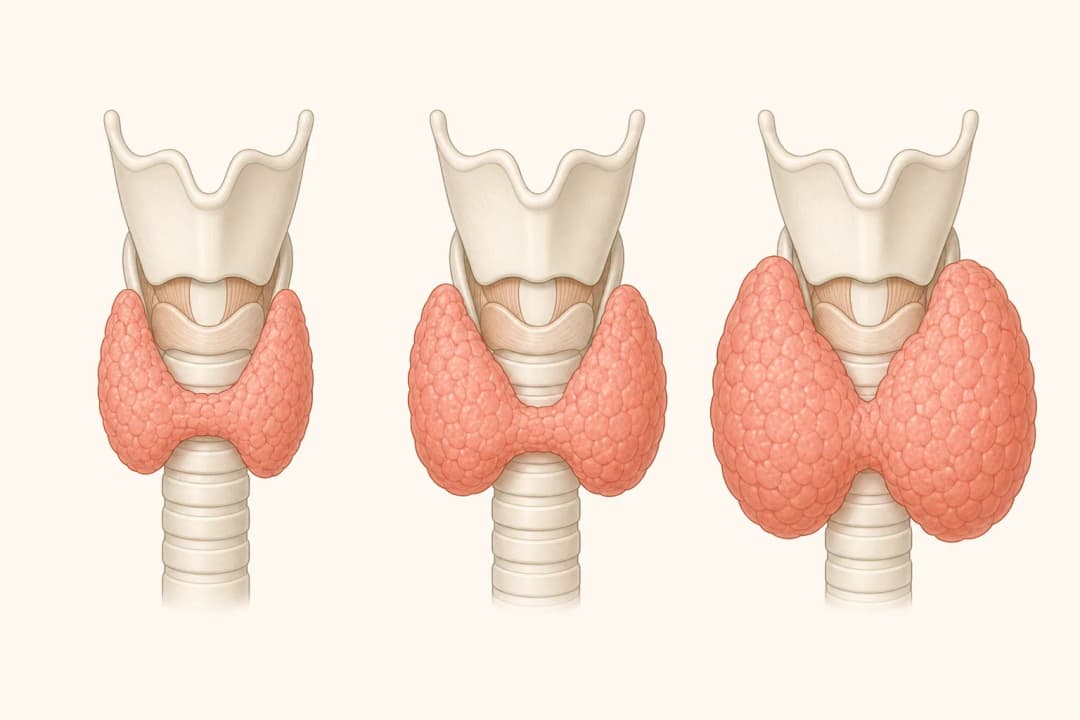
Multinodular goiter hyperthyroidism means several thyroid nodules are linked with excess thyroid hormone production.
This answers one question. It is not a diagnosis and does not replace an assessment by a licensed doctor.
At a glance
- Main issue
- Excess thyroid hormone from functioning nodules
- Assessment
- Blood tests plus thyroid imaging when needed
- Treatment
- Individualised and monitored over time
How it affects the body
The thyroid uses hormones to regulate energy use, temperature, digestion and heart activity. In a multinodular goiter, one or more nodules may work independently and release more hormone than the body needs. This is a form of [Hyperthyroidism](/conditions/hyperthyroidism/). Possible symptoms include palpitations, feeling anxious, difficulty sleeping, excessive sweating, heat intolerance, diarrhoea, or night sweats. Symptoms may be subtle, especially in older adults.
A clinician usually checks thyroid blood tests and examines the neck. An ultrasound can describe the nodules, while a thyroid scan may show which areas are producing hormone. These tests answer different questions, so one test does not replace the others.
How it is managed
Treatment is tailored to hormone levels, nodule findings, symptoms, age, pregnancy plans and other medical conditions. A medicine may reduce hormone production or control symptoms while a longer-term option is considered. Radioactive iodine or surgery may be discussed in suitable cases; enlarged tissue pressing on the throat can influence that decision. Keep follow-up appointments and tell the clinician about heart symptoms, eye symptoms, supplements, and medicines before treatment changes.
When to seek urgent care
Seek urgent help for severe or persistent palpitations, chest pain, fainting, severe breathlessness, new confusion, or a very high fever with marked agitation. These symptoms can signal a serious complication of excess thyroid hormone. Contact your clinician promptly if neck swelling causes trouble swallowing or breathing, or if symptoms suddenly become much stronger.
Questions for your doctor
Ask which nodules are producing hormone, whether you need an ultrasound or scan, and what your thyroid blood tests show. Discuss the benefits and drawbacks of medicines, radioactive iodine and surgery, plus how treatment could affect future pregnancy plans.
Find care
General Clinics & Polyclinics in Dubai
That answer is general. If you want it applied to your own case, these are licensed general clinics & polyclinics listed in Dubai.
The Court Residence, 39B Street, Jumeirah 1, Dubai
Accepts: Tabby, Tamara
Elite Business Bay Residence - Shop 03 & 04, 34 Marasi Dr - Business Bay - Dubai - United Arab Emirates
Accepts: Tabby
Airport View Building, Al Garhoud, Dubai
Accepts: Daman, Thiqa, AXA, Cigna +25 more
IBIS Building, 5th Floor, Unit 5003, Deira, Dubai
Accepts: AXA, Cigna, MetLife, Allianz Care +18 more
Ordered by verification status and how complete each clinic's public record is, then alphabetically. This is a directory listing, not a ranking — Zavis does not rate or recommend providers.
A factual listing drawn from the UAE health regulators' public licence registers. It is not a referral, an endorsement, or advice that any of these providers is right for you.
Questions people ask
Can a multinodular goiter cause an overactive thyroid?
Yes. Some nodules can produce thyroid hormone independently, leading to hyperthyroidism.
Are thyroid nodules always treated with surgery?
No. The choice may include monitoring, medicine, radioactive iodine or surgery, depending on hormone production, size, symptoms and test findings.
Related
Related reading
Keep reading
Medical disclaimer. This page is general health information, not medical advice, and it cannot diagnose you. Always consult a licensed healthcare provider about your own symptoms and treatment. In an emergency in the UAE, call 998 for an ambulance.