
What should you know about middle outer foot pain?
Short answer
Middle outer foot pain may come from overloaded soft tissues, a sprain, altered foot mechanics, or a stress injury, especially after a change in activity.
This answers one question. It is not a diagnosis and does not replace an assessment by a licensed doctor.
At a glance
- Helpful detail
- The exact tender spot and whether you can walk normally are more useful than pain intensity alone.
- Short-term aim
- Protect the foot from movements that increase symptoms while the cause is clarified.
Reading the symptoms
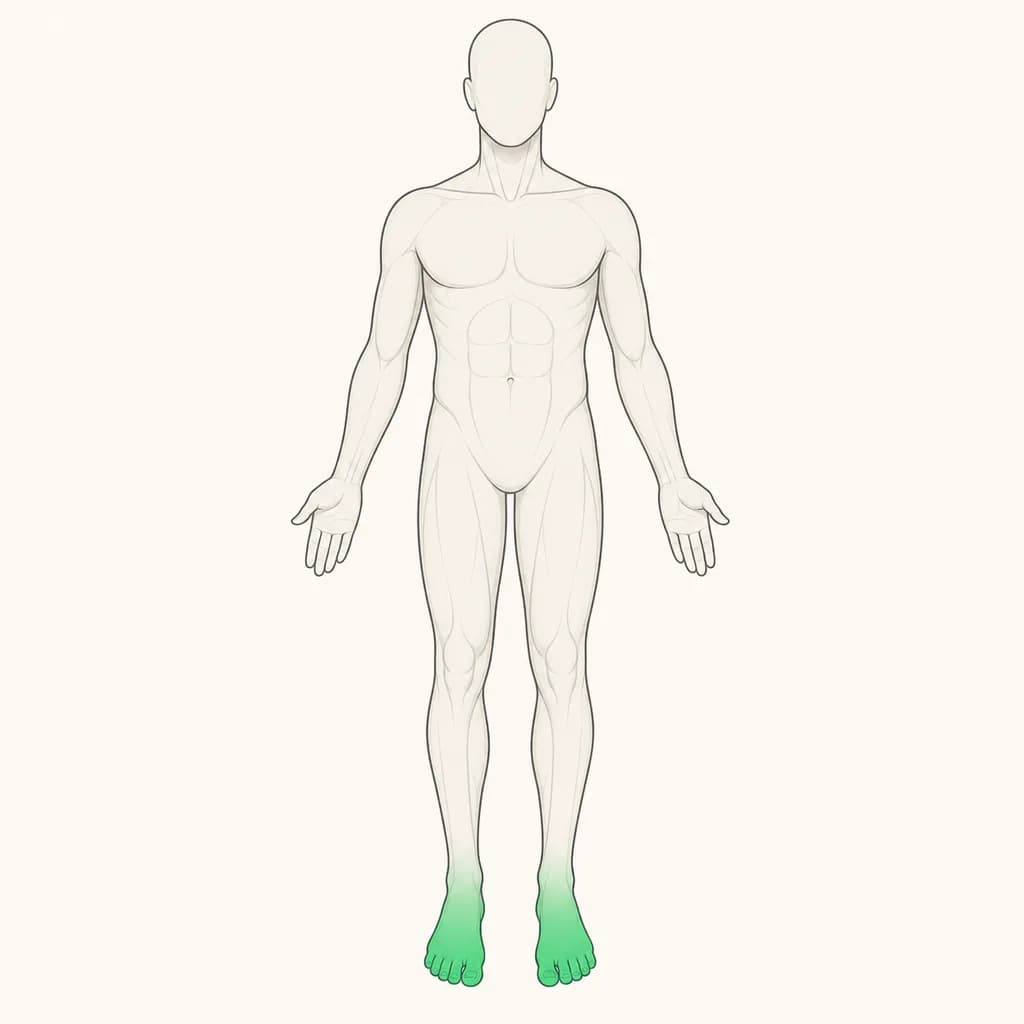
The outer midfoot carries force when you push off and balance. A twist can irritate ligaments or joints, while repeated running, jumping, or long walks can overload nearby tendons and bone. A stress fracture may present with steadily increasing pain and a small, tender area. Flat feet and other changes in foot mechanics can shift pressure across the foot, although the location does not diagnose a condition by itself.
Look for swelling, bruising, warmth, altered sensation, or pain when standing. A clinician may assess the ankle and foot together, check walking, and decide whether imaging is needed.
Protect the foot
Stop the activity that increases pain and use a supportive shoe rather than a flexible slipper or barefoot walking on hard ground. Elevate the foot if it is swollen. A wrapped cool pack may be used briefly for comfort. Avoid running, jumping, or repeatedly hopping to test the foot, particularly when one spot is sharply tender. Once serious injury is excluded, physiotherapy and appropriate footwear or custom orthotics may help address loading and movement.
Warning signs
Get prompt care if you cannot take several steps, the foot looks deformed, swelling or bruising is substantial, or pain follows a forceful injury. Seek urgent help for a cold or discoloured foot, severe numbness, or rapidly worsening pain. Arrange review for focal bone tenderness, pain at rest, or symptoms that persist after activity has been reduced.
What to ask
Ask whether the pain is coming from bone, tendon, joint, or ligament and whether an X-ray or other scan is appropriate. Ask how much weight-bearing is safe, when to resume impact exercise, and whether foot mechanics are contributing.
Find care
General Clinics & Polyclinics in Abu Dhabi
That answer is general. If you want it applied to your own case, these are licensed general clinics & polyclinics listed in Abu Dhabi.
27 Ar Ruwwad St - Shakhbout City - MSH4 - Abu Dhabi - United Arab Emirates
Accepts: Daman, Thiqa, Cigna, MetLife +20 more
Al Ruwais, Al Dhafrah
Accepts: Daman, Thiqa, AXA, Cigna +16 more
Al Bahyah - Al Bahyah Old - Abu Dhabi - United Arab Emirates
Accepts: Daman, Thiqa, Cigna, Allianz Care +18 more
Abu Dhabi
Accepts: Daman, Thiqa, AXA, Cigna +27 more
Ordered by verification status and how complete each clinic's public record is, then alphabetically. This is a directory listing, not a ranking — Zavis does not rate or recommend providers.
A factual listing drawn from the DHA, DOH and MOHAP licence registers. It is not a referral, an endorsement, or advice that any of these providers is right for you.
Questions people ask
Can outer foot pain follow a new exercise routine?
Yes. A sudden increase in impact, distance, hills, or hard surfaces can overload tissues before they adapt.
When might a scan be needed?
Imaging may be considered after injury, with focal bone tenderness, inability to bear weight, or persistent symptoms.
Related
Related reading
Keep reading
Medical disclaimer. This page is general health information, not medical advice, and it cannot diagnose you. Always consult a licensed healthcare provider about your own symptoms and treatment. In an emergency in the UAE, call 998 for an ambulance.